
A Culture Writer’s Guide To Exploring Canggu For The First Time
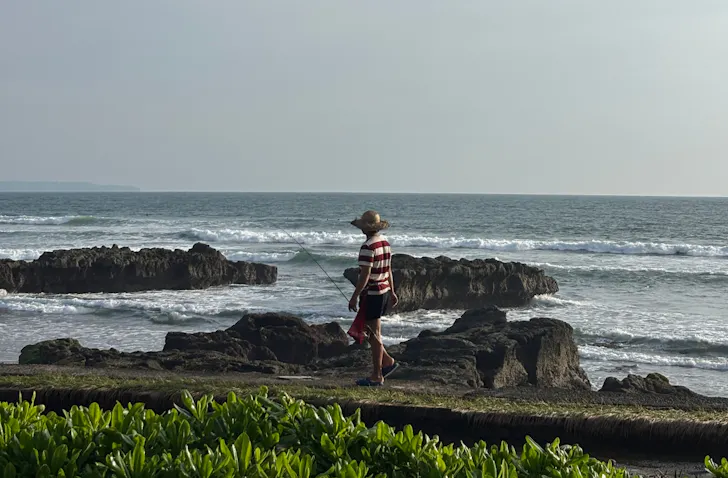
There are few destinations in Southeast Asia as simultaneously beloved and criticised as Canggu.
To some, it's Bali's wellness capital—a place where post-surf smoothies, pilates studios and laptop-friendly cafes have become as synonymous with the landscape as rice paddies and temples. To others, it's shorthand for everything that's changed about the island in the age of mass tourism.
The truth sits somewhere in between.
I've been to Bali a handful of times, but if I'm honest, I usually gravitate towards the island's southern edge. Give me Uluwatu, Padang Padang and long afternoons spent chasing swell over beach clubs any day. There's something about the Bukit Peninsula that feels distinctly untamed for me, be it the dramatic limestone cliffs, the convenience of 'Ulus' resident Ding Doctor during a four-hour surf and none of your mates wanting to leave yet, The Loft's famed smoothie bowls and not to mention a crisp Bintang paired with watching the sun go down at Single Fin.
Which is perhaps why Canggu surprised me.
On paper, the two destinations share plenty of similarities. Both are built around surf culture and both attract a global creative crowd. But the energy feels entirely different. Where Uluwatu is sprawling and elemental, with destinations spread across cliff tops and hidden coves, Canggu is denser, more walkable and arguably more plugged into the cultural pulse of contemporary Bali.
I think for first-time visitors, the challenge isn't finding something to do—but rather understanding the place beyond the version that appears on social media. After several days exploring its beaches, restaurants, markets and cultural landmarks, here's my guide to experiencing Canggu for the first time.
First, Understand What Canggu Actually Is
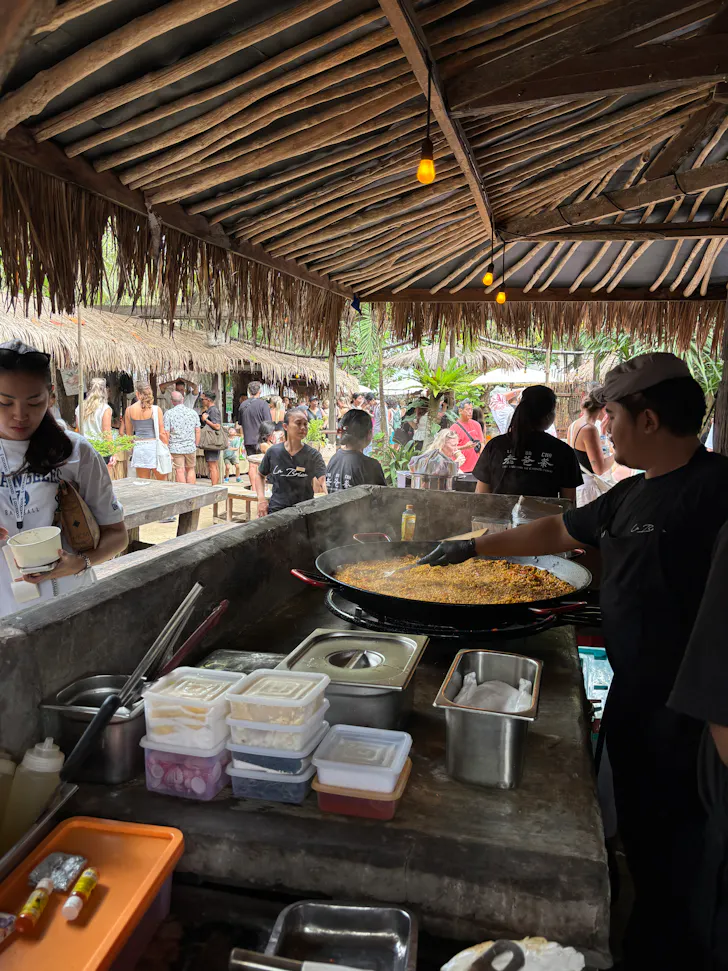
One of the biggest misconceptions about Canggu is that it's a single destination.
In reality, it's a collection of interconnected villages stretching along Bali's south-west coast. Batu Bolong is the energetic centre of the action, where surf breaks, cafes and nightlife converge. Berawa feels slightly more polished, with beach clubs, boutiques and contemporary restaurants. Pererenan, just north, offers a slower pace and is increasingly attracting creatives looking for a quieter alternative.
The result is a destination that's constantly evolving while still maintaining traces of the fishing and farming communities that shaped it. The best way to experience Canggu is by wandering—walk the laneways. Follow the scent of incense drifting from roadside shrines. Spend an hour watching the hum of scooters, surfers and daily offerings unfold around you.
Where To Stay In Canggu
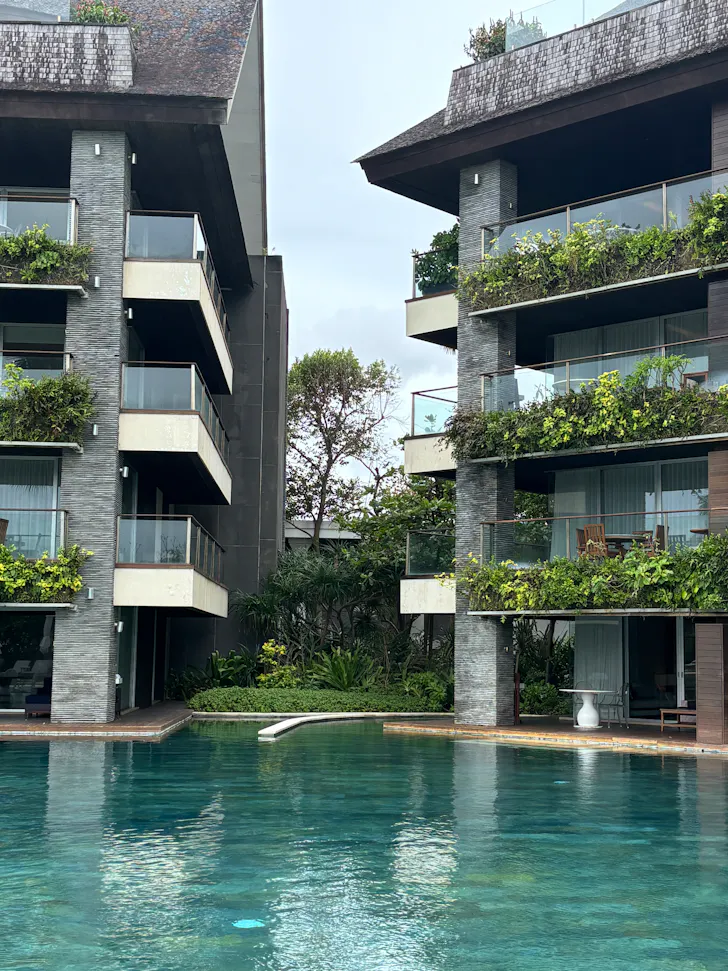
If there's one place that captures modern Canggu's appeal, it's COMO Uma Canggu.
Positioned directly on Echo Beach, the property manages to feel connected to the energy of the neighbourhood while offering genuine respite from it.
For first-time visitors, its location is difficult to beat. You're walking distance from many of Canggu's best restaurants, surf breaks and boutiques, while still having access to the resort's wellness-focused amenities.
The rooms and suites are light-filled and understated, drawing on contemporary design and natural materials rather than the overtly tropical aesthetic I've found elsewhere in Bali. At the centre of the property sits a sprawling lagoon-style pool, while the acclaimed COMO Shambhala Retreat offers yoga, wellness treatments and holistic therapies designed to restore bodies tired from long flights, surf sessions and sun-soaked afternoons.
One afternoon, I traded the bustle of nearby streets for a massage at the retreat and it was a smooth reminder that one of Bali's greatest luxuries isn't indulgence, it's actually the ability to slow down.
Breakfast at COMO Beach Club quickly became a daily ritual. Overlooking the ocean and the morning surf, my usual 'one-cup-of-coffee-a-day' inevitably became two.
The Surf Culture Every First-Timer Should Know About
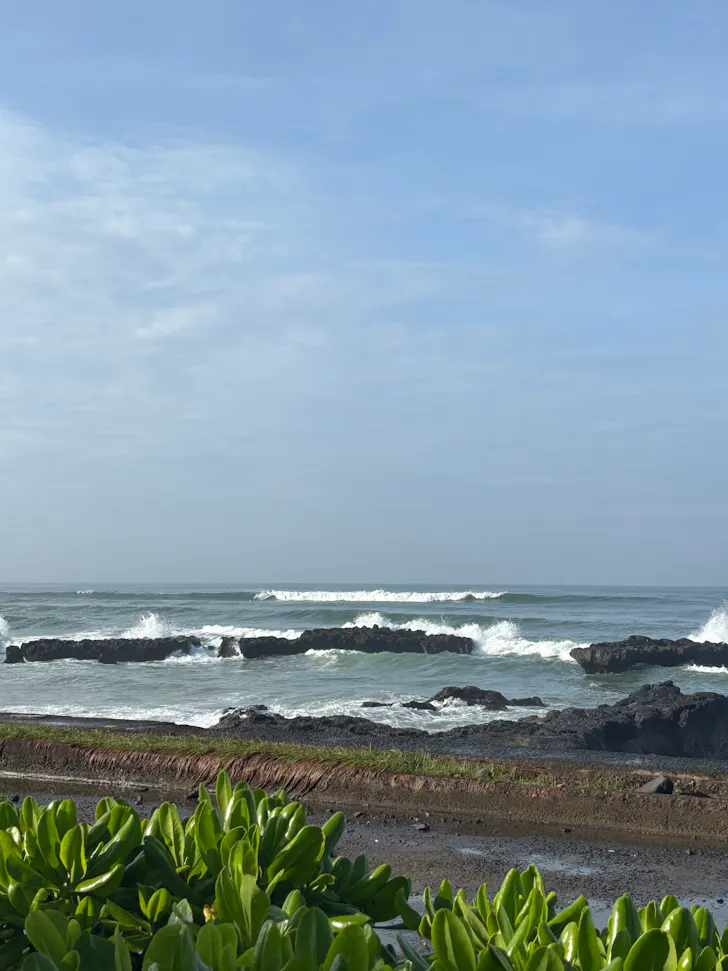
Now, whether your surf or not, it's important to know that surfing isn't simply an activity in Canggu, it's the reason much of modern Canggu exists.
As someone who usually finds themselves further south around Uluwatu and Padang Padang, I was a little surprised by how different the waves feel her. The Bukit is all reef and power. Canggu felt softer around the edges. The waves are more accessible, the beaches are busier and the line-up is a mix of everyone from first-timers taking their first lesson to seasoned locals.
Batu Bolong is the heart of it all. On any given morning you'll find dozens of longboarders trimming across slow, peeling walls while your more novice folk navigate their first green waves closer to shore. If you're learning or travelling with a longboard, this is where you'll want to spend most of your time.
A little further north, Echo Beach offers something heftier, with faster sections and more power on offer, particularly when a decent swell arrives. It's the sort of wave where you'll see everything from performance shortboards to fish shapes depending on the conditions.
Like anywhere in Bali, the ocean dictates the schedule. Tide, swell direction and wind can completely transform a session, so don't be afraid to chat to locals, surf schools or board rental shops before paddling out. Fortunately, Canggu is one of the easiest places in Bali to travel without your own equipment. Board hire is available almost everywhere, from beginner foamies through to high-performance shortboards and longboards.
For surfers, the sweet spot is generally the dry season between April and October, when offshore winds and consistent Indian Ocean swell combine to produce some of the most reliable conditions on the island.
But The Most Meaningful Thing I Did In Canggu Had Nothing To Do With Surfing
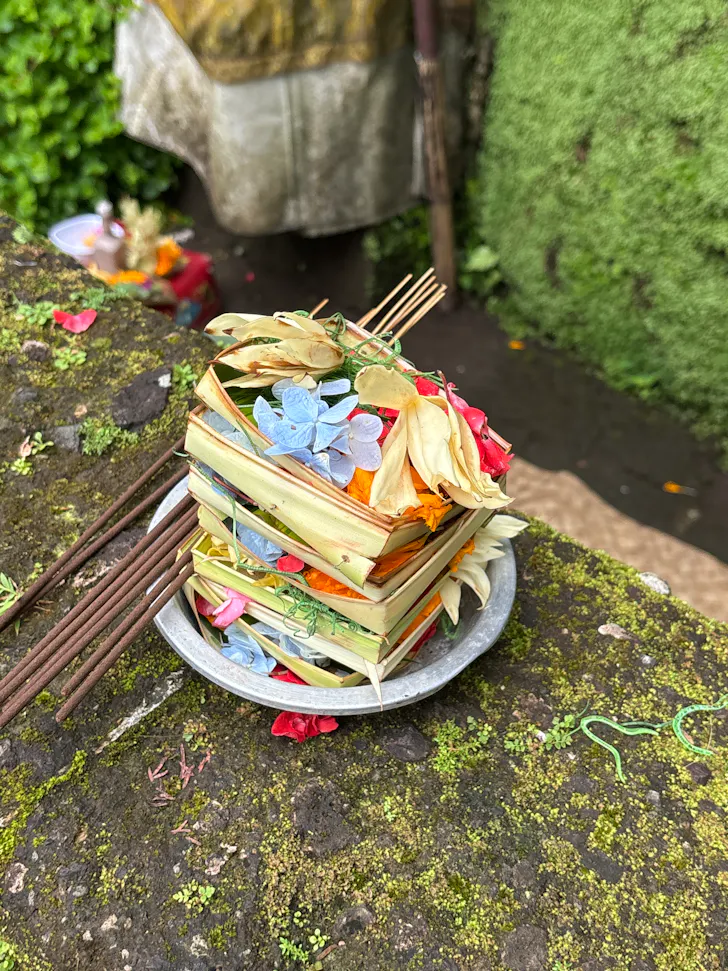
One of the easiest mistakes visitors—and yes, even surfers like myself—can make in Bali, is treating the island as a backdrop rather than a living culture.
Bali is blessed with some of the world's most beautiful beaches, remarkable hospitality and consistently good waves so it's easy to spend your days moving between surf breaks, cafes and sunset spots without ever stopping to consider the traditions that underpin daily life here.
You'll see it in the canang sari offerings placed carefully outside homes, shops and cafes each morning—small woven baskets filled with flowers, incense and offerings of gratitude. You'll notice it when a busy street suddenly slows for a ceremony, or when locals arrive at temples dressed in traditional kebaya and sarongs carrying intricately stacked offerings balanced on their heads.
So, it makes sense that one of the most memorable experiences from my trip wildly wasn't a surf session or a meal, it was taking part in a traditional melukat ceremony at Kedara Water Garden.
Located about 30 minutes inland from Canggu, Kedara feels a world away from the beach clubs and scooter traffic of the coast. Surrounded by tropical gardens, rice fields and flowing water, it's designed around one of the most important elements in Balinese Hinduism: water itself.
Melukat is a traditional purification ritual that Balinese people have practised for generations. While visitors are welcome to participate, it's actually not a tourist invention or wellness trend. For many Balinese Hindus, melukat is undertaken at important moments in life, or whenever someone feels the need to cleanse themselves spiritually, mentally or emotionally. The belief is that water has the power to wash away negative energy and restore balance.
Where To Eat In Canggu
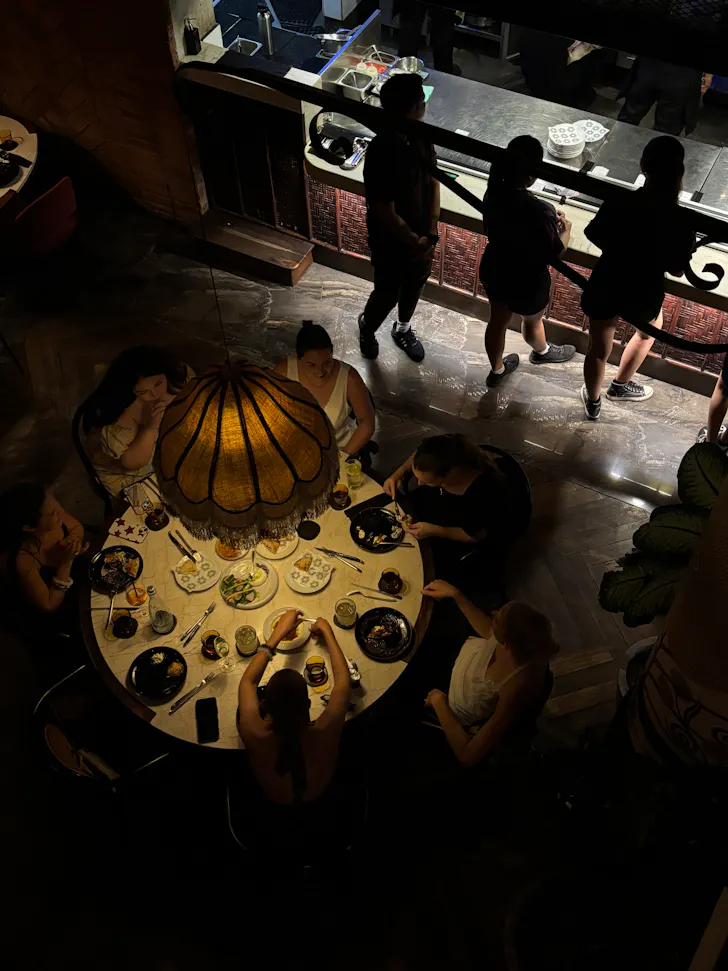
A decade ago, most visitors came here for the waves. Today, many arrive with restaurant reservations already booked. What began as a stretch of coastline known primarily for its surf breaks has evolved into one of Southeast Asia's most influential hospitality precincts, attracting chefs, bakers, coffee roasters, designers and restaurateurs from around the world.
As Bali's international community has grown, so too has its demand for the things many travellers and expats miss from home, and at the same time, Bali's location at the crossroads of Asia has created a fertile ground for culinary cross-pollination. Menus blend Indonesian ingredients with European techniques, Australian brunch culture with Japanese precision, Mediterranean cooking with local produce.
What's emerged is an hospo ecosystem—Scandi bakeries sit alongside natural wine bars. Open-fire restaurants neighbour family-run warungs. Specialty coffee roasters share streets with destination dining rooms. For food lovers, few places in Asia truly feel as dynamic.
Now, when it comes to breakfast, Copenhagen remains one of the area's most enduring institutions. Part bakery, part all-day eatery, the Scandinavian-inspired venue has built a cult following around its breakfast boards, allowing diners to curate their own spread from house-made rye, pastries, eggs and seasonal accompaniments. If you're visiting for the first time, order a cinnamon scroll, add a few smaller breakfast plates and settle in for a slow morning.
Crate Cafe also remains a rite of passage. The industrial warehouse-style space is loud, busy and perpetually packed with surfers fresh from the water and creatives tapping away on laptops. The portions border on absurd and that's entirely the point. Meanwhile, The Shady Shack offers a completely different energy. Hidden amongst lush tropical gardens, it's one of the few places in Canggu that still feels slightly removed from the pace of the surrounding neighbourhood. Order one of the cafe's famous smoothie bowls and claim a table beneath the trees.
For lunch, Penny Lane remains one of Canggu's most visually arresting venues, the venue combines towering Roman-inspired sculptures, dramatic archways and an enormous glass ceiling. The burgers remain a crowd favourite, though the real appeal is lingering over lunch and taking in the architecture.
Nearby, Sensorium is the sort of place hospitality people tend to recommend to other hospitality people (you're welcome). Helmed by Australian chef Will Meyrick's protege team, the menu draws on both Australian cafe culture and Asian flavours. The pulled brisket benedict has become something of a local institution for good reason.
Controversial opinion, but I do think dinner is actually where Canggu truly shines.
Masonry was one of the restaurants that helped redefine dining in the area and remains just as relevant today. Founded by New Zealand hospitality group NZR, the restaurant's open kitchen, timber-lined interiors and wood-fired cooking continue to set the benchmark for modern neighbourhood dining in Bali. Order the wood-fired flatbread, whatever cheese is being featured that week and one of the larger proteins designed for sharing.
Perched above Batu Bolong, Skool Kitchen takes a more elemental approach. Everything revolves around fire. Fish, vegetables and meats are cooked over open flames with the ocean visible from almost every table. Arrive before sunset and order a cocktail before settling into one of Bali's most atmospheric dining rooms.
During my visit, however, it was Santanera and Sa'Mesa that left the strongest impression.
Spread across three levels in the heart of Canggu, Santanera feels like the kind of venue that could comfortably exist in Melbourne, Singapore or Barcelona. Helmed by Argentinian chef Cristian Encina, the restaurant draws on Mediterranean and Latin influences while championing Indonesian produce. The fit-out is equally impressive, combining warm timber, textured stone and an open rooftop that becomes one of Canggu's best spots for sunset drinks.
Then there's Sa'Mesa, arguably one of Bali's most talked-about dining experiences. Inspired by traditional Italian communal dining, there is no menu in the conventional sense. Instead, guests gather around a long shared table while a seemingly endless procession of dishes arrives from the kitchen. The experience is chaotic, generous and deeply social.
How To Visit Canggu Without Contributing To Overtourism
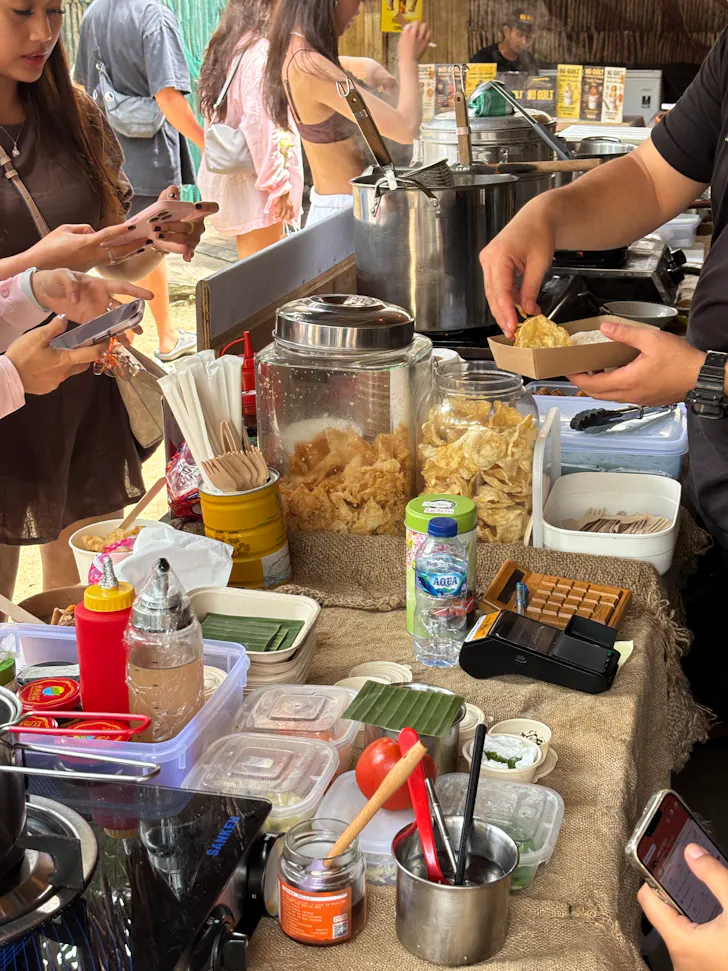
No guide to Canggu would be complete without acknowledging the conversation around overtourism.
The neighbourhood's popularity has brought undeniable benefits to the local economy, but it has also placed pressure on roads, housing and community infrastructure. While these are issues far bigger than any individual traveller can solve, there are small ways to travel more thoughtfully while you're here.
Start with understanding that Bali operates on a different rhythm to Australia. If a ceremony is taking place, traffic may stop. If a procession is moving through the street, people wait. If you're visiting a temple, cover your shoulders and knees, follow the guidance of local staff and remember that you're entering an active place of worship, not just a tourist attraction.
One of the easiest ways to engage more meaningfully with Canggu is through food. Between your reservations at Santanera or Masonry, make time for a meal at a local warung. Spots like Warung Bu Mi, Warung Sika and Warung Jaba serve some of the most satisfying food in the neighbourhood, with generous plates of nasi campur, ayam betutu, curries, vegetables and sambals for a fraction of the price of many tourist-focused venues.
Shop at the Canggu Markets and speak to the makers behind the stalls. Book a surf lesson with a local instructor. Learn a few simple phrases such as terima kasih (thank you) and selamat pagi (good morning). They're small gestures, but they're noticed and appreciated.
When To Go To Canggu And How To Get There

For first-time visitors, the dry season between April and October offers the most reliable weather, with warm days, lower humidity and favourable surf conditions.
One of the reasons Bali has remained such an enduring favourite for Australian travellers though, is its accessibility. Despite feeling worlds away from home, Canggu is little more than a six-hour flight from Australia's east coast, making it just as suitable for a long weekend as it is a two-week surf trip.
Virgin Australia currently operates up to 35 return services each week between Australia and Denpasar, including up to seven return flights per week from Sydney to Bali and up to 13 return flights per week from Melbourne to Bali.
For anyone looking to simplify the planning process, Virgin Australia Holidays combines flights and accommodation into a single booking, with Bali remaining one of the platform's most popular destinations. A package pairing Virgin Australia flights with a stay at COMO Uma Canggu offers an easy introduction to the neighbourhood, placing travellers directly on Echo Beach and within walking distance of many of Canggu's most talked-about restaurants, cafes and surf breaks.
If Canggu has been sitting on your travel list for a while, now is a particularly good time to start planning. Flights to Bali and holiday packages are currently available through Virgin Australia Holidays, including select packages combining return flights and four nights' accommodation from $745 per person for travel between July 2026 and March 2027.
Image credit: Jessica Best