Field & Green Have Turned Wellington Restaurant Capitol Into A Lyon-Inspired Bistro For Two Months
For a while there we all seemed to look away from France. Not entirely, obviously. French cooking never disappeared and much of what happens in professional kitchens still owes everything to it, but it stopped feeling like the place everyone was taking inspiration from. The interesting stuff was happening elsewhere. Japan, Spain, Mexico, Thailand. Fermentation. Fire. Small plates. Things cooked over charcoal and things served raw. French food, with all its cream and butter and sauces and complicated things started to feel a little old fashioned.
And then, almost without anyone noticing, it became exciting again. Look at London. Bouchon Racine is almost comically difficult to get into and was recently named the best restaurant in the UK. Josephine is serving the food of Lyon in Chelsea. Camille opened near Borough Market with a menu based around regional French cooking. Bistros and brasseries cropped up across Auckland.
There is something particularly satisfying about food coming back around like this. Especially food that never really needed fixing in the first place. A properly made pâté en croûte is not improved by being deconstructed. A good peppercorn sauce doesn't need an interesting new interpretation. Sometimes the interesting thing is somebody taking something very old and doing it really, really well.
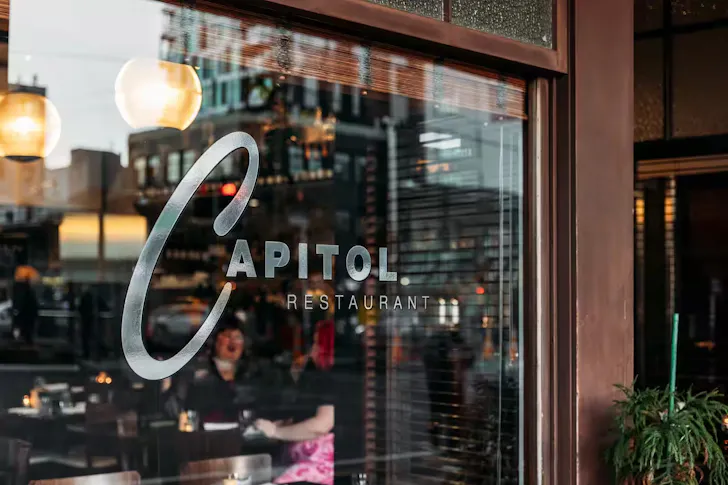
Which makes Laura Greenfield's next move feel particularly well timed. For the next two months, Greenfield has been given the keys to Wellington’s Capitol restaurant and she is going to turn it into a bouchon inspired by the female chefs of Lyon.
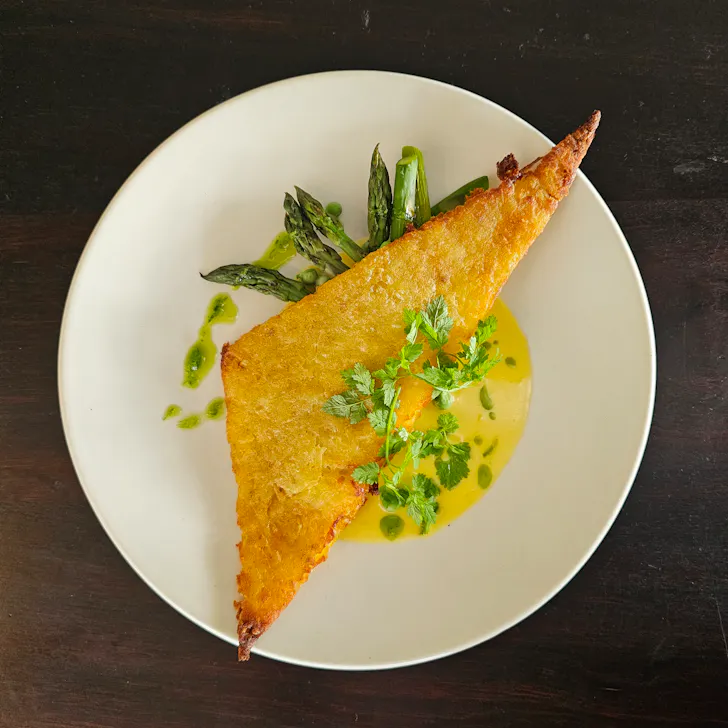
Image Credit: Field & Green | Supplied
Greenfield is probably best known in Wellington for Field & Green, the restaurant she opened with her partner Raechal Ferguson after the pair moved here from London in 2014. For eight and a half years it sat on Wakefield Street serving what they called European soul food, a description broad enough to encompass Greenfield's Jewish heritage and the food she had spent a lifetime cooking and eating across Europe. It sadly closed at the end of 2023.
Since then, Greenfield has cooked all over the place. Guest dinners, events, pop-ups. She has come to quite like it. There is a freedom in people coming to wherever she happens to be cooking rather than standing inside a restaurant every day wondering whether anyone is going to walk through the door. This Capitol residency is happening because friends and owners Tom Hutchison and Kate Prichard wanted to go to a wedding in London and, more importantly, have an actual holiday. Initially the idea was floated of Greenfield taking over for six months. She said no. Two months was manageable.
The question then became what to do with it.
Last year Greenfield cooked three dinners at Alma House under the excellent name Queens of Lyon. The menu was based around the Mères Lyonnaises, the group of women who helped establish Lyon as one of the great food cities of the world. Many had begun cooking in wealthy households before leaving to open restaurants of their own. Among them was Eugénie Brazier, who became the first chef to run two separate three Michelin star restaurants at the same time and whose kitchen would later train the legendary Paul Bocuse.
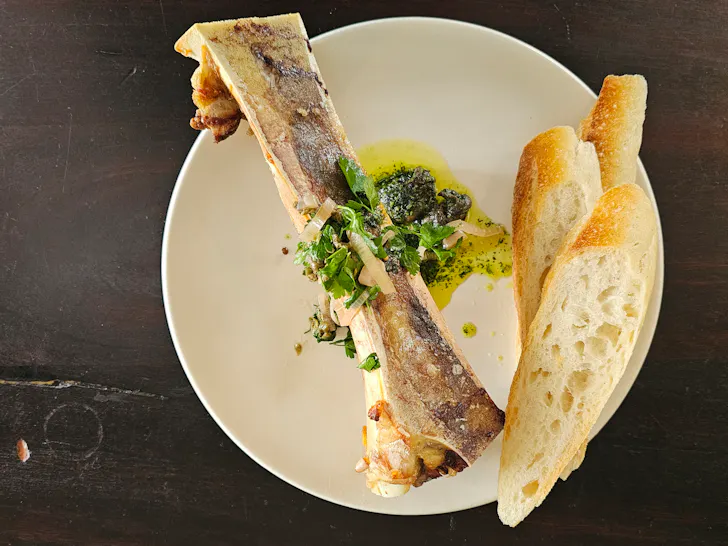
Image Credit: Field & Green | Supplied
There is something in these women that Greenfield clearly recognises. Her route into restaurants wasn't always the plan. She wanted to be an actor, her parents sensibly suggesting she learn how to do something else as well. The choice was either cooking or secretarial work. So before drama school she spent three months at Le Cordon Bleu. She did go and get an Equity card and an agent, but knew that acting probably wasn't going to pay the rent. Cooking could and eventually it stopped being the backup.
There were restaurants in London, six months cooking in Australia, and then most significantly 12 years at Sotheby's on Bond Street, where Greenfield ran its public restaurant. She even wrote a cookbook there too. It sold around 50,000 copies, something that became pleasingly tangible earlier this year when she walked into a secondhand cookbook shop in Melbourne and found one staring back at her from the shelf.
And now she will be on the hobs at Capitol with a menu she has been researching and testing for quite some time. There is nothing particularly coy about any of it. Snails. Bone marrow. Tongue. Quenelles with crayfish sauce. Steak au poivre. Fish à la Grenobloise. Chicken with truffle and cream. Pink praline tart.
Proper French food.
The tongue makes particular sense to Greenfield. She grew up in a Jewish family where food was a constant and Friday nights meant big family dinners. Her mother cooked the sort of elaborate Cordon Bleu food fashionable at the time and would make three or four desserts when people came over. Tongue was simply part of the food Greenfield grew up around.
Other parts of the menu have required considerably more work. The pâté en croûte has been driving her mad. The pastry kept going soggy. Greenfield tried again. Still soggy. Eventually she decided that if the traditional long mould wasn't going to work, there wasn't much point continuing to lose an argument with it. Her version will instead be cooked in a round tin, almost like a cake, giving the pastry more opportunity to cook around the sides. Madeira jelly will be poured across the top, and cornichons and Dijon will be served alongside.
There is cervelle de canut, literally silk worker's brains, which contains absolutely no brains. Lyon was once at the centre of the European silk trade and the dish, made from fresh cheese, herbs and aromatics, takes its name from the city's Canuts, or silk workers. Greenfield tells me the name was essentially a joke at their expense. The bourgeoisie thought the workers were idiots; their brains, therefore, were soft cheese.
History is littered throughout the whole menu, but Greenfield is very clear that nobody is going to have to sit through a lecture before they are allowed dinner. Ferguson has been doing much of the research and sharing stories about the women and dishes behind the menu online. People can read all of it if they want to.
Even the wine has a strange little bit of Lyon attached to it. Greenfield and Ferguson had been trying to find the traditional heavy-bottomed pots that were used to serve wine in the city's bouchons. The story goes that silk workers were supposed to receive half a litre of wine, but the thick base of the vessel displaced enough liquid that they actually got around 460ml. The bosses had found a way to rip them off even while giving them free wine. They couldn't find the proper pots here, but they're serving 460ml anyway.
There is something pleasing about all of this happening at Capitol. It has been open since 2002 and is one of those Wellington restaurants that has managed to exist for so long that it can be easy to stop noticing how good it is. Hutchison's food normally filters New Zealand produce through an Italian lens, served without much unnecessary intervention on big white plates. It is much like what Greenfield is planning, but with Lyon instead.
On Friday 30th it opened for two months. This is no attempt to reinvent what a restaurant can be. In fact, almost precisely the opposite. Food with a century or more behind it, cooked because it is delicious rather than because anyone has found a particularly clever new thing to do with it. Two months of snails and tongue and quenelles and pâté en croûte. French wine in slightly strange quantities. Butter and cream and proper sauces. Gluttony at its absolute best.
See more Urban List in Google Search.