Wellington Restaurant Supra Is Back And Bigger And Better Than Ever
Thom Millot likes things the way he likes them. This is probably true of most chefs, but with Millot it feels particularly apt. There is very little committee thinking in his food or following any sort of prevailing trend. At the first iteration of Supra there wasn’t much interest in unnecessary garnishes or plating something in an elaborate fashion for the fun of it. The service followed much the same logic; straightforward, attentive, no messing around. Asked once to explain the restaurant, Millot eventually landed on perhaps the simplest version of it: “all the things I want and expect when going out for a meal.”
The problem was that eventually the restaurant itself couldn’t keep up with him.
Supra’s original home was almost absurdly small. Seventeen seats tucked into a room with a kitchen built around one charcoal-fired oven and a small induction hob. There was nowhere to hide, but there was also increasingly nowhere to put anything. For a while that was part of the fun. Millot built the food around what was possible. Fire did most of the heavy lifting. Produce was sourced impeccably and never messed about with unnecessarily. His mantra was to find the most logical thing to do with the ingredient in front of him. The restaurant became one of the most interesting places to eat in Wellington while operating with considerably less equipment than many suburban kitchens, winning best new restaurant of the year at the 2025 Cuisine Good Food Awards.
Image Credit: Calvin Miralles | Supplied
Then Millot ran out of room. Not metaphorically. There was nowhere for another fridge. Nowhere for another piece of equipment. Prep had to be designed around storage as much as flavour. A new dish could be a good idea and still be impossible simply because there was nowhere to put one of its component parts overnight. “I’d exhausted my resources,” he says.
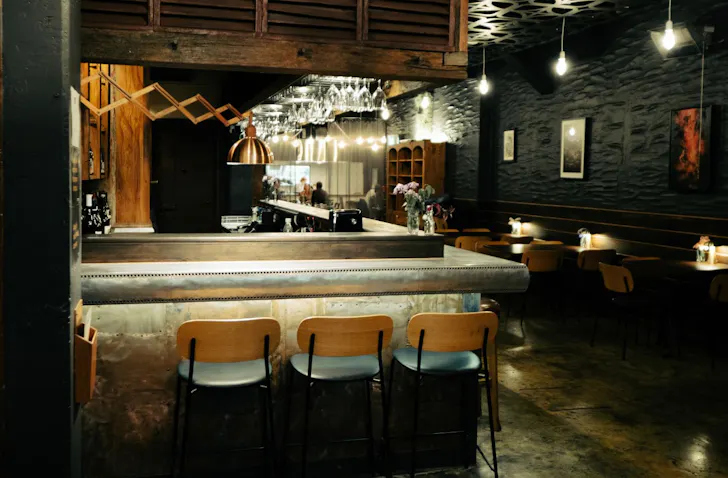
So he has done something about it. The new Supra is bigger, the dining room is three times the size but feels every bit as punk as the first spot. High ceilings sit atop textured walls painted such a dark blue it almost seems black; but, finally, the restaurant has room to breathe. And it comes with a new bar, too. Maru sits alongside but separate from the main restaurant, and gives diners the chance to pop in for a drink and something small from the menu, perhaps explore the vermouth list and try something new.
But the most exciting bit is what sits behind the bar and the dining room. There is a proper kitchen now. Storage. Refrigeration. Space for lacto-fermentation. A deep fryer. Room for crackers, crisps, garnishes and all the fiddly little bits that simply couldn’t exist before because there was nowhere for them to go.
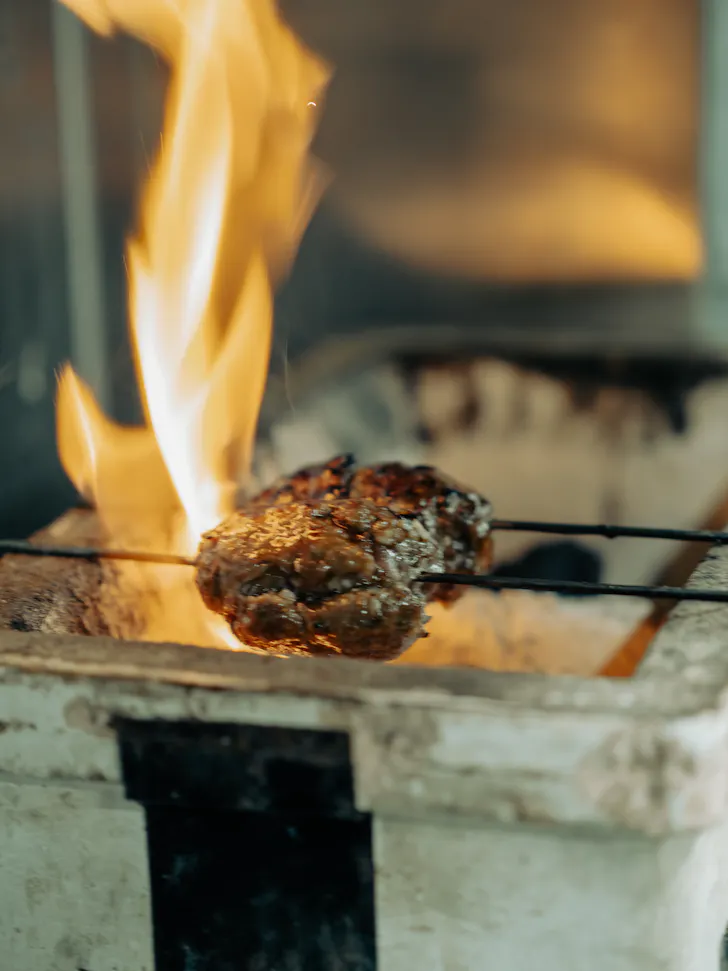
Image Credit: Calvin Miralles | Supplied
“The only limit is our own creativity and our own work ethic,” Millot says. “There’s nothing that the site has holding us back.”
This could be dangerous in the hands of a chef who enjoys mucking about and doing things for the sake of them. Fortunately, Millot doesn’t. Before Supra there was Amok, the restaurant where his cooking was louder and more aggressive. Asked to reduce that food to its basic components, Millot comes up with three: “acid, spice, smoke.” Over time Supra went somewhere else. Sweeter. More umami. Millot describes it as food that had become more attuned to a New Zealand palate than necessarily his own. Now he wants some of that old aggression back.
The funny thing is that given all this new equipment, you might expect the food to have become more complicated. And in fairness it has, you just can’t see it. Thom’s food belies its complexity; you will often look at a plate and see a handful of things, maybe some mushrooms and grains, or a beautifully cooked piece of meat next to some cabbage and mustard. You think you’ve eaten this food before. Trust me, you haven’t.
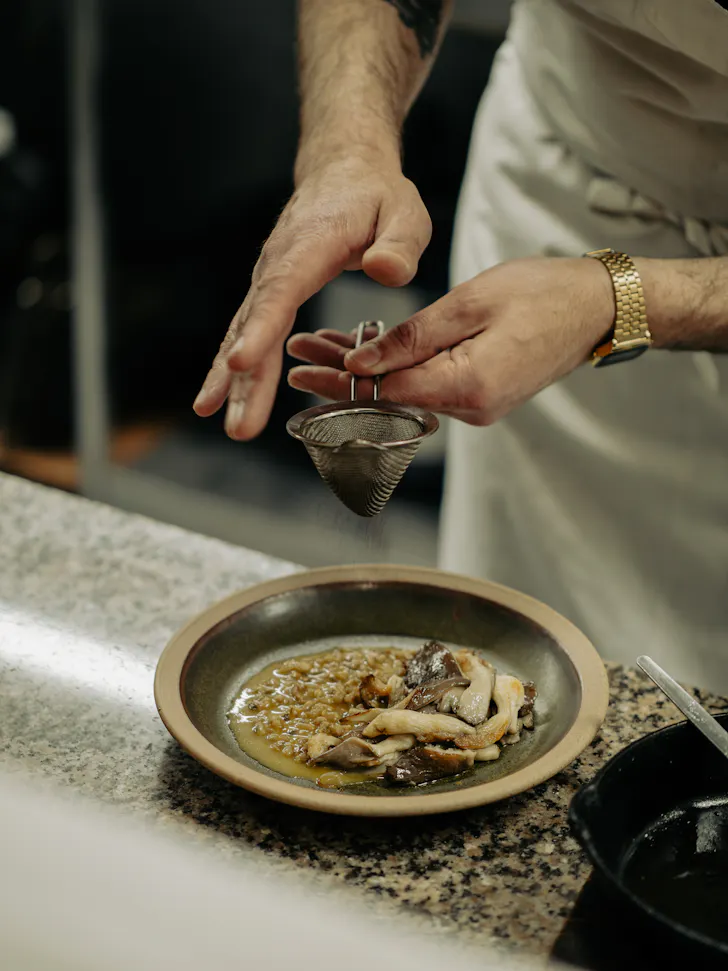
Image Credit: Calvin Miralles | Supplied
The iconic focaccia is blistered and tall in a way that defies gravity, chewy and firm with properly burnt edges. So often focaccia is basically a texture, a vessel for something else. This has actual flavour; sweet and tangy and adult. It comes with Kiwi onion dip and the whole thing might be the perfect summation of the food here. So serious but with a broad smile. Luxurious and fun.
The menu veers excitedly and assuredly from place to place, well known ingredients treated in new ways. Mussels escabeche is full of heat and sour and punch. Prawn toast comes thick and pillowy packed to the brim with filling and swimming in a pil pil sauce. Monkfish is pearlescent and firm in a broth with an almost unreasonable amount of umami.
Then there is the tartare on potato. Soon to be known as one of the best dishes being cooked in Wellington. The potato rosti-style oblong is crisp but quickly gives way to soft, properly unctuous potato. Piled high on top is cut steak carrying heat and herbs, with smoke somehow hanging around in there too. A cured egg yolk sauce brings the whole thing together.
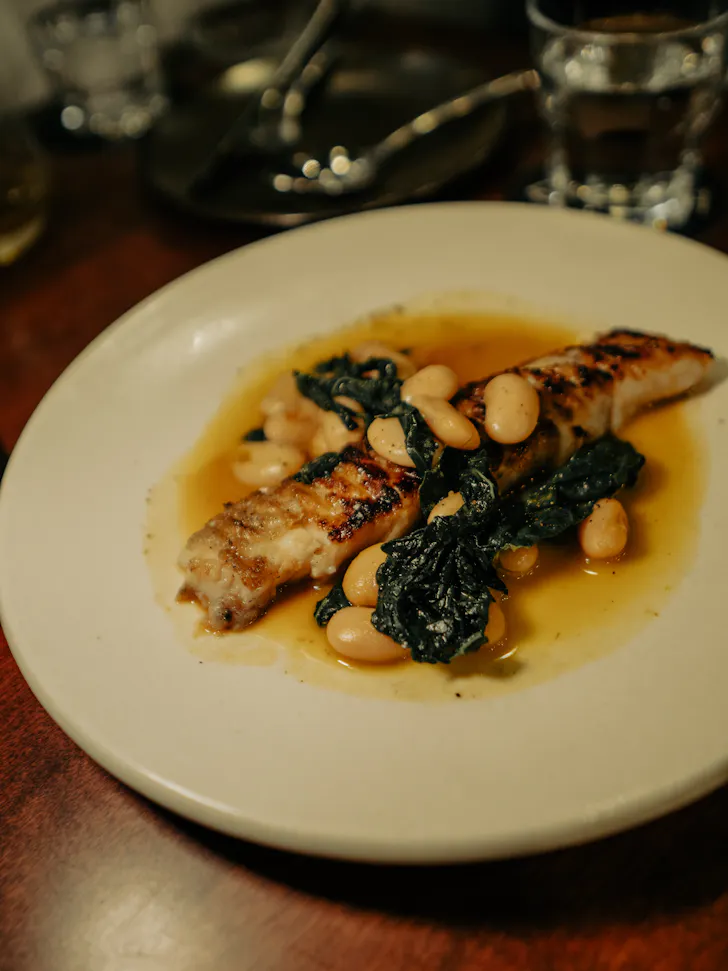
Image Credit: Calvin Miralles | Supplied
Halloumi, grapes and barbecued carrot is perhaps even more representative of the new Supra. The halloumi has the density and satisfaction of eating a steak, and the grape salsa walks forward all jazz hands and vibrancy. The carrot purée tastes like the carrot has been pulled from the earth, put straight over a fire and somehow condensed down into itself. The Barnsley chop has come across from the old Supra almost untouched. Lamb, lacto-fermented cabbage, fennel purée and lamb jus.
Just a few ingredients presented simply, an enormous amount of work hidden inside them.
As a city, Wellington has been eating Millot’s food for years—this new chapter is without doubt the best it has ever been. That isn’t because he suddenly has more equipment, although clearly it helps. It is because the new kitchen has removed the practical reasons for him not to follow an idea as far as he wants to take it. The food can look almost comically straightforward, then reveal itself in layers. Familiar dishes turn out not to be particularly familiar at all. Things you think you have eaten before suddenly taste like something else.
For years, the interesting thing about Millot’s cooking was what he managed to do without. Now comes the considerably more exciting bit; he gets to do whatever he wants.
See more Urban List in Google Search.