Bradfield City Centre: Inside Australia’s First New City in 100 Years
 Eloise Luke
Deputy Editor (Local Markets) | Urban List
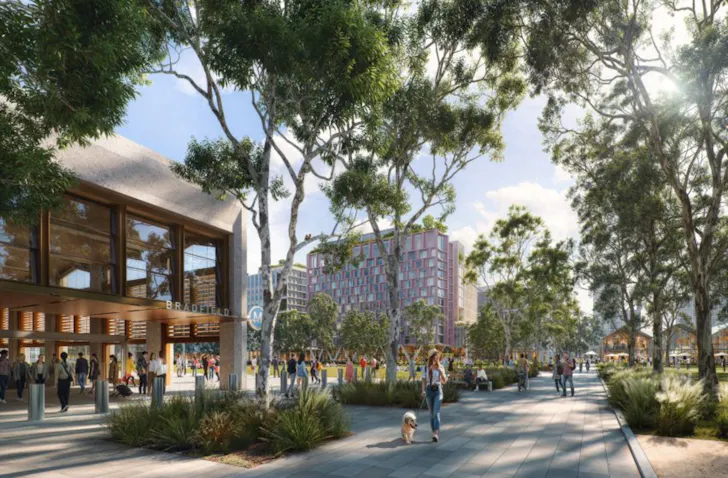
Western Sydney isn’t just getting a new airport—it’s getting a brand new city.
Set beside Western Sydney International Airport, Bradfield City is being positioned as Australia’s first major new city built in more than a century. The 114-hectare masterplan includes 10,000 homes, a university campus, major green space and a cutting-edge manufacturing hub designed to anchor the region’s economic future.
The first building is already complete—and it sets the benchmark for everything that follows.
Here’s everything you need to know about Bradfield City in Western Sydney, and what happens next.
Jump to:
- Where Is Bradfield City And What Is Being Built?
- What Is The First Building In Bradfield City?
- How Sustainable Is Bradfield City?
- What Bradfield City Means For Western Sydney
- How You Can Help Name Bradfield City
Where Is Bradfield City And What Is Being Built?
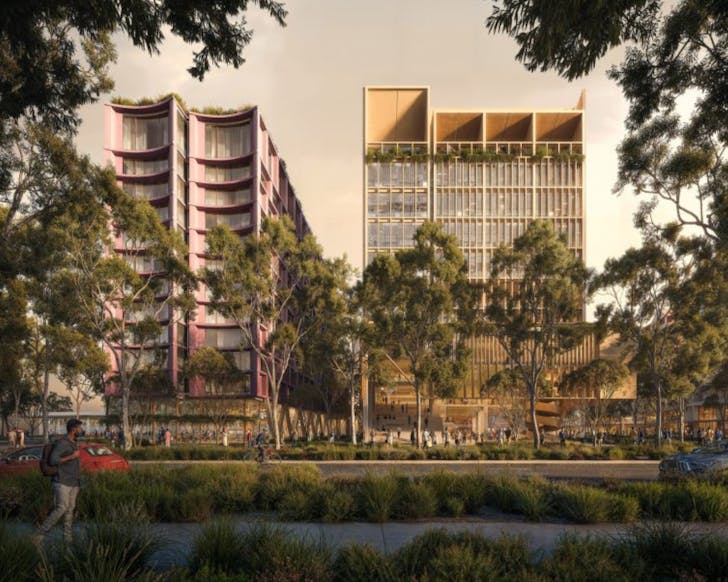
Bradfield City is located at Badgerys Creek within the Western Sydney Aerotropolis, around 50 kilometres west of the CBD.
The masterplan has been led by Skidmore Owings & Merrill (SOM) alongside Australian studio Hassell, in collaboration with First Nations cultural design agency Djinjama.
Plans for the city include:
- 10,000 homes
- A university campus
- Offices, retail and hotel space
- A two-hectare Central Park
- A 2.2-kilometre Green Loop
- Four major civic centres
The first stage (known as Superlot 1) will deliver 1,400 homes alongside education, commercial and public spaces, forming what’s being described as the city’s civic heart.
Backed by more than $1 billion in public investment and delivered by developer Plenary, construction on the initial precinct is expected to roll out over the next five years.
What Is The First Building In Bradfield City?
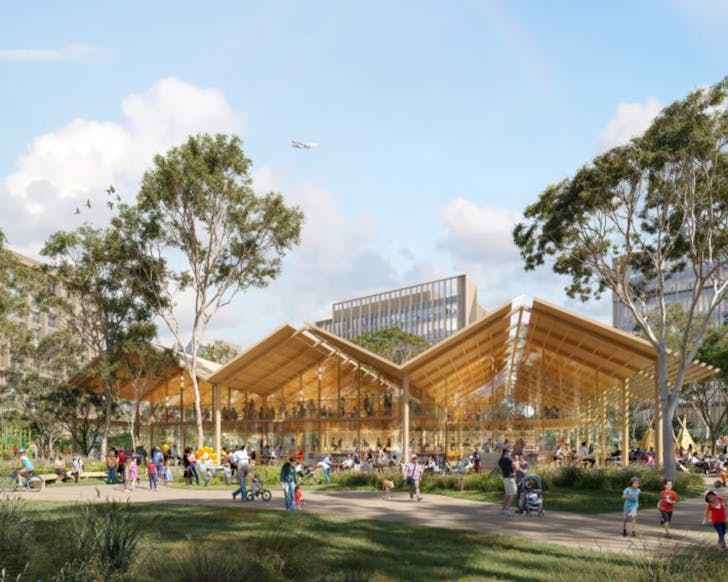
Before the apartments and towers rise, the First Building has already opened as the city’s foundation piece.
Housing Stage 1 of the Advanced Manufacturing Readiness Facility (AMRF), it functions as a collaborative hub for government, industry and research to prototype and scale innovative manufacturing projects.
But architecturally, it’s doing something more significant.
Designed as a human-scale urban pavilion, the building provides public space within what will eventually become a dense city centre. It includes a visitor centre and viewing areas where people can observe the real-time development of Bradfield.
In Dharug language, the area is known as Wianamatta, meaning “Mother Place”—a site of cultural significance for First Nations women. The building’s form and materiality draw on water systems of the Cumberland Plain, using warm timber and natural materials to create a structure that feels connected to Country rather than imposed on it.
How Sustainable Is Bradfield City?
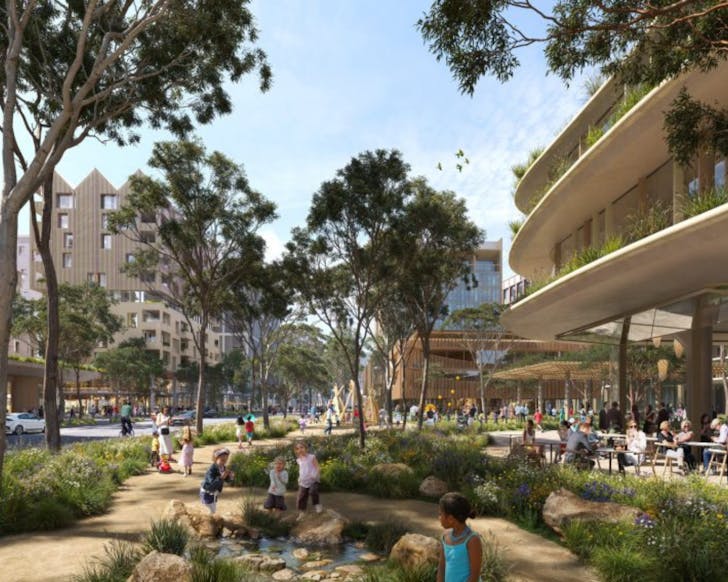
Sustainability has been embedded into Bradfield City from the outset.
The First Building reinstates permeability across the site, collecting and filtering runoff through planted landscapes featuring Cumberland Plain species. Rainwater is captured and reused for greywater and irrigation, while nearby waterways—including the longest freshwater stream in Greater Sydney—are being regenerated to support biodiversity and natural filtration.
The building itself has been conceived as a modular “kit of parts.” Its prefabricated timber components are mechanically fixed, meaning they can be disassembled, expanded or relocated in the future—a circular economy approach rarely seen at this scale.
Across the broader city, sustainability strategies include passive design, green roofs, solar panels and climate-resilient public space woven through housing and commercial areas.
What Bradfield City Means For Western Sydney
With Western Sydney’s population forecast to reach three million by the 2030s, Bradfield City represents more than new housing.
Positioned alongside Western Sydney International Airport, it’s designed to become an economic engine—creating jobs across advanced manufacturing, education, research, tourism and hospitality.
Rather than expanding outward, Bradfield is being built to be intentionally dense, walkable, connected to transport and grounded in Country from day one.
How Can You Help Name Bradfield City?
The NSW Government is asking the public to help name streets, parks and other public spaces across Bradfield City.
The first place up for naming is the two-hectare Central Park, with First Nations names that reflect its role as a welcoming gathering place particularly encouraged.
For the wider city, suggestions can celebrate First Nations connection to Country, Western Sydney’s diversity and achievements, or Australian innovation and excellence.
Submissions will be considered for a name bank to be used as Bradfield City continues to grow, with community feedback reviewed against Geographical Names Board requirements.
Image credit: Skidmore Owings & Merrill (SOM)

The New Western Sydney International Airport Will Open This October—Here’s Everything To Know

Biennale Of Sydney 2026 Is Taking Over The City With Rememory

Sydney Opera House’s All About Women Festival Is Back For 2026—And The Lineup Is Stacked
See more Urban List in Google Search.