
Yum Club: Come For The Yakult Slushie, Stay For The Tom Zap Pork Short Ribs
It’s 5:28pm on a Wednesday afternoon as myself and a few work mates hurl ourselves out of an awkwardly parked Uber in Surry Hills.
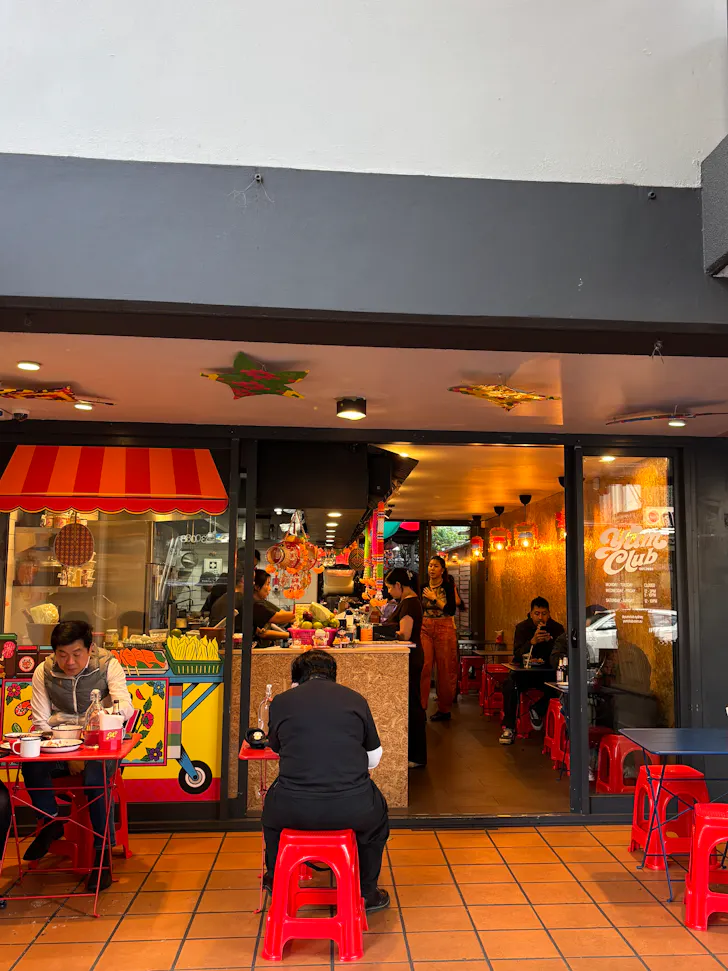
Yum Club is hard to miss, with its red stackable PVC stools grid-ironed across Crown Street. The narrow shop (of what was formerly a Korean fried chicken takeaway joint) glows a deep, syrupy orange. Walking in, a hefty clay mortar sits just behind a chipboard counter, within arm’s reach of a pink plastic basket piled with limes, red onion and a solid wedge of cabbage. Above, garlands in pink, orange, yellow and blue loop beneath wire racks loaded with takeaway containers.
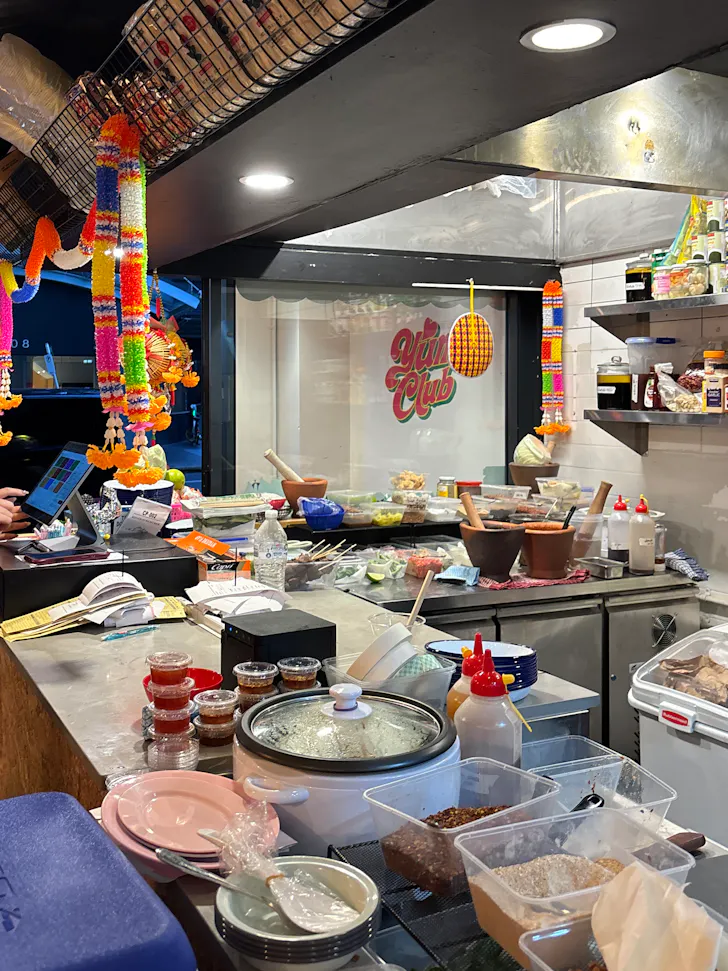
Before we even nab a seat, there’s a lot to take in—a lucky cat by the menus, a small congregation of figurines and a stack of dark blue plates ready for service. Behind the counter, plastic tubs of dried chillies, toasted rice powder, a rice cooker sits among sauce bottles and disposable containers. There’s even an esky the size of a small washing machine.
It’s all wonderfully very busy but there’s more going on at Yum Club than the colourful shopfront might suggest. This little pocket of Surry is dedicated to dishing up a particular kind of regional food: the punchy, fermented, chilli-heaving cooking of Isan, in northeast Thailand.
“You won’t find the usual Pad Thai, coconut-based curries, fried rice or spring rolls here,” co-founder Rowena Chansiri tells us.
“What I love about Isan food is how much flavour comes from simple ingredients and traditional techniques. Rather than relying on rich sauces or coconut milk.”
Cooking is built around a handful of ingredients that do a lot of heavy lifting. Fresh herbs, lime, chilli, toasted rice and fermented fish all have their place, bringing layers of sourness, heat and savouriness to dishes and sometimes, all three at once. Som tum, the region’s famous pounded salads, and yum, a family of dressed salads, are particularly good examples of this, says Rowena.
For Rowena, who grew up in Bangkok surrounded by the Isan community, the food is familiar territory. One of her business partners, Rujirada Wongswadiwat, was born and raised in Buriram, an Isan province where her mother ran a som tum shop. Those family connections are a big part of what brought Yum Club to life, and why the team is so particular about the food they’re putting on the table.
She goes on to explain how Isan’s culture has been shaped by agricultural landscape and generations of making the most of what was available, fermentation central to it all. Everything from freshwater fish to tiny field crabs is preserved and fermented, developing deeply salty flavours that give so many Isan dishes their backbone.
“Traditionally, people working in the rice fields would also carry sticky rice in bamboo containers, along with chilli relishes, fresh herbs and whatever they had prepared at home, “ she says.
“Grilled meats, sticky rice, papaya salads and herb-packed dishes became an important part of everyday eating.”
There’s plenty of food to share (in fact, that’s the way to go) and enough chilli to keep anyone who can cop a bit of heat, very happy. Mind you, they’re not expecting everyone to launch themselves straight into the deep end. The menu works on a spice scale from zero to three, with zero completely chilli-free and three getting close to the kind of heat you’d find in Isan.
But there’s a much more interesting story to tell than just calling it ‘spicy Thai food’.
If Rowena’s name rings a bell, you might know her from AMA, the little Thai-Chinese, slow-braising nook just down the road, or Ickle, a coffee spot in Sydney’s South. Yum Club, her third venue, is a different beast in its own right. Where AMA is about “comfort and depth”, Yum Club is about “exploration, energy and having fun around the table,” Rowena mentions.
Get to the menu and it’s broken up into fried dishes, skewers, things from the grill, soupy bowls, som tum, yum and other Isan staples. Rowena is especially keen to get people onto the soups and stews, a side of north-east Thai cooking she reckons is still relatively underrepresented outside Thailand, especially in Sydney. These are full of herbs, fermented flavours and sour, chilli-laden broths.
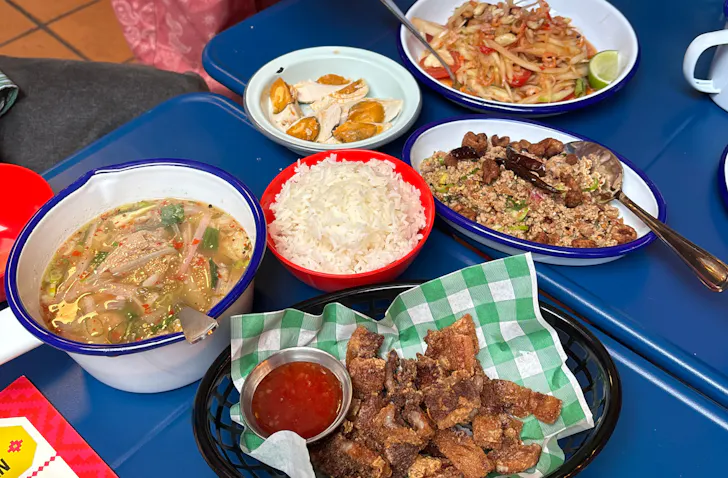
Big on our recommended feeds is the tom zap pork short ribs—slow-cooked pork, soft enough to fall apart, swimming in a clear, broth loaded with lemongrass, galangal and makrut lime leaves. Holy, if anything.
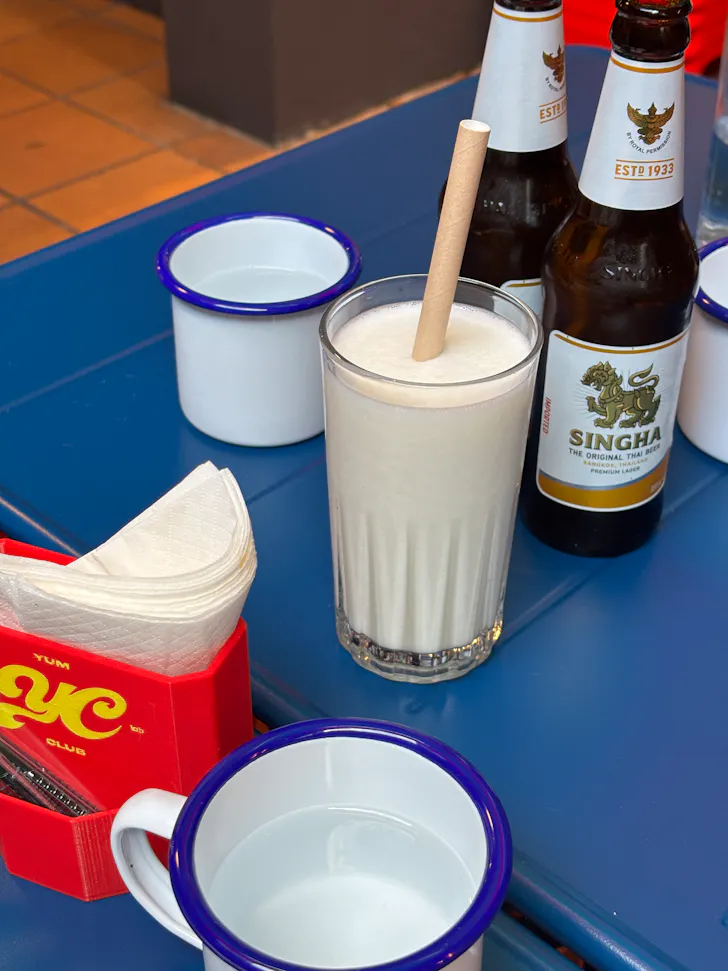
The duck larb is worth getting into too. It’s a minced duck salad with plenty of lime, chilli, fresh mint and shallots, plus toasted rice powder, a bit of an Isan staple that brings this nuttiness and texture into the mix. The whole thing gets doused with crispy fried chillies and crackling duck skin scattered over the top. There’s a Yakult slushie (which can easily be flipped into a Yakult Margarita) to take the edge of that heat, if you need.
If you’re looking to get a little further acquainted with the region’s fondness of fermentation, the sour pickled fish, fried until golden brown and served with crisp cos lettuce, chilli, garlic and a squeeze of fresh lime, is where it’s at.
“It’s a dish that can be quite unexpected for people who haven’t grown up with these flavours,” Rowena explains.
“You get the richness of the fish, the punch of fermentation, the freshness of the herbs and lettuce, and that sharp hit of lime. It’s almost like a little party on your palate.”
And if you’ve made it this far, you may as well take a look at the skewers. Alongside more ‘familiar’ cuts, there’s chicken hearts, chicken liver and pork intestine, all of which Rowena suggests are worth your time.
“We’ve put a lot of work into getting the marinades, seasoning and cooking just right,” she says.
“We love seeing people try them for the first time and realise how much they enjoy them.”
Image credit: Urban List