
James Parr Fell Into Modelling By Accident, But Found Purpose In Rewriting Disability Representation

There’s a moment that James Parr keeps coming back to. He’d just made his runway debut at Melbourne Fashion Festival, not long after “accidentally” falling into a modelling career. Sitting outside Federation Square the next morning as he waited for another fitting, he glanced up at a giant screen that was replaying highlights from the previous day’s runways. Among the footage was Parr himself: tall, tattooed, confidently striding down the runway on his prosthetic leg.
Then, he noticed a little boy stop in his tracks.
“He had a prosthetic leg, too,” says Parr. “The joy, the way he grabbed his dad, and the way he pointed to the screen when he saw me – that is what motivates me. He’d probably never seen that before. It’s crazy that I got to witness that.”
For Parr, his modelling career has never really been about fashion. It’s about visibility. It’s about rewriting the story people tell themselves about disability – and the stories society teaches us from an early age.
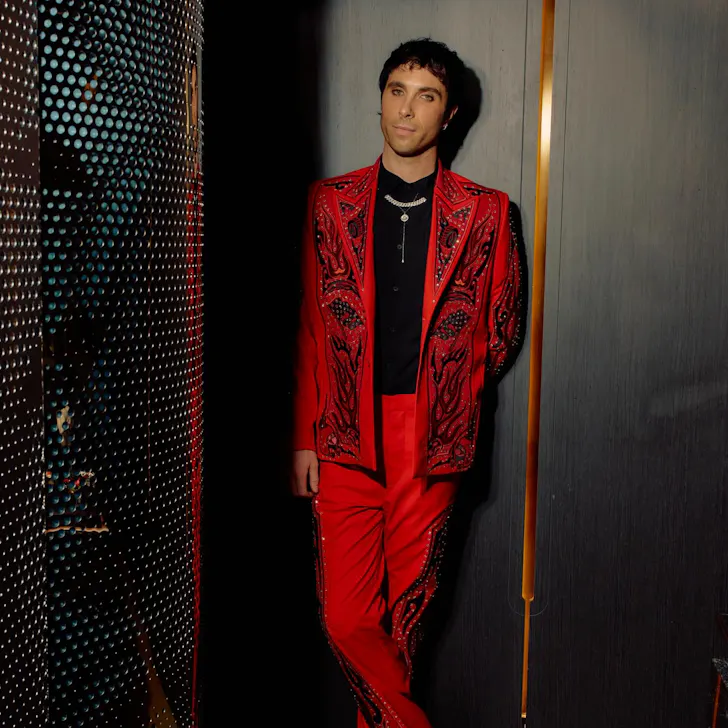 Image credit: James Parr | Instagram
From Accidental Model to Intentional Advocate
As well as an award-winning model, James is also an accomplished speaker, writer, and a passionate advocate for visibility – drawing on his own personal experiences as a cancer survivor and an amputee, while also navigating the world as a Queer, Aboriginal man. But he didn’t set out to live a life in the public eye.

Before all of this, Parr worked in the education system, working with children living with diverse experiences of disability, trauma, and complex behavioural needs. At the time, disability advocacy was something he approached externally: part of the work, part of caring for others.
Then in 2019, when James was just 21-years-old, he was diagnosed with osteosarcoma, a rare and aggressive bone cancer, which required him to undergo a below-the-knee amputation of his right leg. From there, disability became deeply personal.
“I found it really hard to identify as someone with a disability. Disability is such a ‘dirty’ word” he says.
Flipping The Script on Disability
“I guess I needed to unpack it for myself. I challenged myself, looking at why I had a negative connotation with disability… and I found it all came down to representation,” explains James.
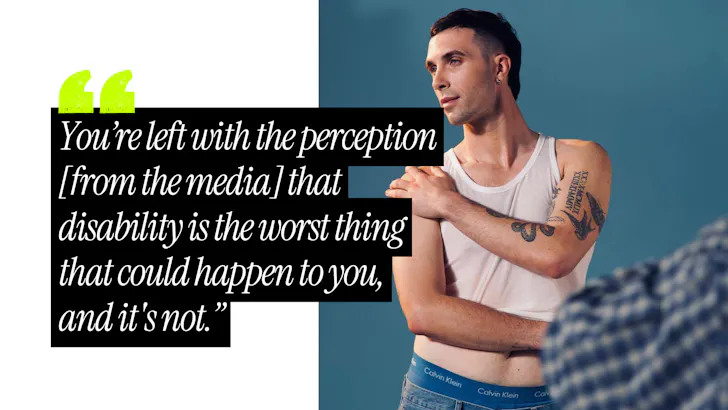
“How it's spoken about, portrayed in the media… you’re left with the perception that disability is the worst thing that could happen to you, and it's not.”
James can recall being that kid at the supermarket who gets curious about a person with a disability, only to be discouraged by a parent from asking questions. Nowadays, he often finds himself on the other side of that exchange, noticing a child staring at his prosthetic leg.
He explains: “...And the parent is like; Don't look at that. Don't question. Don't make it weird. But that is going to make them weird! It instills fear, so then their connotation with a disabled person is fear.”
When a child sees adults awkwardly avoid disabled people, they learn that disability is something uncomfortable or tragic, and can carry that understanding into adulthood. Recognising this, James is often more than happy to interject when a random child makes a loud comment about his prosthetic, and their parent reactively attempts to shut it down.
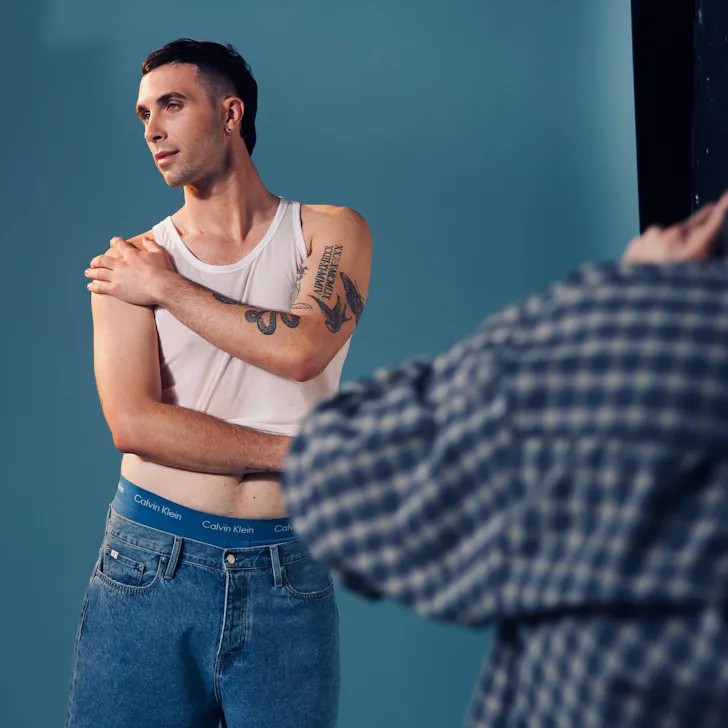 Image: James Parr | Supplied
Not Bad, Not Sad
That interrogation – of his own internalised ableism as much as society’s – is central to Parr’s work. He isn’t interested in presenting disability as inspirational or tragic. He wants to flatten the drama around it altogether.
“It’s not bad, it’s not sad. It’s just who we are,” says James.
Parr’s entry into modelling was almost comically casual. Someone saw a photo of him on Instagram and offered him a paid shoot. He signed with an agency and, within months, found himself walking runways.
“It was never something I aspired to,” he laughs.
Now, he has appeared in major fashion campaigns and on billboards for the Australian Open. His accolades include winning GQ’s Model of The Year 2023, and being named in Forbes’ 30 under 30 Asia Pacific. But Parr is refreshingly pragmatic about the fashion industry’s relationship with inclusivity. While people often question whether brands are simply “ticking a box” by hiring disabled models, Parr sees a more nuanced reality.
“Whether they are being tokenistic or not, if the box wasn’t ticked, the representation still wouldn’t be there,” he says. “So I think it’s about taking the power back in that.”
More Than Ramps and Railings
Still, he’s careful to distinguish between brands and businesses that genuinely engage with accessibility, and those that treat it as a performative add-on. It’s a distinction Parr is currently exploring through his work as a guest editor for Urban List, where he’s been writing about accessibility in hospitality venues.
For Parr, accessibility is far bigger than ramps and railings. He is also acutely aware that true accessibility benefits everyone, not just disabled people.
“When people hear accessibility, they automatically think structural,” he says. “But it’s also the lighting, the music, the seating, the language people use, how staff talk to you. There are so many different ways a place can feel inaccessible.”
He points out the exhausting “admin” many disabled people are forced to do before even attempting a night out: calling venues, asking questions, clarifying what “semi-accessible” actually means.
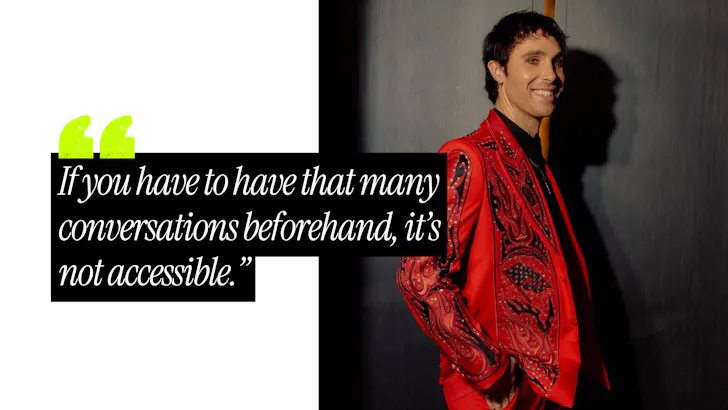
“If you have to have that many conversations beforehand, it’s not accessible,” he says simply.
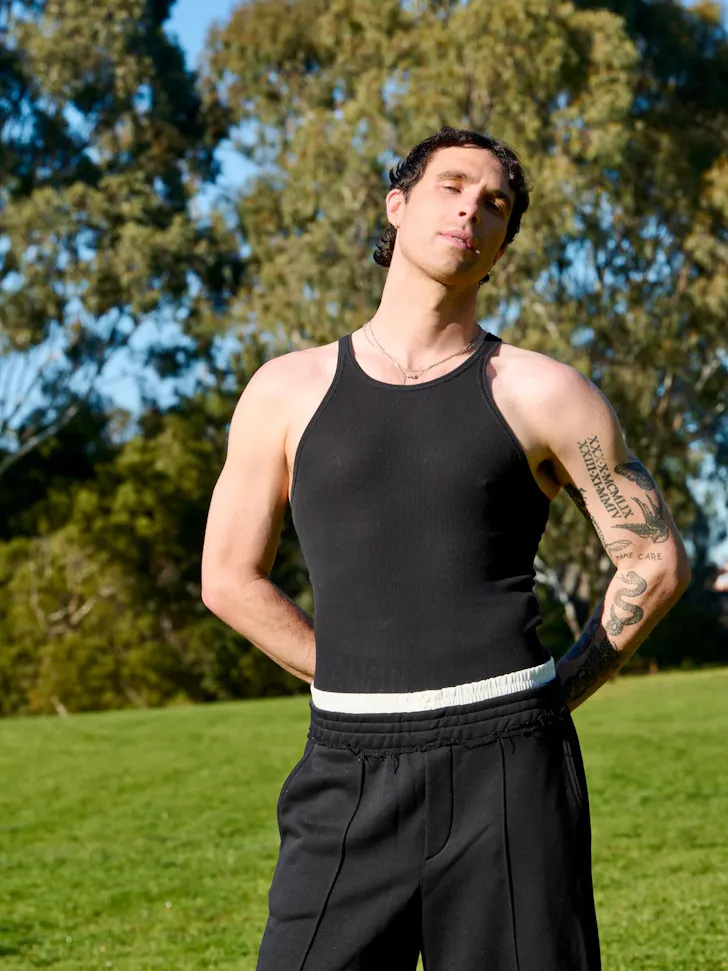 Image credit: James Parr | Supplied
Stop Being Weird
There’s an ease to the way Parr discusses these issues that makes them feel less like lectures and more like invitations to think differently. Even when talking about awkward interactions with strangers, he resists becoming prescriptive.
“I think people can get weird around disability because they’ve had less exposure to it,” he says. “That’s normal.”
But his advice is equally straightforward: stop overcomplicating it.
“Just interact with someone with a disability the same way you would anyone else.”
He laughs, recalling one woman who stopped him mid-run to call him “inspiring” simply for exercising with a prosthetic leg.
“There were six other people running on the oval,” he says. “I was like, ‘Are they inspiring too?’”
It’s a perfect example of “inspiration porn”, a term coined by disability activist and comedian Stella Young to describe treating disabled people as extraordinary for doing ordinary things. Parr understands where it comes from, but he also believes it reveals an underlying assumption that disabled people are somehow lesser.
“When we’re doing something considered normal, people are amazed because they view disability as less than,” he says.
That perspective extends into dating and socialising too. Parr recalls initially struggling with people shifting into caretaker mode around him, or leading interactions with invasive questions about his amputation.
“Cancer’s so boring,” he deadpans. “It’s not even a good story.”
Over time, though, something shifted. Parr began finding greater confidence and acceptance within himself, and with it came a different energy in the people around him.
“I think part of it was my own acceptance,” he says. “That changes the people you attract into your life.”
Today, Parr’s ambitions extend beyond modelling and advocacy. He wants to write a children’s book about disability – one that isn’t really about disability at all.
“I want to change the inference,” he says. “I want kids to see disability as normal.”
It feels fitting for someone whose entire career has emerged from questioning the assumptions people don’t even realise they’ve absorbed. Parr isn’t interested in being placed on a pedestal, nor does he want disability framed as a tragedy to overcome.
Mostly, he just wants people to stop being weird about it. And maybe that’s exactly where meaningful change starts.