
Paralympian Ellie Cole Is Optimistic About The Future Of Accessible Dining


Together with Toyota and Sociability, we’re shining a light on inclusive dining in 2026—spotlighting the venues going the extra mile to make eating out accessible for your whole crew. Kicking off Welcome Dining, we chatted with Paralympian and disability advocate Ellie Cole.
It’s not an exaggeration to say that Ellie Cole has spent half her life in the water, growing up on the Mornington Peninsula and in the Olympic pool. She is Australia’s most decorated female Paralympian, having won all of her medals in the pool.
But outside the water, Cole has continually reinvented her career—not only to give back to the communities and people she cares about most, but also to put them in the spotlight. A vocal disability advocate and keynote speaker, water sports broadcaster, and now a children’s book author inspired by her two-year-old son, she has once again transformed her path, making an impact far beyond the pool.
Remarkably, it was only a few years ago that the now-34-year-old Cole could comfortably and confidently make her way down to the shoreline and step into the ocean—something made possible with the help of Toyota's range of mobility and access products for prosthetics.
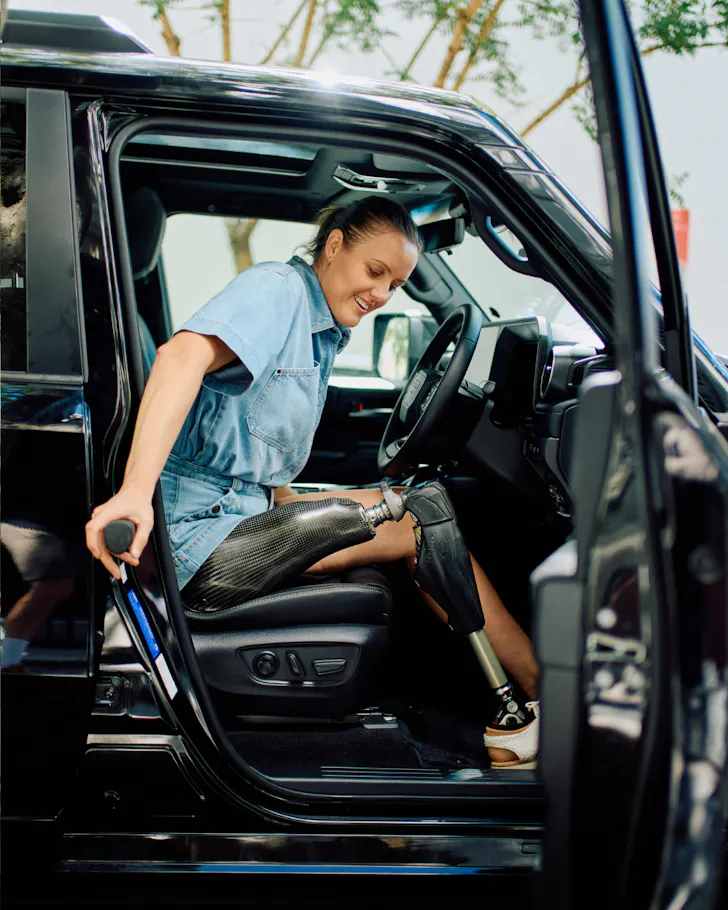 “I've always struggled walking on sand. If you think about walking on sand, you use a lot of foot muscles, and your legs kind of go everywhere. For someone with a prosthetic, it was just a nightmare,” Cole explains.
“I was walking down to the shoreline with Priya Cooper, who used to own the title of the most decorated female Paralympian before me. So there was me with a prosthetic, her in a wheelchair, just like going to the shoreline with no difficulty at all. Neither of us had to be carried. It was super emotional for me, and it was such a simple thing.”
Cole counts this moment at the launch of accessible matting on a beach in Perth, which she attended as part of her work in disability advocacy, as a career highlight.
She hopes that more Aussies with disabilities will be able to enjoy an ocean swim on a hot day soon, and that's looking like a reality. But in the meantime, there are unfortunately many more everyday experiences that are filled with hurdles for people who navigate the world with disability.
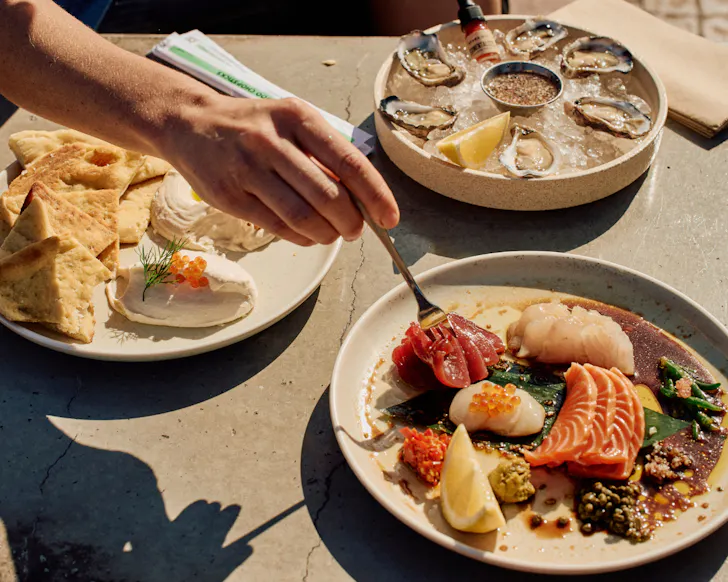 For example, Cole loves heading out for dinner with her friends, many of whom are fellow Paralympians. But tracking down restaurants that truly live up to the accessible dining label can be a minefield.
“The first question is, can we actually get in?” says Cole. “And not only that, but are we able to just get inside independently, without fuss, and without having to call staff to help?”
When most people think about the accessibility of a space, wheelchair users usually come to mind. However, while this population is important, it only accounts for a small percentage. Accessible considerations also include sensory factors like lighting and noise, and the readability of menus.
Terms like “partially accessible” can be real red flags for disabled diners. Sometimes, you can call ahead and do all your due diligence, only to arrive at a venue and be met with “just one small step” to the entrance, or an incredibly heavy door that won’t easily budge.
None of this is to say that restaurants and venues should be deterred from making any efforts to offer accessible dining; it’s just about being intentional and open-minded. And as Cole admits, even she has her own blindspots.
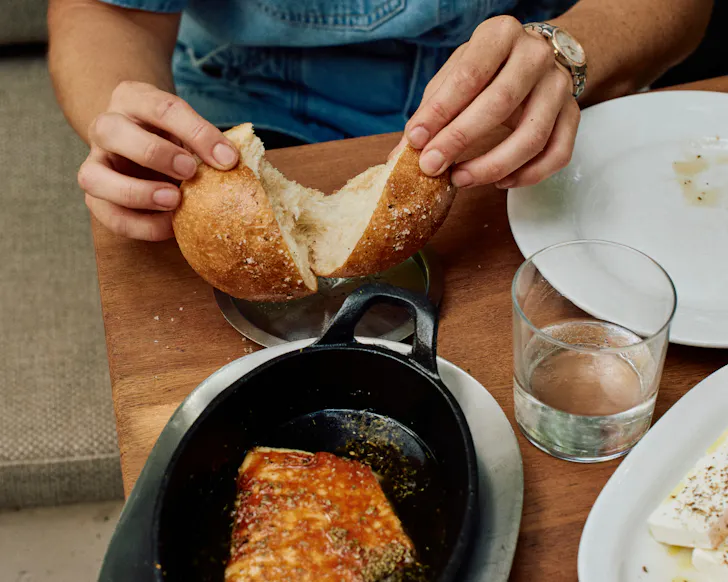 “Even as someone who is so experienced in disability–I've grown up with one, 90% of my friends have one–I still get caught out when it comes to accessibility. Recently, I was at a place with a friend who has short stature, and she started talking about how none of the signs on the wall or the light switches were at a height she was able to actually reach. I never would have thought of that!”
“Collaboration and consultation are so important, but also the understanding that you might not get everything right all the time, but it's the intention that is really important,” Cole adds.
“Accessibility isn't necessarily about special treatment. Ultimately, it’s about making people feel welcomed, and not just accommodated as an afterthought, which I think a lot of people feel,” says Cole.
“When a lot of restaurants think about accessibility, they actually think about it as quite niche, and that it only really serves that one person. But if you think about accessibility in more of a broad sense here, that universal design approach benefits everybody–including parents with prams, people of an older age, people that maybe have an injury and aren't very good at navigating that injury quite yet.”
Through her work on projects like Toyota’s Welcome Dining campaign, in collaboration with Sociability, Cole is also proud to be a part of helping to reshape old attitudes.
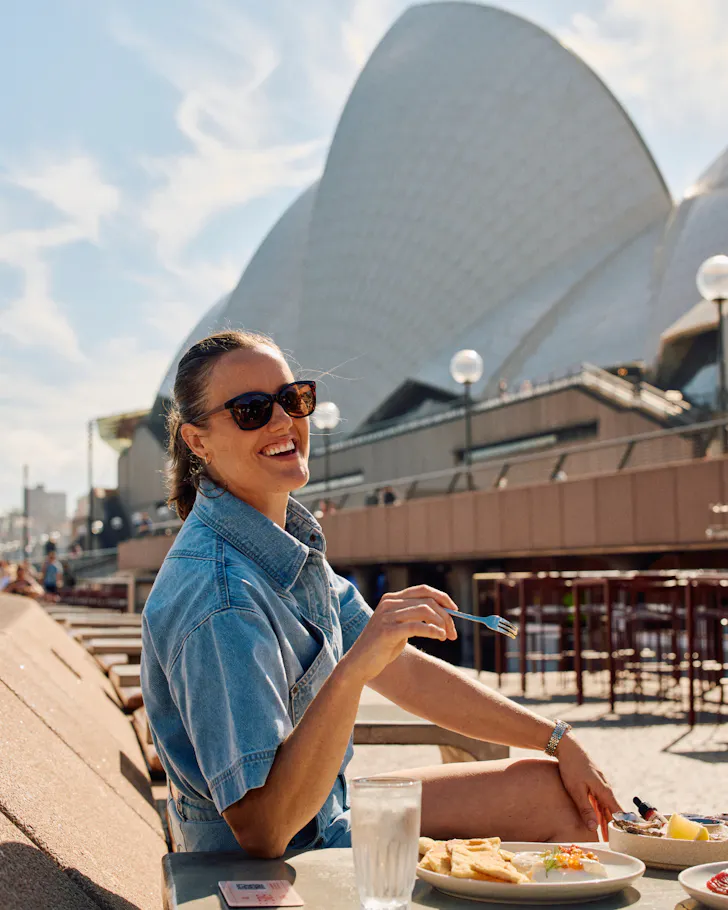 “In my experience, having a disability, I freaking love helping companies and businesses to be more accessible. If they just ask a couple of questions, of course, I'm going to give them my time, because the changes they make are going to stay in that place forever. Early on, I could tell Toyota genuinely wanted to improve people’s lives.”
Cole adds on how they go the extra mile to invest in their partnerships.
“They asked me what would make my life more accessible, and I told them about a prosthetic I needed. It was revolutionary, but completely unaffordable. Toyota just bought it for me so I could experience everything everyone else could. They didn’t want logos or promotion; they just wanted me to enjoy life.”
Cole has seen conversations around disability shift a lot in the past ten years, especially when it comes to accessible dining. Seeing more people becoming more comfortable with speaking and asking about accommodations, and calling out what good access looks like, makes her “super optimistic”.
“Everyone deserves to feel welcome at the table when they come into a restaurant. Accessibility is not just a compliance thing, it's actually just about making everyone's life easier and better,” says Cole.
Editor’s note: This article is sponsored by Toyota and proudly endorsed by The Urban List. To find out more about who we work with and why read our editorial policy here.
Image: Urban List.