
How Tokyo Tina’s Three-Bowl Winter Menu Stands Out In A City Of Cult-Favourite Ramen Joints
 Coby Renkin
Melbourne Editor | Urban List
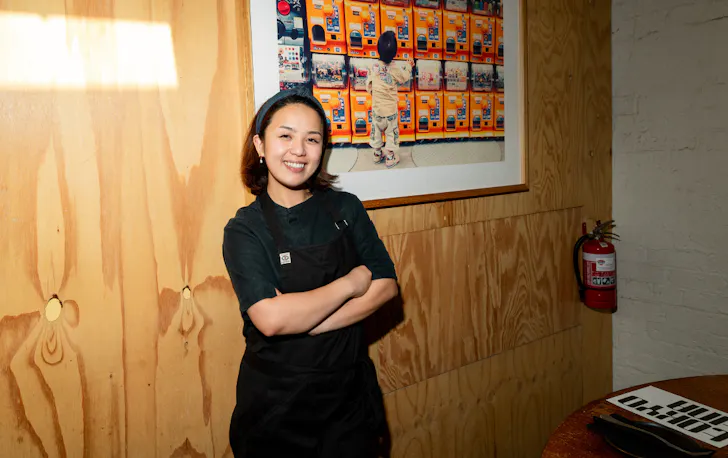
Tokyo Tina's Ramen Club has become a Melbourne weeknight winter staple over recent years. Each Wednesday night through winter, a menu of three limited-time ramen bowls hits the tables, and diners flock to try it. But in a city with so many incredible Japanese restaurants and cult-favourite ramen joints, what makes Tokyo Tina's such a standout?
Head Chef Ciara Mae Ohori's approach is a safe guess. With both Filipino and Japanese heritage, she leans on her upbringing—the flavours and nostalgia or her childhood—when crafting the Ramen Club menu.
"My dad is Japanese, and my mom is Filipino, but she's been working in and out of Japan since she was like 18," Ohori says.
"Growing up, my mum would always bring me instant ramen," she says. "I remember just the flavour and the umami that each noodle brings".
Tokyo Tina's ramen might be a little more refined than what Ohori once ate from a packet, but the comfort she found in the dish as a child still comes through in the bowls she serves today.
"It's something that's very close to my heart," Ohori says.
Having joined the Tokyo Tina team in 2019, Ohori stepped into the role of Head Chef in 2024, so 2026 marks her third year leading Ramen Club.
"I've tried to mix it up a little bit in my own style," Ohori explains. "I like a lighter broth, so [this year] I'm focusing on chicken bones for my chashu ramen. So obviously it's a pork ramen, but I'm using chicken as the stock."
"That's the good thing about [Melbourne], you can mix it up and people will still enjoy."
The double chicken stock simmers for a minimum of six hours, but can go longer—often overnight—and is layered with dried shiitake, kombu and white miso.
While Ohori used pork belly in previous years, she's swapped it out for chashu pork scotch this year.
With hoisin, ginger and star anise, "it was more of a Chinese-style flavour," she explains. "I didn't really get the feedback that I was hoping for for that one, so I changed it up this year to make it more authentic to Japanese flavour."
"I can actually see the difference from the last few previous years that I've been doing the ramen from this year. It's more umami and you can really get that punch of feeling like you're having the ramen in Japan," Ohori says.
The chicken stock also forms the tastanmen ramen—a minced chicken ramen with a soy milk and chilli paste base, topped with chilli, chicken and some choi sum. It's Ohori's personal favourite on the menu.
"Growing up, I really tended to go through different flavours, but personally, now my go-to is the tantanmen chicken ramen," she says.
It's a very mild option so a no-brainer for kids or anyone who is hesitant about spice (yes, even despite the aforementioned chilli).
The third and final bowl on the 2026 Ramen Club menu is the veggie kakiage ramen, made with shiitake mushroom dashi, garlic oil, veg kakiage (a Japanese veggie fritter), bean sprouts, bamboo, soy egg, spring onion and seaweed.
"I make the mushroom broth [by] slowly cooking the shiitake mushrooms and kombu until the flavour, or the umami, of the shiitake comes up," Ohori explains.
With a strong mushroom flavour and plenty of punch from spices and other veggies, it's a worthy bowl for both vegetarians and meat-eaters alike.
To Ohori, no matter what you order, there's something special about Ramen Club.
Even in the depths of a cold and grey Melbourne winter, eager diners are willing to brave the elements for a taste.
"People come just to enjoy a bowl of ramen, even though it's the middle of the week," Ohori says. "That's why I like it."
"It actually brings people to this side of town. Even though they don't live nearby—they're quite far away—I like that they're actually travelling [for it]."
Having sold almost 50 bowls of ramen on the first night of the Club, it's safe to say Ohori is onto something.
After all, Melbourne's food culture played a big role in her decision to move here. Having studied in the Philippines and worked in kitchens in Singapore before moving to Australia, she says Melbourne's dynamic food scene caught her attention—particularly when it comes to Japanese cuisine.
Describing Japanese food in Melbourne, Ohori says it's very close to Japan in many ways, but mixing in local produce helps give it its own distinct flavour—a special category she calls the "Melbourne way of Japanese food."
Book a table or walk in to Tokyo Tina on a Wednesday night this winter for a taste of where the Melbourne way, and Ohori's approach, meet on Chapel Street.
Imagery: Tokyo Tina | Supplied