Is The CRL Going To Give Auckland Its Spark Back? These Small Business Owners Think So
 Molly Codyre
New Zealand Editor | Urban List
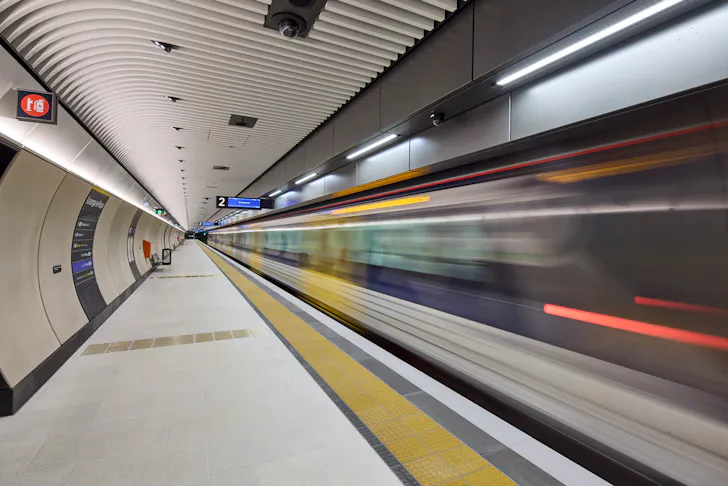
There was a time when the ground under Crushes, the much-loved vintage and NZ slow fashion shop on Karangahape Road, would shake. Owner Rose Hope was never quite sure if it was down to the underground work taking place while they constructed the CRL, or from the jackhammering on the road outside as the council established new bus lanes on the street. Either way, things were moving. “All the 1906 buildings were just… shaking,” she laughs. “You would always have a low hum.”
It’s safe to say the entirety of Tāmaki Makaurau felt the impact of a decade of CRL construction, but it’s the areas in the immediate vicinity of the stations that have had the biggest disruption. Small Gods Taproom, who also operate the online beer delivery and subscription service, Beer Jerk, took over the lease of a warehouse-style space on the ground floor of a former office building a few metres from the new Maungawhau station just one year before Mount Eden station closed. “It’s been years of disruption and road closures. There have been days where customers just can’t get in because the pavement has been dug up to do some work and people can’t actually access our business,” owner Luke White tells me. “There’s been construction vehicles and work, and a lot of noise, vibrations, and dust. But, all that said, it has to be done. Auckland is a young city, and these things have to happen.”
Situated at the top of the precipitous Shaddock Street, just down a set of stairs from Mount Eden Road, Small Gods sits at the crux of what was once a main pedestrian thoroughfare to the station and, as of Sunday, hopefully will be again. It also put them smack bam in the middle of a major construction project, which meant they were surrounded by a near-permanent fug of dust, noise and disruption. White tells me about a comedy night they put on where the comedian opened up saying “welcome to this Final Destination-themed taproom”.
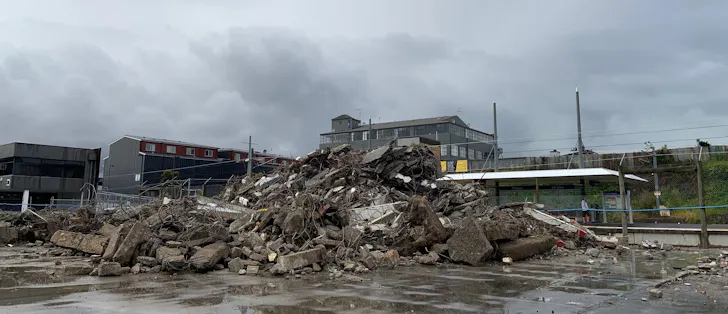
Maungawhau Station During Construction: City Rail Link | Website
All of this is to say, the journey to the CRL hasn’t been easy. There have been roads ripped up. There has been shaking ground. There have been detours and closed streets and disappearing pavement. But, finally, we have reached the light at the end of the tunnel. The CRL is nearly here. As Jono Thevenard, owner of Karangahape Road restaurant Pici tells me, “you’ve gotta break a few eggs to make an omelette, and we’re about to get served an omelette.” And a pretty tasty one at that.
But, what does that mean for small businesses, exactly? The ones who have, as Thevenard says, “hung on and stuck it out”? Well, as it turns out, they’re all feeling pretty cautiously optimistic.
Crushes moved into a new space on the corner of K Road and Pitt Street in December 2025. “How have I prepared for the CRL opening? Well, I took on this shiny new corner lease,” Hope tells me. “We spent 13 years two doors down. And we knew that whoever took on this space was going to be really important for carrying over this next chapter for the road. And it didn’t have to be us, but we knew it needed to be someone like us who is about the community, and supports the artists. And we just knew that to have it stay empty would be the worst look at the street’s most important time.”
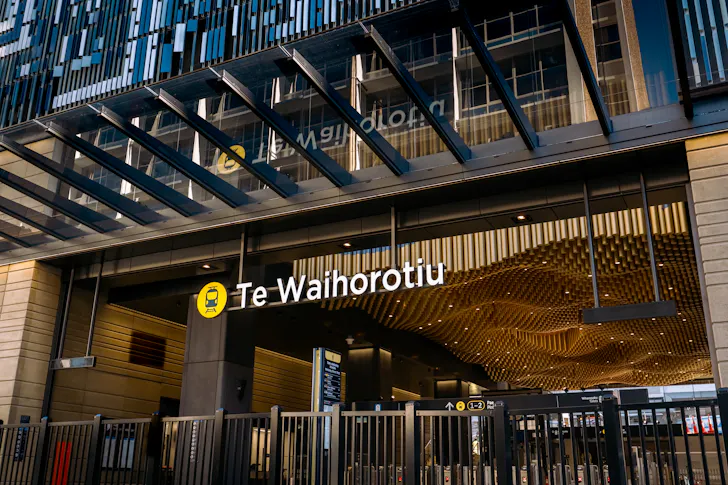
Te Waihorotiu Station: Auckland Transport | Supplied
And Hope is far from alone when it comes to claiming real estate on Karangahape Road. While there are a fair few for lease signs dotted along the strip, Hope tells me that most of those spaces will be full pretty soon. “Most of these for lease shops have now actually had their leases signed, and lots of stores are bummed because they’ve missed their window. So the street is going to be fully tenanted,” she explains. One of those openings has already been announced—Ragtag has received the keys for the former Madame George space and will be moving in in the coming months.
The same is occurring around Maungawhau Station. “We just want the whole neighbourhood to be more accessible and more vibrant, which means also more foot traffic and more offices filling up, which is happening, the building across from us will be filled early next year,” Dianne Cho, co-owner of Parable House tells me. She says that on the station's open day a few weeks ago they had a queue of people waiting outside before they had even opened for the day. “It was a busy, hectic Saturday for us.” Around the station, meanwhile, the council are focusing on crafting genuine community spaces. "It’s gonna look beautiful around Maungahwau station, there’s going to be native bush, and trees, a playground and Sunday markets," White tells me. "I'm expecting it will have a cool vibe and energy and bring people in in a way that areas like Britomart, Aotea Square, and Wynyard Quarter do."
Te Waihorotiu Station, on the corner of Albert Street and Victoria Street West, is undoubtedly one of the most interesting additions to the network. This pocket of the city has been in decline for a while, partly contributed to by the station’s construction. For years the area—already difficult to reach thanks to scarce parking—was more inaccessible than ever, and, as a result, businesses have closed at a rapid pace. And yet, many have clung on while even more are moving in in anticipation of the station opening; last week, Cassia opened just 400 metres down the road. In particular, the theatre quarter around the Queen Street and Mayoral Drive intersection has kept things thriving despite relentless upheaval. One of those is Basement Theatre. Sitting just 500 metres away from the new station, they team there are positively anticipating the hopeful influx of people the station will bring.
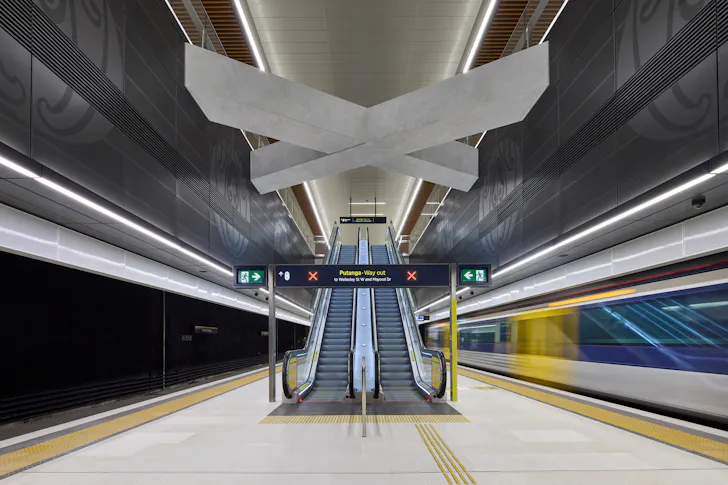
Station Interiors: Auckland Transport | Supplied
“I’m really excited for what this means for the area. I’m excited for the liveliness to come back and for people to return to the city, and be able to go to gigs and shows without transport being an issue,” Selu-Kian Lealiifano-Faletoese, the theatre’s Programmes Navigator, tells me. The theatre is launching a new happy hour in anticipation of the opening (5-6pm, every day except for Saturdays), and has a stacked lineup of new programming—Test Fest in October, and Silly Season in December. “The idea is that, if you’re in the city for whatever reason, on a date night or out with the girls, you can pop in and catch a show.”
We are a city that has become so reliant on cars that it is expected it might take us a little while to fully adapt to this new way of life. But, as Thevenard says, “I don’t think Aucklanders realise how freeing being on public transport and not being in a car actually is.” There’s something about being able to hop on the train, read your book, and end up in a whole new pocket of the city without battling traffic or parking woes that makes the whole experience seem incredibly straightforward. Or heading out to a bar or a night on the town knowing you can just hop on the train straight home. More than anything though, it cements Tamaki Makaurau as a genuine world-class city that deserves to be taken seriously.
“The whole network is going to give the city so much dignity, and there’s so much you can do with dignity, like optimism, or energy, and new opportunities,” Hope tells me. “For any naysayers who think it won’t do anything, Auckland has been sad and dead for so long, and anything new or energetic is super powerful at the moment.”
Want more like this? Check out:
-
The 12 couples behind some of Auckland's best hospitality venues
-
Auckland’s $5.5 Billion City Rail Link Will Finally Open This September
-
This New Auckland Food Festival Will Turn The City Into One Big Restaurant In November
Main image credit: Auckland Transport | Supplied
See more Urban List in Google Search.