
18 Of The Very Best Things To Do In Rome In 2026
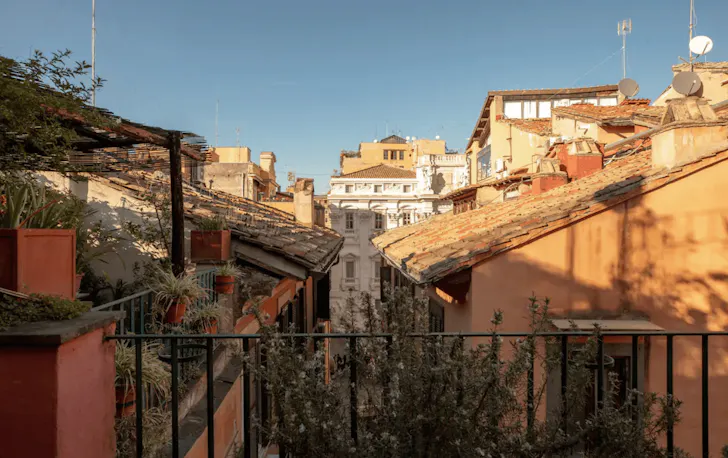
Rome is the kind of city where your “quick wander” turns into a full day of pasta, piazzas and accidentally stumbling across world-famous landmarks.
There’s a lot to take in—ancient ruins, Baroque masterpieces, neighbourhood trattorias, rooftop aperitivos and more gelato than you thought physically possible. The trick isn’t trying to see everything—it’s knowing what’s actually worth it. From the must-do icons to the experiences that make the trip, these are the best things to do in Rome.
The Icons
Step Inside The Colosseum
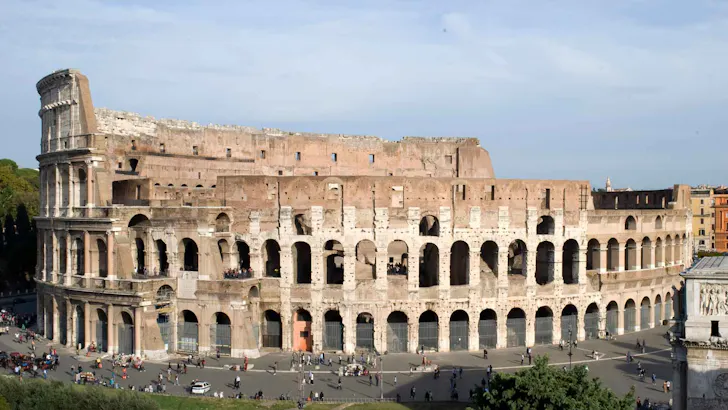 Image credit: Rome Tourism | Website
It might be the most obvious thing to do in Rome—but it’s also completely unmissable. The Colosseum isn’t just a landmark; it’s the symbol of the city, and stepping inside is one of those experiences that genuinely lives up to the hype.
Built between 72 and 80 AD, this is the largest amphitheatre ever constructed, once capable of holding more than 80,000 spectators. Back then, Romans packed the stands to watch gladiator battles and elaborate public spectacles. These days, the atmosphere is a little less brutal—but no less impressive.
Inside, the scale hits you straight away. Walk the inner corridors, take in the layers of ancient stone and make your way up for sweeping views across the arena. For something a little more immersive, book access to the arena floor itself—standing at ground level gives you a completely different perspective, and a sense of what it might have felt like to enter the space as a gladiator. It’s one of Rome’s busiest sights, so booking ahead is essential. Go early if you can, take your time, and let it sink in—this is history on a truly monumental scale.
Look Up In The Pantheon
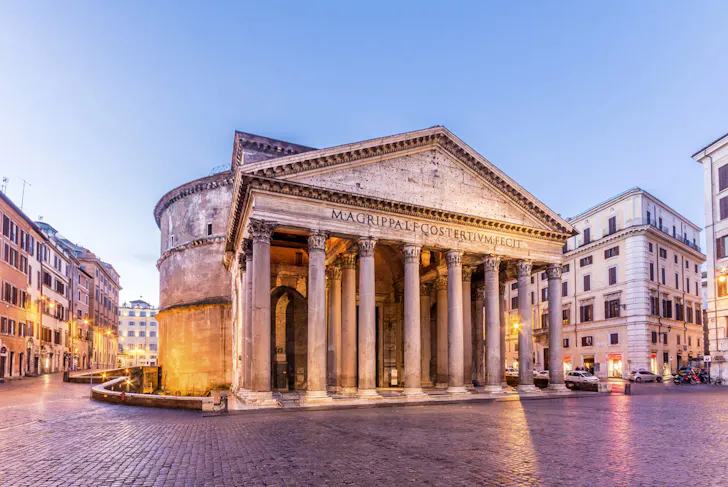 Image credit: Italian Dual Citizenship | Website
In a city full of ancient ruins, the Pantheon stands apart—largely because it’s still almost perfectly intact. Built in 125 AD under Emperor Hadrian, it remains one of the best-preserved monuments from ancient Rome, and stepping inside feels surprisingly modern for something nearly 2,000 years old.
From the outside, it’s all grand columns and understated presence. But the real moment hits as soon as you walk through the doors. The vast dome stretches overhead, measuring 142 feet in diameter—still the largest unreinforced concrete dome in the world—and it’s every bit as impressive as it sounds.
At its centre, the oculus draws your eye upward. This open circle in the ceiling is the building’s only source of natural light, casting a shifting beam that moves across the interior throughout the day. It’s simple, but incredibly powerful—designed to connect the space to the sky above.
Entry is relatively quick, but don’t rush it. Stand still for a moment, look up, and let it all sink in—this is ancient Rome at its most quietly brilliant.
Explore The Vatican
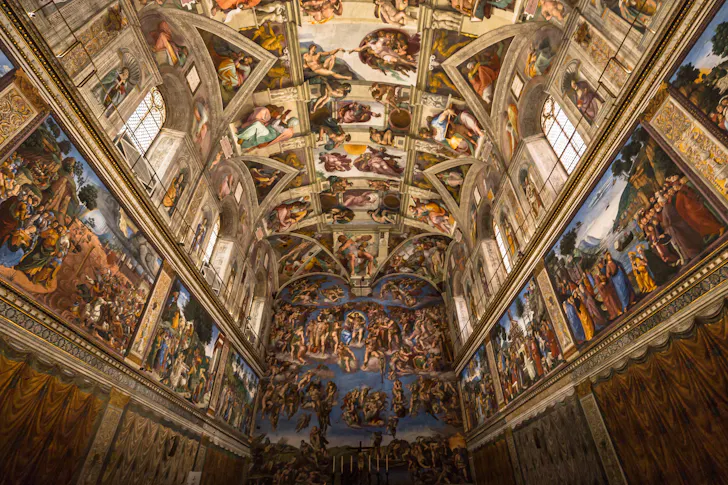 Image credit: Vatican City Guide | Website
Even in a city packed with history, the Vatican stands apart. Home to the vast Vatican Museums and the Sistine Chapel, it’s one of the most significant cultural sites in the world—and easily one of Rome’s most memorable experiences.
The museums themselves stretch for kilometres, leading you through galleries filled with ancient artefacts, tapestries and Renaissance masterpieces before culminating in Michelangelo’s Sistine Chapel ceiling—one of those rare, genuinely goosebump-inducing moments.
But don’t stop there. Step into St Peter’s Basilica, where soaring domes, intricate marble and works by artists like Michelangelo and Bernini make it just as impressive as anything in the museums. If you’re up for it, climb to the dome for sweeping views across Vatican City and Rome beyond—it more than pays off. Book ahead, go early if you can, and give yourself time. This is one experience you don’t want to rush.
Toss A Coin Into The Trevi Fountain
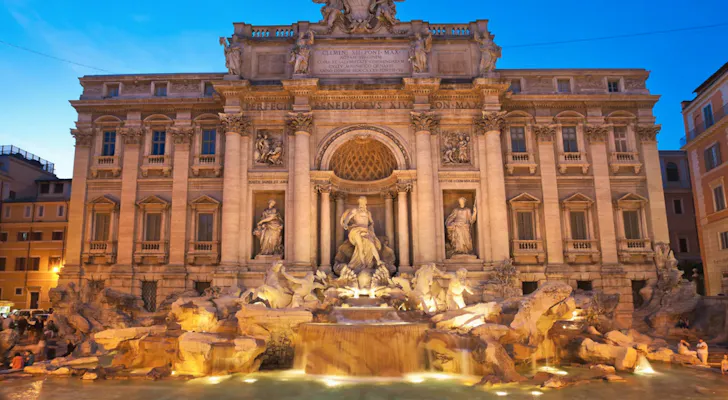 Image credit: Condé Nast | Website
Yes, it’s busy. Yes, everyone goes. And yes—you should absolutely have it on your list. The Trevi Fountain is one of those rare places that delivers a genuine pinch-me-I’m-in-Rome moment the second you see it in real life.
Tucked between narrow streets, the fountain suddenly reveals itself in full scale—carved from gleaming Carrara marble and taking around 30 years to complete. At the centre, Oceanus, the god of the sea, stands triumphantly atop a shell-shaped chariot pulled by seahorses, flanked by Tritons blowing into conch shells. It’s dramatic, detailed and impossible not to stop and stare at for a while.
Then there’s the ritual. According to legend, tossing a coin over your shoulder into the fountain guarantees your return to Rome—and judging by the millions of coins thrown in each year, people are taking that seriously. (They’re regularly collected and donated to charity, so consider it a good deed too.)
Go early in the morning or late at night if you want a quieter moment—but even in the middle of the crowds, it still hits. And once you’ve made your wish, grab a gelato nearby and lean into it properly.
Walk Through The Roman Forum And Palatine Hill
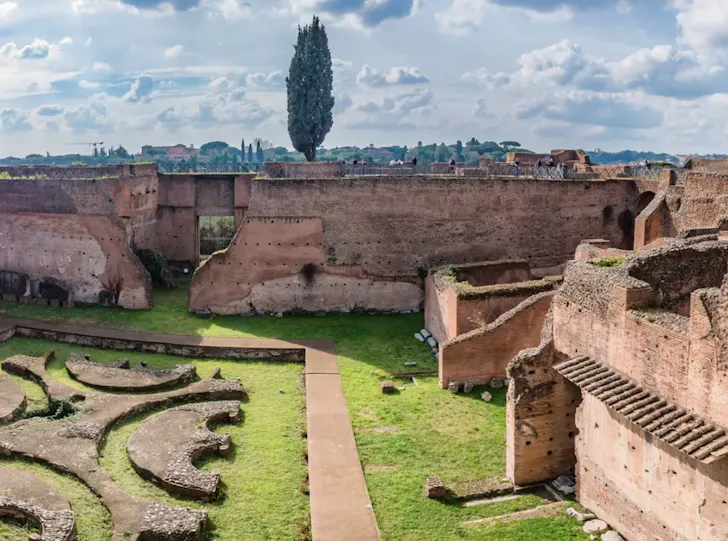 Image credit: Italia | Website
Right next door to the Colosseum, the Roman Forum and Palatine Hill offer a completely different way to experience ancient Rome—less spectacle, more immersion. This is where the city actually lived, with layers of history unfolding beneath your feet.
Start in the Roman Forum, once the centre of political, social and commercial life. Today, it’s a sprawling landscape of ruins—columns, temples and crumbling arches—that hint at what was once the heart of an empire. It takes a little imagination, but that’s part of the magic. Wander slowly, pause often and let the scale of it all sink in.
From there, make your way up to Palatine Hill, one of Rome’s seven hills and said to be the birthplace of the city itself. It’s quieter up here, with sweeping views back over the Forum on one side and the Circus Maximus on the other. You’ll also find the remains of imperial palaces and expansive gardens, offering a glimpse into how Rome’s elite once lived.
Marvel At Castel Sant’Angelo
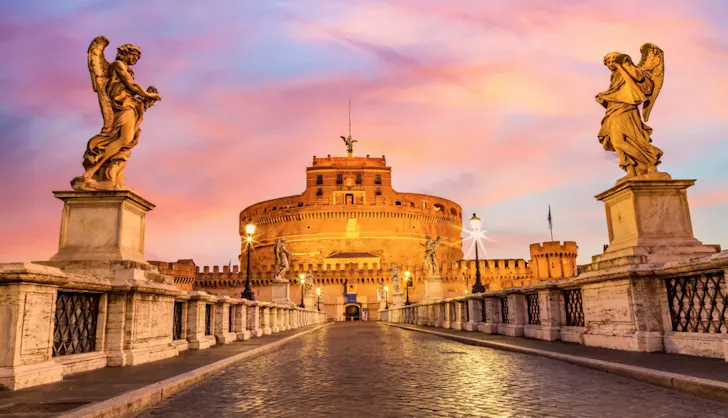 Image credit: Italia | Website
Few landmarks in Rome feel as cinematic as Castel Sant’Angelo. Rising up along the banks of the Tiber, this towering structure has been part of the city’s skyline for nearly 2,000 years—and it’s just as impressive up close as it is from afar.
Originally built as Emperor Hadrian’s mausoleum, it’s since taken on many roles—from fortress to papal hideout—but today, it’s best experienced simply as one of Rome’s most striking vantage points. Start with the walk across Ponte Sant’Angelo, where a line of dramatic angel statues—designed by Gian Lorenzo Bernini—guides you towards the entrance, setting the tone before you even step inside.
From there, it’s all about the ascent. A winding path leads you up through the fortress, with glimpses of ancient stonework, hidden passageways and thick defensive walls along the way—including the Passetto di Borgo, once used by popes to escape to the Vatican in times of danger.
At the top, the payoff is immediate. The rooftop terrace delivers sweeping, uninterrupted views across Rome—St Peter’s Basilica rising in the distance, the Tiber winding below and the city’s terracotta rooftops stretching as far as the eye can see. Come just before sunset if you can—this is one of those spots that stays with you long after you’ve left.
Eat And Drink Your Way Through Rome
Master The Art Of Espresso
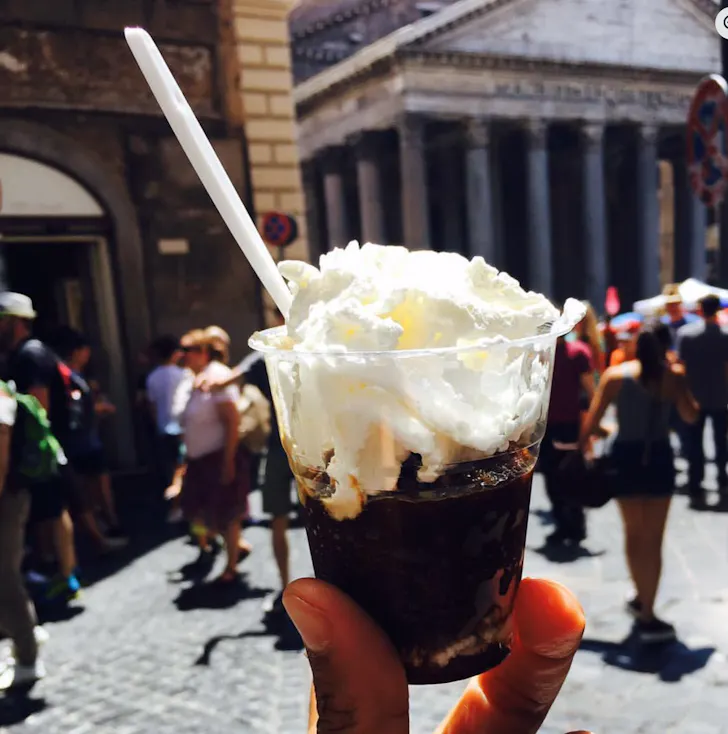 Image credit: Hotel Madrid Roma | Instagram
Drinking coffee in Rome isn’t just a habit—it’s a ritual you’ll want to perfect. Skip the takeaway cup, step up to the bar and order an espresso like a local. You’ll down it in a few sips, exchange a quick word with the barista and be out the door in minutes—feeling instantly more Roman.
To do it properly, mix old-school with new wave. Start at La Casa del Caffè Tazza d'Oro, just steps from the Pantheon, where rich, full-bodied espresso has been poured since the 1940s—ideally paired with their iconic coffee granita if you’re visiting in warmer months. Then switch things up at Faro, a leader in Rome’s specialty scene, where single-origin beans and carefully crafted brews show just how refined coffee here can be.
Do both, and you’ll get a proper sense of Rome’s coffee culture—fast, unfussy and surprisingly nuanced.
Eat As Much Gelato As Possible
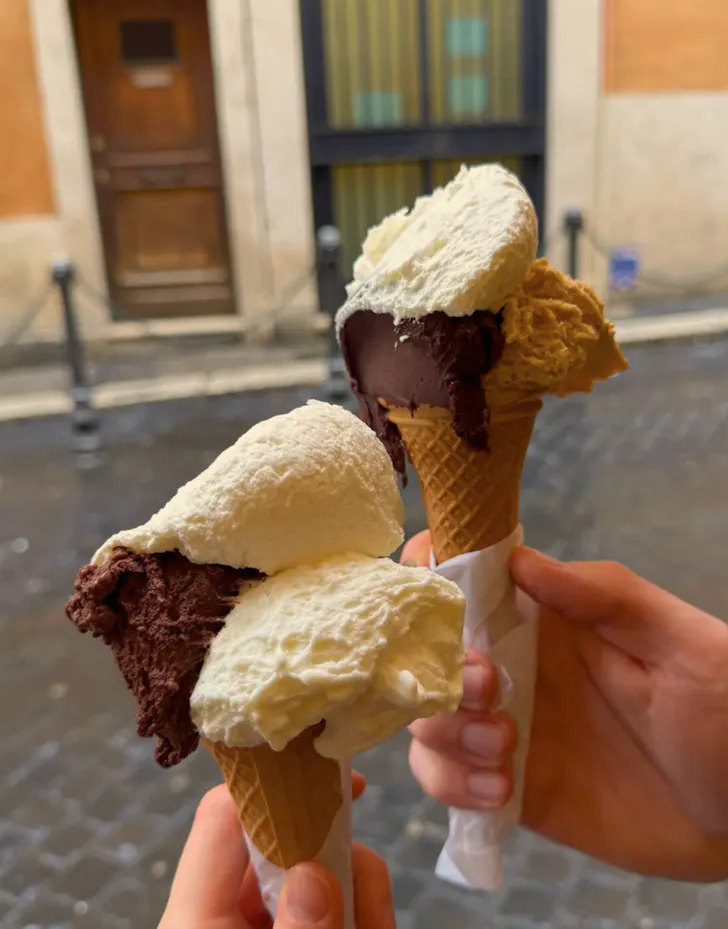 Image credit: Giolitti | Instagram
In Rome, gelato isn’t dessert—it’s a daily essential. Mid-afternoon, post-dinner, wandering between sights… there’s always a reason for a scoop (or three).
Part of the fun is pairing it with where you are. Grab a cone from Giolitti after visiting the Pantheon and join the crowd spilling out onto the cobblestones, or swing by Gelateria del Teatro as you wander the cobbled streets near Piazza Navona, where you can watch fresh ingredients being folded into each batch.
Stick to classic flavours like pistachio and stracciatella to start, then branch out once you’ve found your rhythm. Just don’t limit yourself to one a day—it’s simply not how things are done here.
Feast On Roman Carbonara
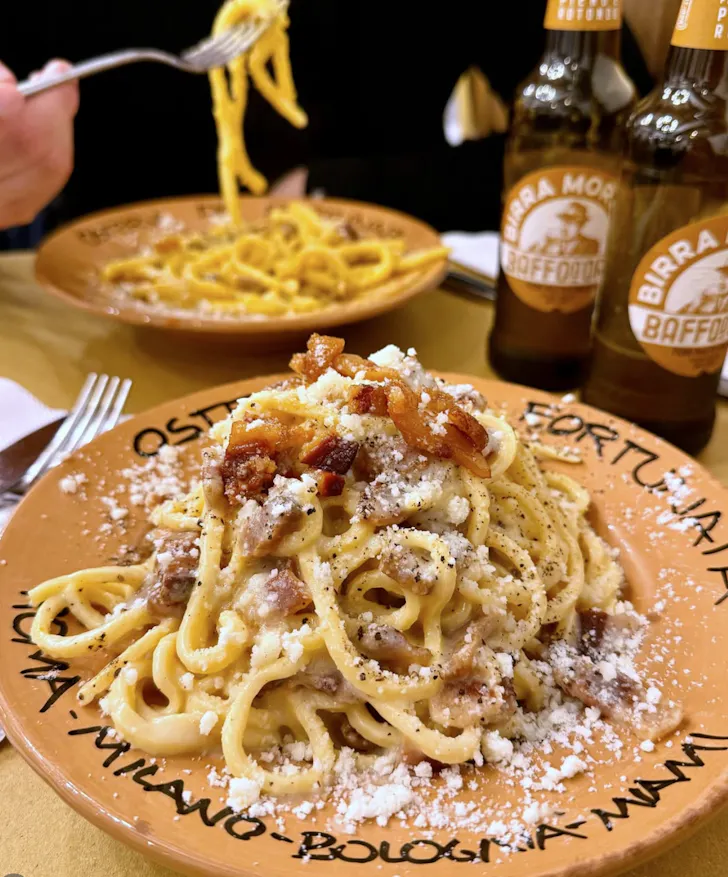 Image credit: Osteria da Fortunata | Instagram
Trying carbonara in Rome isn’t optional—it’s a rite of passage. And once you’ve had a proper one, there’s no going back.
At spots like Osteria da Fortunata, you can watch fresh pasta being rolled by hand before it hits your plate, transformed into that signature silky, peppery carbonara using just a handful of ingredients. Or head to Nannarella in Trastevere, where generous, no-frills plates are served in buzzing surrounds that feel quintessentially Roman.
The magic is in the simplicity—no cream, no shortcuts, just technique and quality ingredients coming together perfectly. Once you’ve nailed carbonara, move on to cacio e pepe and amatriciana—but this is always the one you’ll come back to.
Cook Like A Local
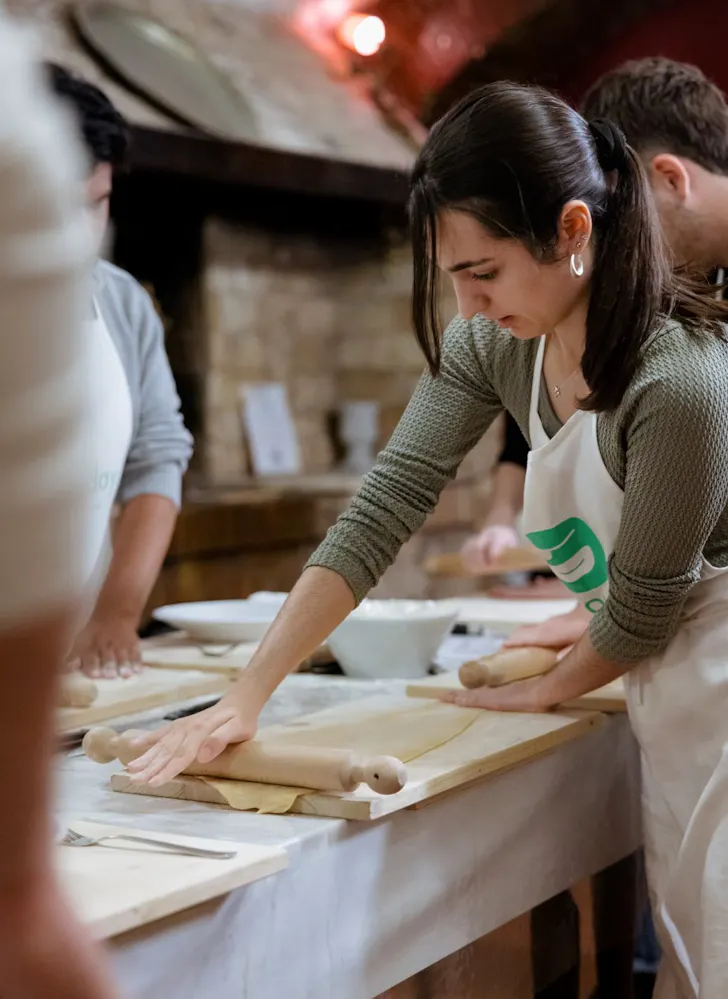 Image credit: Airbnb | Website
It might be an obvious choice—but in Rome, it’s one of the best things you can do. Because as good as the food is here, learning how to make it yourself takes the experience to a whole new level.
From rolling fresh pasta by hand to mastering the perfect Roman pizza base, cooking classes give you a behind-the-scenes look at the dishes you’ve been eating all trip. You might find yourself shaping cacio e pepe from scratch, learning family recipes alongside a local Nonna, or even trying your hand at gelato—yes, it tastes even better when you’ve made it yourself.
Most classes end the way they should: sitting down to eat everything you’ve created, often paired with a glass of wine or a cheeky limoncello. It’s equal parts hands-on, social and seriously satisfying—and one of the easiest ways to take a little piece of Rome home with you.
Grab Slice After Slice Of Pizza
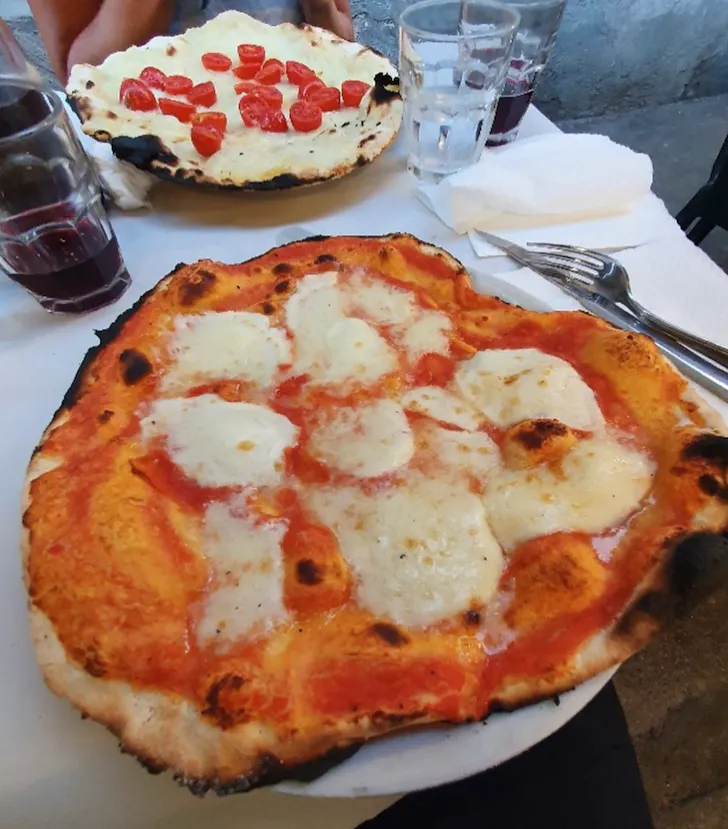 Image credit: Pizzeria Remo | Instagram
Pizza in Rome is less about one perfect meal and more about a running tally across the day. A slice here, a quick stop there—it all adds up.
Start with pizza al taglio at Antico Forno Roscioli, where trays of thin, crisp slices are cut to order—ideal between sightseeing stops. Then carve out time for a proper sit-down at Pizzeria Remo, a long-standing local favourite known for its ultra-thin, crunchy Roman-style pies.
Different styles, same outcome—you’ll quickly realise there’s no such thing as too much pizza in Rome.
Wander And Soak It All In
Get Lost In Museums And Galleries
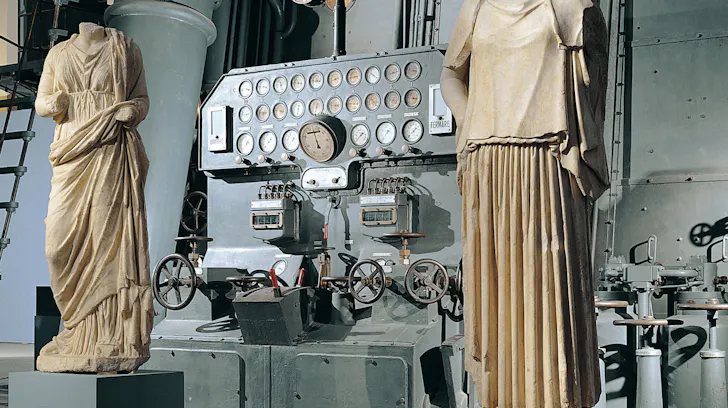 Image credit: Rome Tourism | Website
Rome is essentially one giant museum—but stepping inside its galleries reveals a quieter, more considered side of the city. Beyond the big landmarks, there’s an incredible mix of spaces that span centuries of art, architecture and culture.
If you’re picking a few, start with the Galleria Borghese for its intimate, villa-style setting and knockout Bernini sculptures, then head to the Capitoline Museums for a deeper dive into ancient Rome. For something completely different, Centrale Montemartini pairs classical sculpture with industrial machinery, while MAXXI brings a sharp, contemporary contrast.
It’s less about ticking everything off and more about choosing the kind of experience you’re in the mood for—whether that’s Renaissance masterpieces or something a little more unexpected.
Stroll Through Local Markets
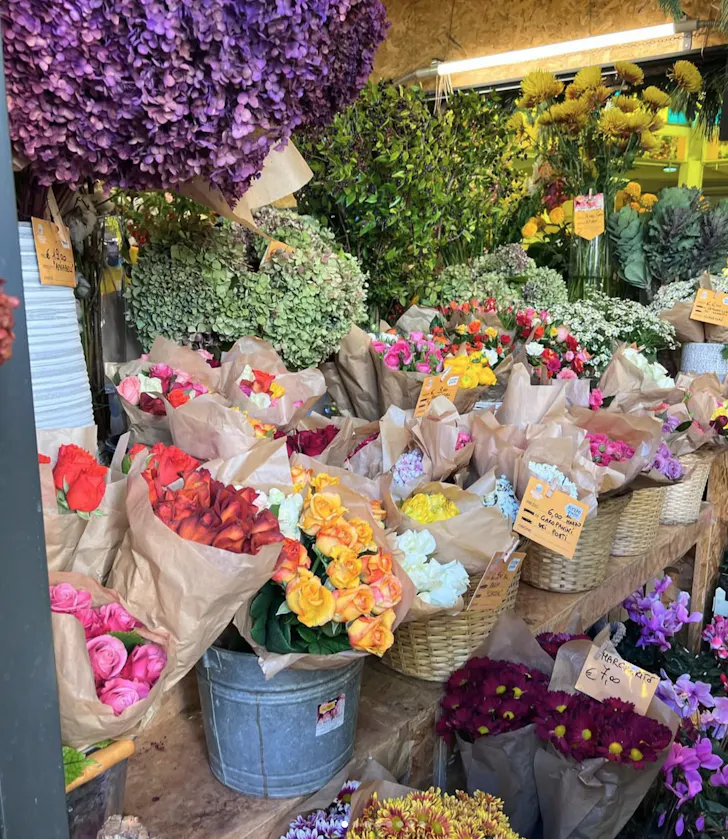 Image credit: Lisa Travel Consulting | Instagram
For a more local take on Rome, skip the restaurants for a morning and head to the markets. This is where the city feels less curated—loud, lively and full of everyday moments.
If you only visit one, make it Testaccio Market. Set in one of Rome’s most traditional neighbourhoods, it’s a mix of fresh produce, casual food stalls and long-standing vendors who’ve been here for decades. Come hungry—you can easily build your own lunch as you go, from pizza and sandwiches to regional specialties that give you a real taste of the city.
Elsewhere, Campo de’ Fiori offers a more central, high-energy experience, while weekend farmers markets like Campagna Amica bring in producers from across the region. Different vibe, same outcome—you’ll leave well fed.
Climb The Spanish Steps And Shop Your Way Through Rome
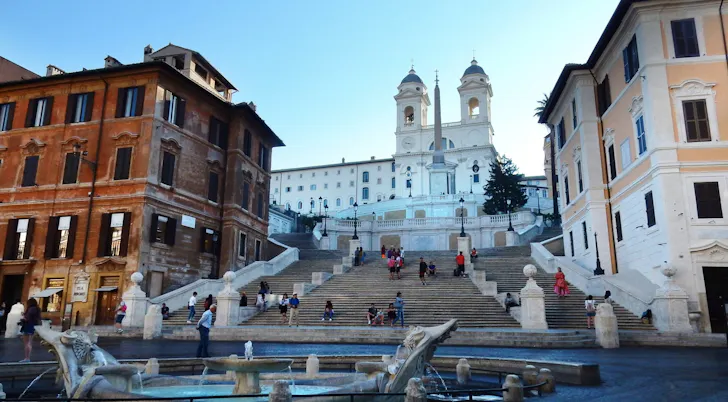 Image credit: Rome Tourism | Website
The Spanish Steps are one of Rome’s most recognisable landmarks—but they’re also the gateway to some of the city’s best shopping. Start at the base in Piazza di Spagna, where the elegant staircase rises up towards Trinità dei Monti, then take your time climbing—it’s as much about the atmosphere as the view.
At the foot of the steps, you’ll find the Barcaccia fountain, a sunken, boat-shaped design by Gian Lorenzo Bernini (and his father Pietro), quietly bubbling away in the middle of the piazza. From there, it’s all about the surrounding streets.
This pocket of Rome is home to the city’s most iconic shopping strip. Via dei Condotti leads the charge, lined with luxury names like Gucci, Prada and Valentino, alongside jewellery heavyweights like Bulgari. Just beyond, streets like Via del Babuino and Via Frattina offer a mix of high fashion and more understated Italian labels, while quieter lanes like Via Margutta bring a slightly more relaxed, gallery-like feel.
Even if you’re not planning to shop, it’s worth wandering. The storefronts feel more like curated exhibitions than retail spaces, and the streets themselves are part of the experience—elegant, polished and unmistakably Roman.
Take Aperitivo Over Piazza Navona
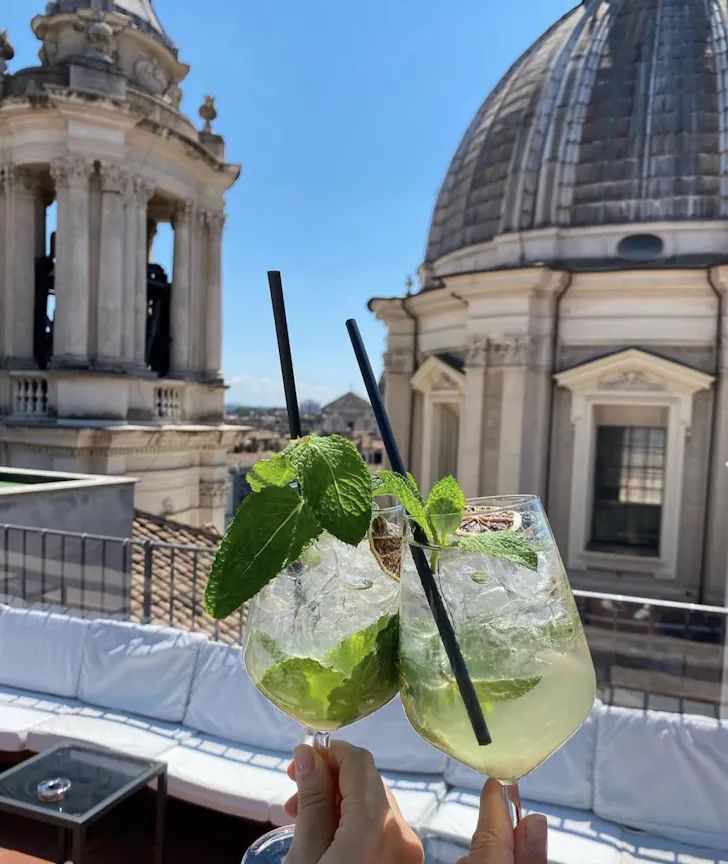 Image credit: Terrazza Borromini | Instagram
Piazza Navona is one of Rome’s most beautiful squares—but instead of just passing through, it’s best experienced at a slower pace and from a different angle.
At ground level, it’s all fountains, street artists and that constant hum of people drifting through. The centrepiece, designed by Gian Lorenzo Bernini, anchors the piazza with its dramatic detail, while the surrounding Baroque buildings give the whole space that unmistakable Roman grandeur.
But for something a little more memorable, head upstairs.
Perched above the piazza, La Grande Bellezza offers one of the best views in the city. From the terrace, you’re looking straight across to the dome of Sant’Agnese in Agone, with rooftops stretching out beyond—cocktail in hand.
Aperitivo here leans into the setting—it’s definitely on the more elevated end, but for a front-row seat over Piazza Navona, it more than delivers.
Roam The Streets Of Trastevere
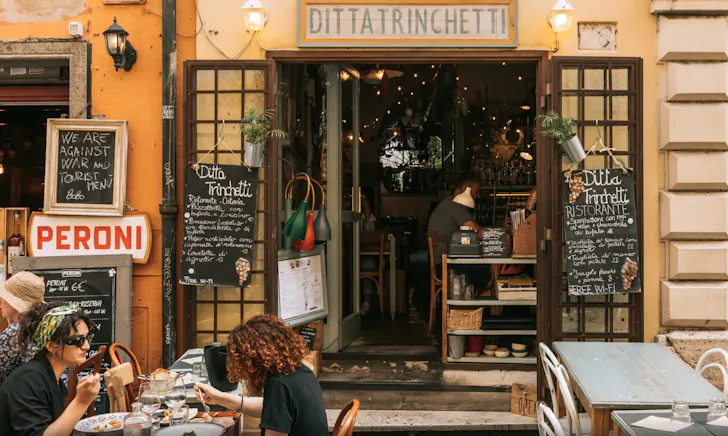 Image credit: Expedia | Website
If you only wander one neighbourhood in Rome, make it Trastevere. On the other side of the Tiber, the city loosens up a little—less polished, more local, and full of the kind of energy you can’t really plan for.
By day, it’s all ivy-covered buildings, quiet piazzas and the occasional café spilling out onto the street. But come late afternoon, things start to shift. Aperitivo kicks off, bars fill up and the narrow cobbled streets take on that golden, slightly chaotic glow Rome does so well.
Food-wise, you’re in very good hands. This is one of the city’s biggest dining hubs, where you can squeeze into Da Enzo al 29 for classic Roman dishes done properly (if you don’t mind a queue), or go a little more elevated at Zia, where seasonal ingredients and a contemporary edge take things up a notch.
The best way to do it? Don’t overthink it. Pick a direction, follow the streets that look the most inviting, stop when something catches your eye—and repeat. It’s lively, a little messy and exactly the kind of night you’ll want more than once.
A Different Side Of Rome
Catch A Football Match At Stadio Olimpico
 Image credit: AS Roma | Website
If you want to see a different side of Rome—louder, more passionate and completely electric—get yourself to a football match. Italians don’t just follow the game, they live it, and the atmosphere inside Stadio Olimpico is something else entirely.
Set within the leafy Foro Italico at the base of Monte Mario, this is Rome’s largest stadium and home to both AS Roma and Lazio. On match day, the energy builds long before kick-off. Streets fill with fans, scarves go up, chants start early—and once you’re inside, it’s full immersion. Expect roaring crowds, nonstop singing and a level of passion that’s impossible not to get caught up in.
With a capacity of over 70,000, the stadium has hosted everything from the 1990 World Cup final to major European fixtures, and while it’s also used for rugby, athletics and even huge concerts, it’s football where it really comes alive.
Even if you’re not a die-hard fan, it’s worth doing. Grab a ticket, pick a side (or don’t), and lean into it—you’ll walk out understanding exactly why the sport means so much here.
Discover Rome’s Most Haunting Crypt
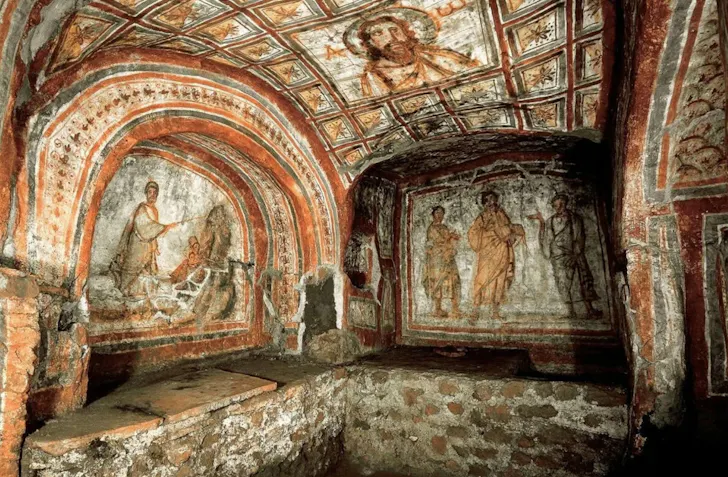 Image credit: Get Your Guide | Website
If you’re looking to step slightly off the usual Rome itinerary, the Capuchin Crypt is one of the city’s most unusual—and undeniably memorable—stops. It’s equal parts fascinating, eerie and surprisingly thought-provoking.
Tucked beneath the church of Santa Maria della Concezione dei Cappuccini, this 17th-century crypt was built between 1626 and 1631 under the direction of Pope Urban VIII. Inside, it holds the remains of around 3,600 Capuchin friars, dating from the 1500s to the late 1800s—but this isn’t a traditional burial site.
Instead, the bones have been carefully arranged across a series of small chapels, decorating the walls in intricate patterns and symbolic displays. You’ll begin with a small museum that explains the history of the Capuchin order before moving into the crypt itself. Each room reveals something different, with low lighting and quiet corridors adding to the atmosphere.
It’s not for everyone, but that’s part of the appeal. Slightly unsettling, deeply symbolic and unlike anything else in the city, this crypt offers a very different perspective on Rome’s history.
Urban List Best Of: has our highest stamp of approval—curated lists of the very best recommendations for you to eat, do, see, buy or book, carefully chosen by our Editors.

The Best Rome Neighbourhoods To Stay In 2026

Where To Find The Best Pizza In Rome In 2026
