At Apapacho, Joshua Arias Is Cooking The Mexican Food Of His Upbringing
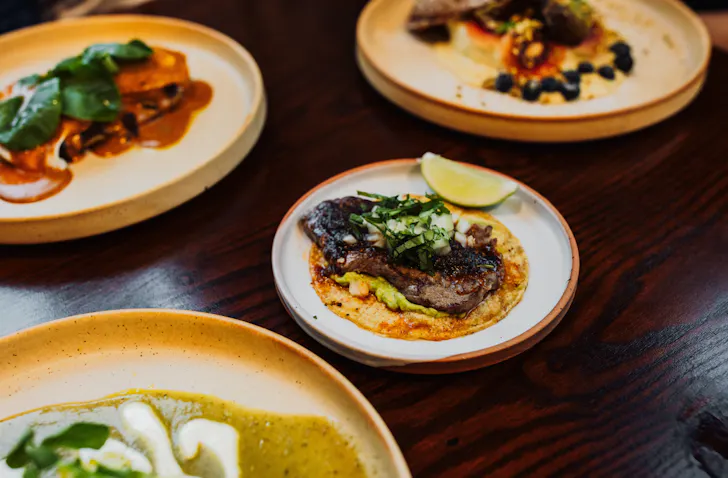
Mexican food has travelled extraordinarily far, but somewhere in that journey the version many of us encounter has become strangely narrow. There is a familiar shorthand: something vaguely tomato based, some slow cooked meat, coriander, maybe some cheese. Like someone had done a google image search of Mexican food and worked backwards from here.
This narrowness always seems slightly at odds with the way Mexican cooking is talked about. Watch enough episodes of Chef’s Table and you might reasonably expect some Mother Gaia-level epiphany in which the ground rises up and swallows you whole with earthen tones enriched with spices you hadn’t the temerity to imagine. The reality is that much of the Mexican food on this side of the world can feel considerably more homogenised.
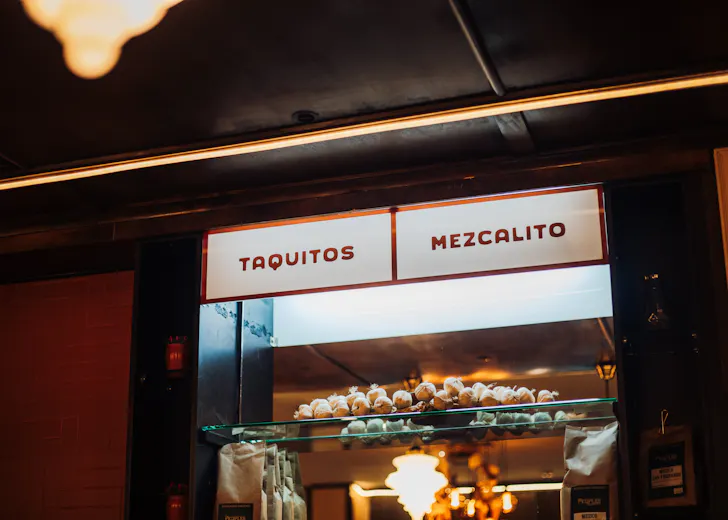
Image Credit: Apapacho | Wellington NZ
Owner and head chef of Apapacho, Joshua Arias, thinks he knows why. He suggests, “Mexican food has been popularised around the world through the USA, because they do have that way to make things viral.” This means there is often a gap between what is actually happening in Mexican cuisine and the version the rest of the world gets. It’s a topic Joshua is better placed than most to speak on; he grew up in Guadalajara, studied cookery, has worked in hospitality his whole life and even completed a masters degree specifically in Mexican cuisine. For most of his career in Mexico, Mexican food was all he cooked. The food at Apapacho is his attempt to bring some of that experience to Wellington, moving away from the version of the cuisine we might expect and towards “what we eat every single day or night in Mexico.”
Whilst other places focus on the fiesta and the party at night, what Joshua is doing is different – this is the morning after and the warmth of wandering chats with families and friends. He talks of how “Mexican food is a happy place; it's a party. But it's also something that can be warm, can be serious. And it doesn't really need that much colour to be outstanding.”
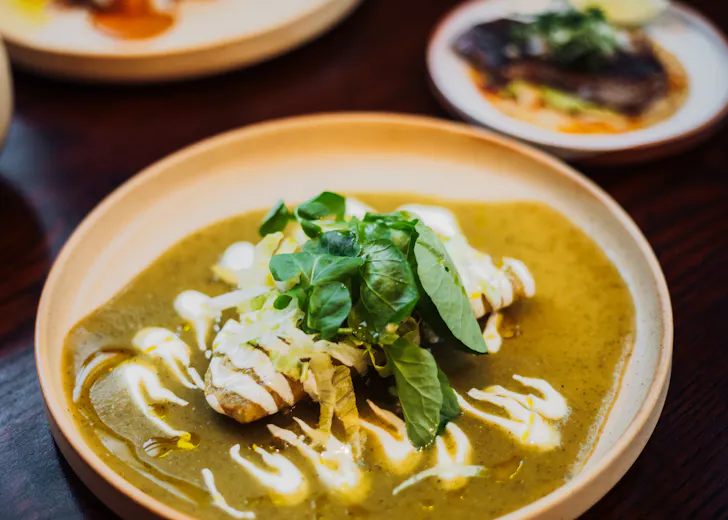
Image Credit: Apapacho | Wellington NZ
The small, unassuming corner spot on Ghuznee Street that Apapacho calls home is the perfect manifestation of that idea. Opened by Joshua and his brother Kevin earlier this year, it is a calm, restrained room of cream, ochre and dark wood. Succulents and cacti are dotted about, but there are no sombreros nailed to the wall or explosions of primary colour. Some of the bones were already here, including all that wood, which Joshua realised reminded him of the old cantinas of Mexico. The bar tiles reference the breakfast counters found in Mexican markets while the brown booths and old furniture have something of a grandmother’s house about them.
This familial warmth is intentional. Apapacho comes from Nahuatl, an indigenous language spoken predominantly in central Mexico, and, as Joshua explains it, means to hug someone with your soul. Not just a hug, but that particular feeling of being pulled in by your grandmother and immediately feeling warm and looked after. Sometimes notions like this can feel forced or quaint, here it feels more than appropriate and you can see it in every last element.
It is this commitment to connection that runs throughout the menu. Joshua’s recipes have roots in the food of his mother and grandmother, but he talks about applying everything he has learnt since: technique, balance, different ingredients, the relationship between sweet, acid and salt. Mexican recipes brought here and allowed to interact with what is actually available in Aotearoa. A brunch menu of iconic dishes brought to Pōneke: huevos rancheros, chilaquiles, tacos and even guac and chips.
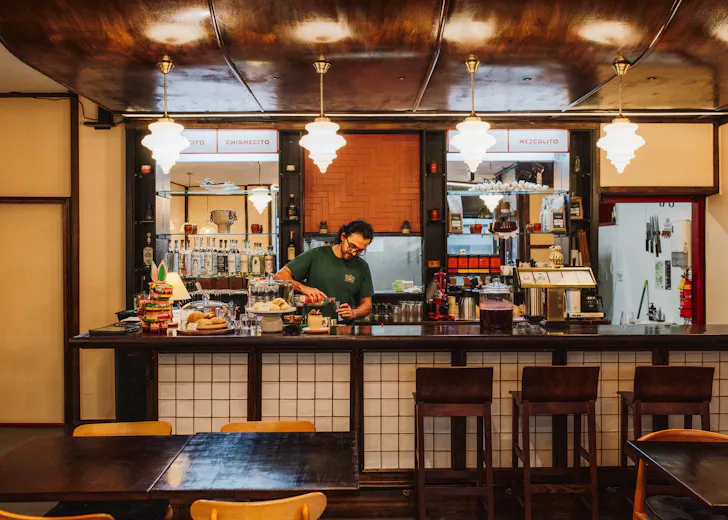
Image Credit: Apapacho | Wellington NZ
I know fusion is a dirty word, but I guess when you think about it all the best food is, to a certain extent, fusion. Ideas and processes brought from one place to another before being applied in a new context, using local ingredients and abundance. This is what Apapacho does so well. Meat comes from Conscious Valley out in the Ohariu Valley, a name on Pōneke menus across the city fast becoming synonymous with excellence. Fresh habaneros, serranos, manzanos and jalapeños come from growers in the South Island, while some dried chillies still have to be imported because the full spectrum Joshua grew up cooking with simply doesn’t exist here yet. Apapacho gets its tortillas from Hands Down Tortillas in Hawkes Bay, who make them from scratch using the ancient process of nixtamalisation. He talks of how they are “such a great product, because they follow how they should be done. And they respect that process.”
It is these three ingredients that form the basis of their birriaquiles, a strong contender for my dream bowl of food. It is also, essentially, the most excellent plate of nachos in the world. Those tortillas are cut and fried in house and are tossed through lamb birria before being loaded with feta cheese, shredded lamb, refried beans and all manner of other good things. There are layers of heat and fat and crunch, but the actual masterstroke is what happens underneath. The chips at the top remain crisp and structural, whilst the ones at the bottom surrender completely to the birria. They go soft and dense, almost fudgy, rendered down with the fat and broth.
The huarache benedict is probably the clearest example of Apapacho’s dual identity. On paper it sounds suspiciously like the kind of fusion dish I would normally run from very quickly and never look back: eggs Benedict, but made Mexican by putting chilli in it. In practice though, it’s brilliant. The English muffin is replaced by a toasted corn masa base, crisp around the outside but with enough chew to hold everything together, while ancho chilli runs through the hollandaise. It is warm and luxurious and purposeful.
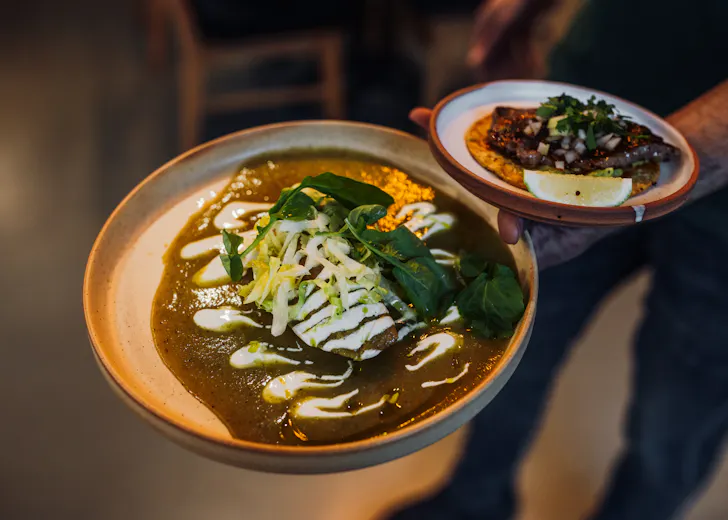
Image Credit: Apapacho | Wellington NZ
I could go on breaking down each dish, but that would spoil the fun. Every single one is familiar in its design, but utterly revolutionary in how it is executed.
What I will rhapsodise about though, is the hot sauce.
Just before the food arrives, a small, full bottle of it lands on the table. It is the kind of orange that means something serious. Not the playful, bright orange of a child’s crayon, but the brooding orange of a hornet you would Google to see how deadly it is. Hot sauces tend to be either obnoxious or vague. This is neither. You only need to be sparing with it, but it makes its presence known. A few drops and suddenly the whole dish seems to sit up straighter.
Apapacho feels different because Joshua knows exactly what Mexican food is. He is cooking the food he grew up with, the recipes of his family, the breakfasts and late-night food of Mexico, then working out what those things can become here. He is applying a lifetime of eating and cooking to the cuisine he loves and sharing it with all of us here in Pōneke. I had been waiting for something that was never going to arrive from a version of the cuisine that had travelled through too many filters before it reached me. But it turns out I was right, the food I had in the past wasn’t quite right. I did want that Mother Gaia epiphany after all – I just needed someone to cook it and really mean it. To experience apapacho.
Want more? Check out:
See more Urban List in Google Search.