Wellington Cafe Cloudbuster Is Tiny, That’s The Whole Point
A good cafe should occasionally make you wait. Not because the coffee machine is broken or somebody has forgotten your order, but because the person behind the counter is talking to somebody else. Properly talking with them, not glib surface chats but true, in-depth ones. They might know their name, their kids, where they work, what happened last week. Then, when it is your turn, they do the same with you.
This is the idea at the centre of Cloudbuster, a new tiny cafe perched at the edge of Pōneke in Island Bay. Owner Jack Wedde tells me he has designed Cloudbuster to work within the community. “The efficiencies that you build into them are so that you can be flexible,” he explains. “So that you can stop and be social.” It is a small distinction but an important one. Most businesses are built around the idea that efficiency means doing more things, for more people, more quickly. “You don’t just have to charge through to the next order or the next docket. You create a work environment where you can pause. You can look at people and you can speak to them.”
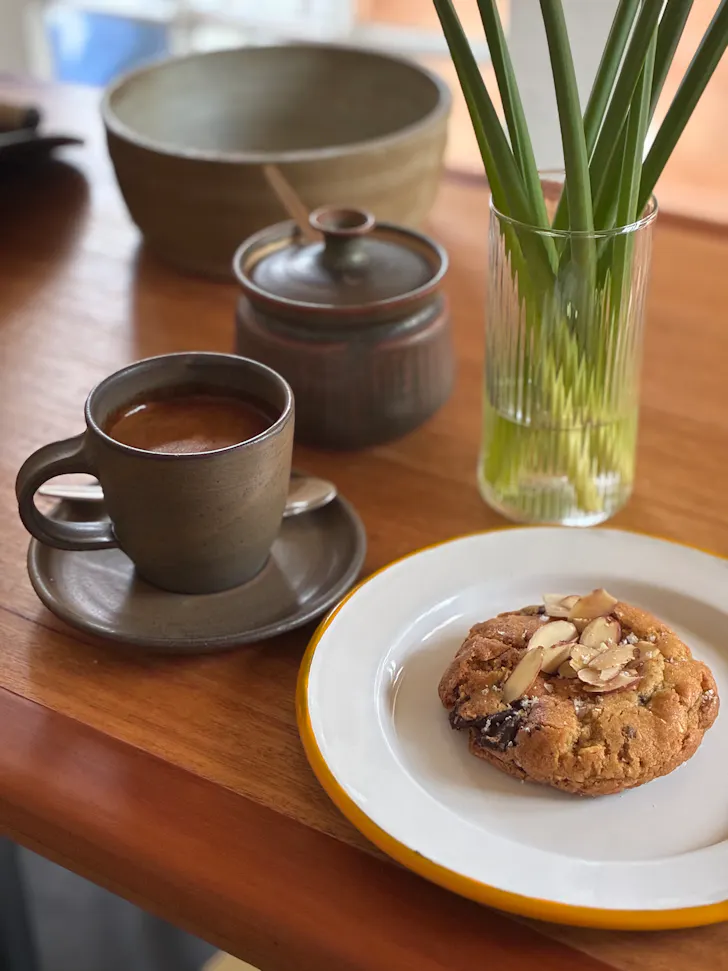
Image Credit: Cloudbuster | Supplied
This design is not without understanding; Jack has spent enough time in hospitality to know the other version. He started at 18, initially in kitchens before quickly moving into front of house. There was a year in Japan working in bars, the early days of Sweet Mother’s Kitchen, then a decade in Melbourne where hospitality ran alongside a career as a screenwriter. He wrote for television for seven or eight years, including work on New Zealand crime drama The Gulf. When he returned to Wellington, hospitality gradually moved from the thing supporting his other career to the career itself. He spent a couple of years at two of the best bread related spots in the capital: Gramercy then Good Boy.
Across all of those places he developed a fairly specific idea about the sort of hospitality he likes: small. “The selection’s tight, but we’ve thought about it. These are the things you will want,” he tells me. It applies to the food, but more importantly it applies to the business itself.
Cloudbuster is tiny because Jack wants it to be tiny. He had his eye on the site before it became available, in large part because it was exactly the right size. He has managed restaurants and front-of-house teams before and knows what happens as they grow. Eventually management becomes the job. “You don’t get to do a little bit of baking and a little bit of coffee and a little bit of talking to people. You kind of eventually just get pushed into a corner where all you can do is manage people.” So he has gone the other way. The cafe is small enough that he can make the coffee, bake, serve people and talk to them. The menu is small enough that he can make most of it himself. The whole operation is deliberately restrained.
That simplicity is visible in the food, but disguises something much more complex and knowledgeable. Everything sits somewhere along a nostalgic, comforting spectrum.The kahawai sandwich exists because it is essentially his dream sandwich. Smoked fish, cream cheese, capers, big chunks of salad peppered throughout. Smoked fish was something Jack grew up eating after diving or catching eels, or when friends brought some around. He wanted to share that with all of us. It is also, for what it is worth, probably now my dream sandwich. I have driven across the city more than once just to eat it.
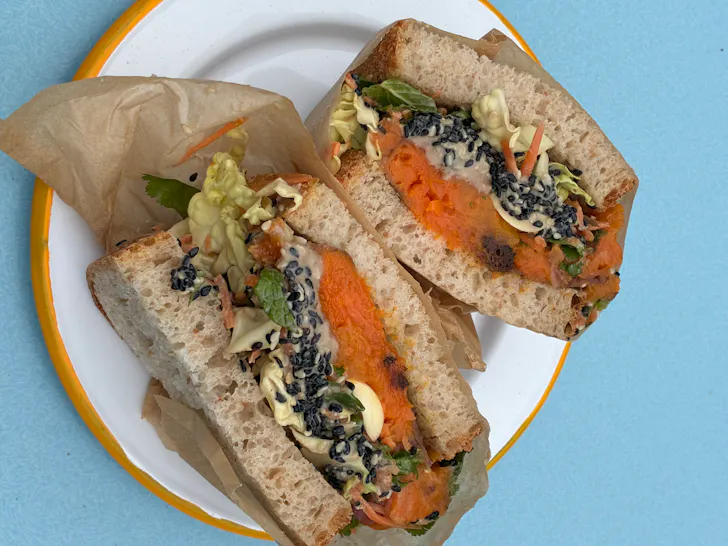
Image Credit: Cloudbuster | Supplied
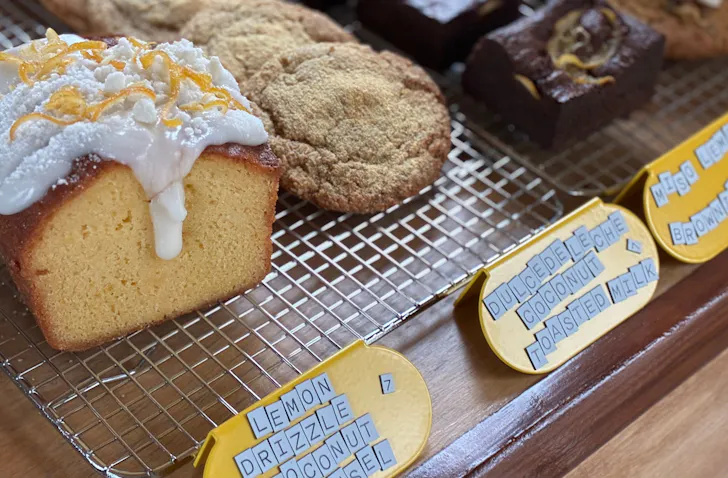
The cheese scone came about for almost the opposite reason. “I don’t like scones, particularly.” Unfortunately for him, the cafe sits opposite a park with huge numbers of children passing through every week. A cheese scone was non-negotiable. So he had to work out how to make one he actually wanted to eat. The current one is spiked with acidic pickled onion and comes slathered with cream cheese rather than butter. Then there is the ginger crunch, which is properly hot with ginger and nearly half of it is icing. The correct ratio.
With all of this artisanal home-cooked produce, Jack is also trying to keep Cloudbuster affordable. “We’re in a recession, right? So the food’s got to be achievable, affordable. It’s got to be accessible.” There is an obvious tension in hospitality between provenance and price. You can source the most extraordinary version of every ingredient available, tell everyone exactly where it came from and then discover you have made a sandwich nobody can afford to eat regularly. Jack is trying to find the point before that happens. “It doesn’t have to be a special event. It’s just like, come here every day, have a little something.”
This might be the most important thing about the whole place. We talk a lot about restaurants as cultural spaces, but cafes probably do far more of the day-to-day work. They are where you go alone without feeling alone. Where you take a baby because you desperately need to get out of the house. Where you meet somebody for 20 minutes that becomes an hour. Where the person behind the counter notices you haven’t been in for a while. For that to work, you have to be able to afford to return. And you have to want to stay.
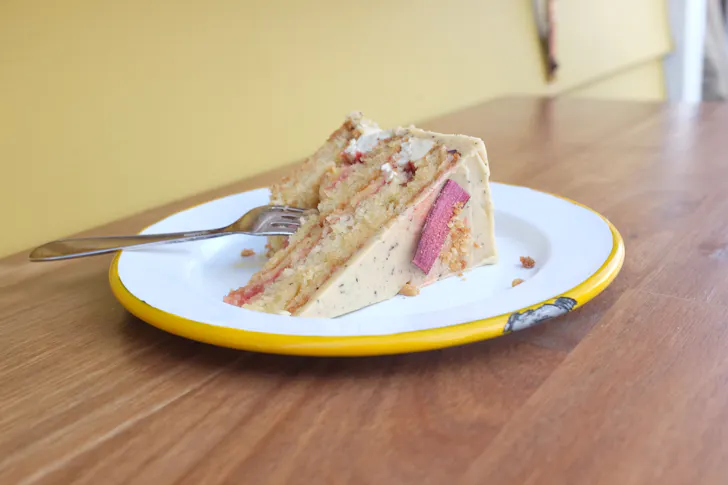
Image Credit: Cloudbuster | Supplied
This community that Jack talks about extends beyond the café itself. Next door is Zoe Porter and her beautiful pottery studio. The two were previously neighbours and Jack already loved her work. When he was considering taking on the space and she happened to be looking for somewhere new, there was a garage beside it with more room than he needed. Now the two businesses sit together. If you sit in, coffee is served in her cups and mugs, and treats are served on her plates. It’s a little touch people might not notice directly, but you can feel that element of warmth and community when holding it. Extraordinary cakes, the likes of which would not seem out of place in a beautiful bygone children’s story, are on the counter at the weekend and are made by another Island Bay resident Lydia Wisheart. Think multiple layers of soft cake sandwiched between thick swathes of inventive fillings and textures, all covered in swirls and odd shapes.
There is not much else happening along this particular stretch of the city. There is the park opposite, a shelter used by bus drivers and then these small businesses trying to create a little more reason for people to be here. “You’ve got to build a little bit of something,” Jack says. “Build a little vibe and a little energy in the space.”
When he puts it like that it doesn’t seem too complicated. And maybe that is the point. Because cafes like Cloudbuster are useful. Not useful in the sense of having Wi-Fi and somewhere to plug in a laptop. Useful because they give people somewhere to go. Somewhere that is neither home nor work, where spending money is involved but hopefully not very much of it. Somewhere you might see somebody you know and, eventually, somewhere somebody might know you.
The food here is great. Obviously. The coffee here is great too. But neither are really the point. The point is having somewhere to be. Somewhere to sit with people and take a moment.
Want more? Check out:
See more Urban List in Google Search.