
Apple’s Cheapest iPhone And MacBook Yet Raise An Awkward Question: Who Is “Affordable” For?
When Apple launches something “cheap,” the word lands with a slight clunk.
For decades, Apple has operated like the luxury wing of the tech department store. Its products are objects of aspiration: brushed aluminium, minimalist packaging, price tags that hover comfortably above the rest of the market. The company built an empire by selling the idea that technology could be both a tool and a status signal.
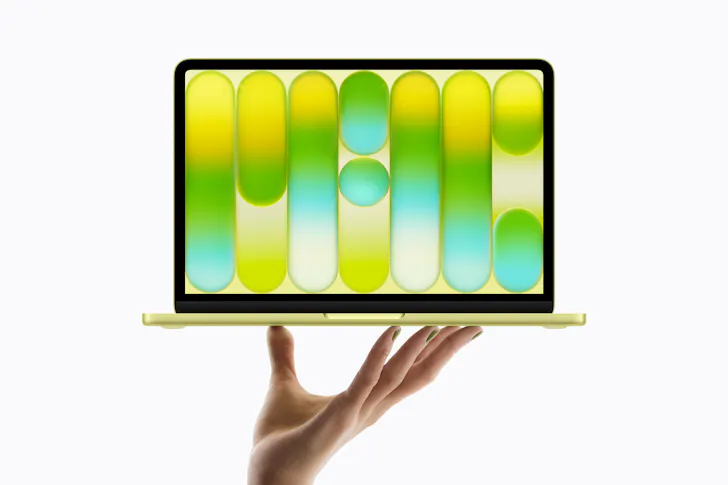
Which is why the release of its cheapest-ever devices, the entry-level iPhone (the iPhone 17e) and the new MacBook Neo, feels significant. Both start under $1,000, marking the first time Apple’s lowest-priced laptop and iPhone share the same entry price.
On paper, it looks like accessibility. In practice, it raises a more interesting question: is Apple becoming more relatable, or simply redefining what “affordable” means in an era of economic squeeze?
The timing is not subtle.
You Might Also Like:
- The Queensland Government Has Invested $1 Billion Into Tourism—Here’s Exactly What It’s Doing
- Gifts For Travellers: 23 Gift Ideas For The Frequent Flyer In Your Life
- Here’s How To Overhaul Your Tech To Modernise Your Home

Image Credit: Apple
Across much of the world, including Australia, the last few years have been dominated by inflation, rising rents, and a persistent cost-of-living conversation. When household budgets tighten, consumer tech is often one of the first luxuries to be reconsidered.
Against that backdrop, Apple unveiling a $899 laptop is a strategic pivot. The MacBook Neo is explicitly positioned as an entry-level machine aimed at students and everyday users. It runs on the same A-series chip architecture used in iPhones rather than the more powerful M-series chips used in premium Macs, a choice that keeps costs down while maintaining the ecosystem.
Seen through a purely economic lens, the move makes sense. When consumers become price sensitive, companies lower the drawbridge.
But Apple lowering the drawbridge is not the same thing as opening the gates.
The tension lies in what “cheap” means inside Apple’s universe.
A $899 starting point may be the lowest Apple has ever gone for a MacBook, but it still places the device above many Windows laptops and Chromebooks that students and families have relied on for years. In other words, the new entry tier does not compete with the true bottom of the market. It simply creates a more approachable on-ramp to Apple’s ecosystem.
Lower-priced devices are not just about immediate sales. They are about ecosystem capture.

Image Credit: Apple
A budget iPhone or MacBook means more people entering the Apple environment: iCloud storage, AirPods, Apple Music, app purchases, eventual upgrades and endlessly annoying charger cables. Once someone is inside that ecosystem, leaving becomes seriously inconvenient.
Seen this way, the budget devices are less about empathy and more about customer lifetime value.
This is classic Apple strategy. The company rarely races competitors to the lowest price. Instead, it carefully carves out a lower rung that still sits comfortably above the bargain bin.
Think of it less as a budget aisle and more as the velvet rope being moved a few steps closer to the door.
There’s another cultural layer to this moment.
Over the past decade, Apple products have increasingly become symbols of a certain economic tier. The flagship iPhones now routinely climb into four-figure territory. High-end MacBook Pros can easily exceed the cost of a used car.
That positioning has helped Apple become one of the most profitable companies in the world. But it has also sharpened the perception that the brand lives slightly above everyday financial reality.
The introduction of low-priced devices could be read as an attempt to soften that perception. A $899 entry point signals awareness that not every customer can or will spend $1,500 on a laptop.
Yet there’s a paradox here. In an era where the wealth gap feels more visible than ever, the idea of a $899 device being framed as “affordable” can still feel slightly detached from the financial pressure many people face.
For some consumers, it reads as accessibility. For others, it reads as that crappy housemate whose parents pay their rent.
Of course, Apple rarely makes a move that isn’t strategic several steps ahead. Apple is not discounting the brand. It is expanding the funnel. So, is the brand becoming relatable?
Well, yes and no.

Image Credit: Apple
Yes, because offering genuinely lower entry points acknowledges economic reality. A sub-$1,000 iPhone or MacBook would have been almost unthinkable in Apple’s lineup a decade ago.
But also no, because the move does not fundamentally change Apple’s identity. The company still builds its narrative around premium design, high margins, and aspirational ownership. The cheaper devices do not dismantle that image.
In some ways, Apple’s shift says as much about the global economy as it does about the company itself.
When a brand synonymous with premium pricing begins expanding its budget tier, it is often a signal that consumer spending is tightening. Even the most loyal Apple customers are thinking harder about what they buy.
So the new, cheaper iPhone and MacBook are not just products.
They are an acknowledgment that the tech industry’s most luxurious brand now has to speak to a broader, more financially cautious audience. Not everyone can afford the penthouse, but plenty of people will still pay for the lobby.
The MacBook Neo and iPhone 17e launch on March 11 and can be ordered here.
Main Image Credit: Apple
Editor's note: Urban List editors independently select and write about stuff we love and think you'll like too. Urban List has affiliate partnerships, and if you purchase something through the links in this article, we will earn a commission from those partners. To find out more about who we work with and why read our editorial policy here.
The News You Want

The New Western Sydney International Airport Will Open This October—Here’s Everything To Know

High-Tech Check-In, New Lounges And More Retail—Inside Melbourne Airport’s $4.5 Billion Expansion
