
Your Ultimate Guide to the 2026 Australian Open
 Eloise Luke
Deputy Editor (Local Markets) | Urban List

If there’s one event that defines summer in Melbourne, it’s the Australian Open—for three weeks every January, the city shifts into AO mode. Whether you’re a diehard tennis tragic or mostly here for the food, music and vibes, the AO is as much a lifestyle event as it is a sporting one.
With AO26 bringing expanded fan zones, bigger after-dark programming and one of the most stacked Opening Weeks yet, it pays to plan ahead. From when to go and how to get there, to which tickets are actually worth your money and how to beat the heat, here’s everything you need to know before heading courtside.
Your Australian Open Guide At A Glance
Jump To:
- When Is The Australian Open 2026? Key Dates & What’s New
- How To Get To The Australian Open (Without The Stress)
- How To Get Tickets (And The Best Sessions To Book)
- What To Do At The AO Precinct: Food, Drinks & Fan Zones
When Is The Australian Open 2026? Key Dates & What’s New

Returning to Melbourne Park from mid-January through to early February 2026, AO26 once again blurs the line between elite sport and all-day festival.
The tournament officially unfolds across two phases. Opening Week runs from 12–17 January 2026, followed by the main draw from Sunday 18 January, wrapping up with the women’s and men’s singles finals on Saturday 31 January and Sunday 1 February, respectively.
Across six days, fans can catch Australian Open qualifying matches, open practice sessions, charity and exhibition matches, and Kids Tennis Day, all with lighter crowds and far better access than main-draw play. It’s also the most affordable way to experience the AO precinct in full swing—food, bars, music and all.
What makes 2026 feel different is how much further the AO has leaned into its festival identity. Expect expanded fan zones, more shaded lounge areas for heatwave days, and a stacked AO LIVE entertainment program that keeps Melbourne Park buzzing from midday into the early hours.
Insider Intel
- There’s also a brand-new Opening Ceremony on Saturday 17 January, officially launching the tournament before the first ball of the main draw is hit.
How To Get To The Australian Open (Without The Stress)
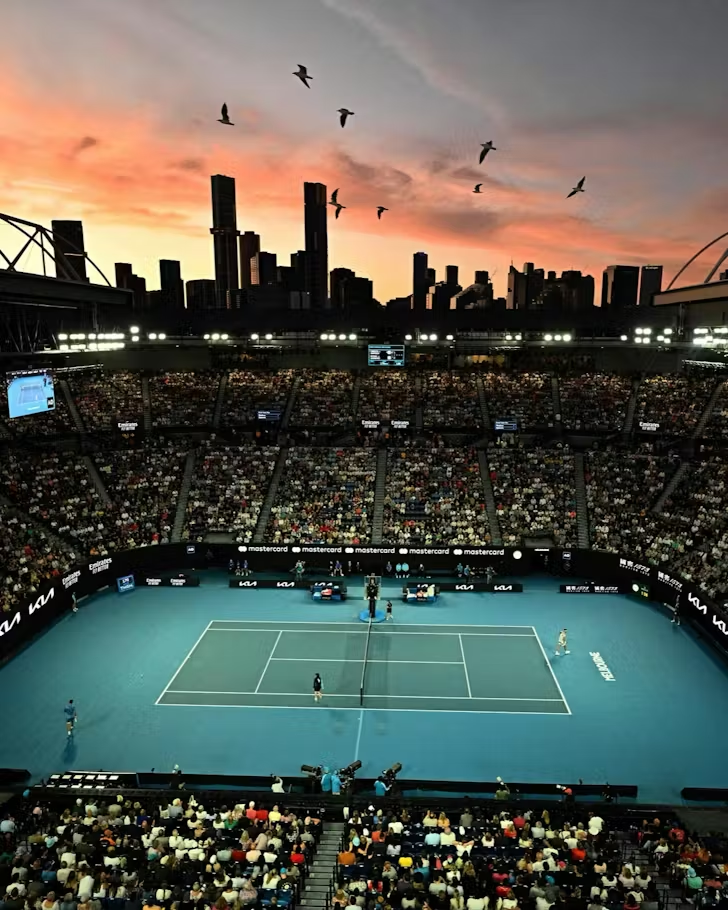
Getting to Melbourne Park is easy. Getting home smoothly—especially after a late-night epic—is where a little planning pays off.
- Train: Your safest bet. Flinders Street or Richmond stations both put you within walking distance, with the stroll through Birrarung Marr or down Swan Street often faster than waiting in post-match queues.
- Trams (Route 70 to Melbourne Park or Route 75 to Jolimont): Convenient earlier in the day, but they tend to bottleneck after night sessions. If you’re leaving late, walking back toward the CBD before jumping on public transport can save serious time.
- Walking: Super underrated. From the CBD it’s around 10–15 minutes, and on busy nights it’s often the quickest option door to door.
- Rideshare: This works thanks to designated drop-off zones, but surge pricing after big matches is almost guaranteed.
If you’re driving, be warned: parking around the venue is limited and traffic can be brutal. CBD car parks or park-and-ride options paired with a short walk are far less stressful.
Insider Intel
- For anyone staying late, Night Network services are essential—matches regularly run past midnight. Accessibility-wise, step-free access is available at major gates, with venue teams on hand to assist throughout the precinct.
How To Get Tickets (And The Best Sessions To Book)

Tickets are released in stages, so knowing what you’re aiming for helps enormously.
A Ground Pass is the most flexible option. It gives you access to Melbourne Park, practice courts, outside courts, food precincts, bars, music stages and big screens.
If you’re after guaranteed seats, arena tickets are where strategy matters. Rod Laver Arena hosts the biggest matches and offers the best airflow when the roof is open. Margaret Court Arena delivers an electric atmosphere, though it can feel hotter on warm days. John Cain Arena is the value sweet spot—stacked line-ups, great vibes and often a better chance of seeing top players without premium pricing.
For maximum bang for buck, Opening Week ground passes, John Cain Arena day sessions, and early-round night sessions are all smart picks.
Those wanting to elevate the experience can look to AO Reserve, which pairs premium seating with curated dining and exclusive access, or AO Travel & Experiences, which bundles tickets with accommodation and transport—particularly popular with interstate and international visitors.
Insider Intel
- Signing up to AO Extras is also a savvy move if you want early access to ticket drops and updates.
What To Do At The AO Precinct: Food, Drinks & Fan Zones

Even if you only plan to watch one match, chances are you’ll stay all day. The AO precinct is designed for exactly that.
Food precincts roll out across Melbourne Park, with vendors rotating throughout the tournament—meaning second-week eats often look very different to opening days. Between matches, you’ll find cocktail bars, beer gardens and shaded lounges, while AO LIVE delivers DJs, live music and after-dark energy that turns the precinct into a genuine night festival.
Practice courts in The Village are a must, particularly mid-morning when player access is at its best, and big screens dotted throughout the grounds mean you never really miss the action. On hot days, shaded areas, misting zones and free water refill stations are everywhere—bring a reusable bottle and pace yourself.
Insider Intel
- The smartest way to do the AO? Treat it like a full-day plan: practice courts and coffee in the morning, a long shaded lunch, a wander through fan zones and merch stops in the afternoon, then settle in for a night session before strolling back toward the city once the crowds thin.
Image credit: Australian Open | Instagram

17 Of The Best Luxury Hotels In Melbourne To Book (February Edition)

These 20 Cafes Across Melbourne Are Dialled In And Editor-Approved
