
First Nations Women Lead Garrigarrang Badu, A Powerful Act Of Cultural Continuation
 Eloise Luke
Deputy Editor (Local Markets) | Urban List
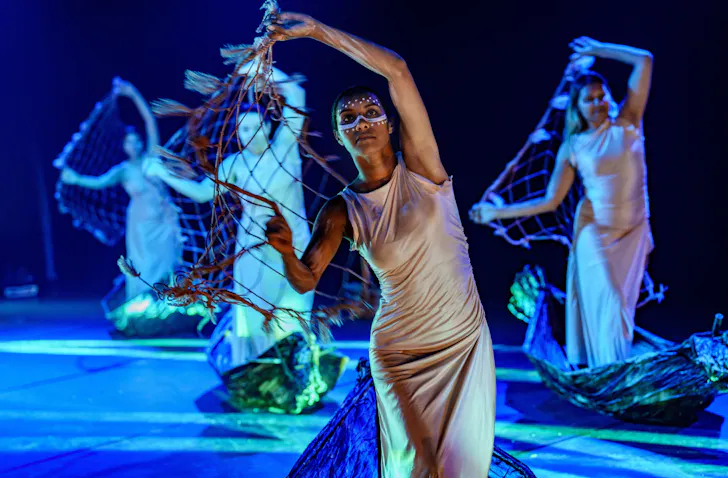
In January 2026, Garrigarrang Badu will premiere at Sydney Festival, performed by Jannawi Dance Clan at the Sydney Opera House. Written entirely in Dharug language, the work is led by artistic director Peta Strachan, a Dharug woman from the Boorooberongal Clan—tracing the flow of Country from saltwater to freshwater, honouring the women who have carried story, language and culture for generations. Blending traditional and contemporary movement, Garrigarrang Badu brings together women from Aboriginal and Torres Strait Islander nations across the continent in a powerful act of cultural continuation.
Ahead of its Sydney Festival season, we sat down with Strachan to discuss the making of the work—how dance acts as a catalyst for language revitalisation and healing, and what it means to present Dharug stories on one of Australia’s most culturally significant stages.
Background, Heritage And Influences
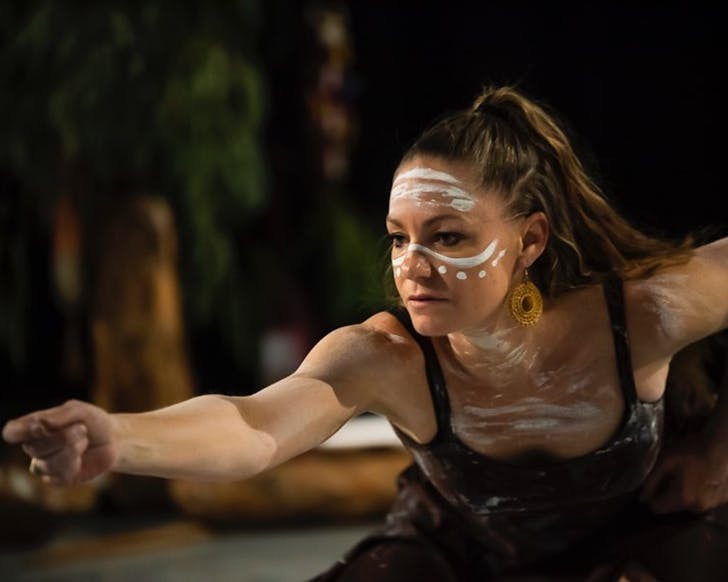
Image credit: Jannawi Dance Clan | Instagram
When we first speak to Peta, she's straight out of dance rehearsal, which will be non-stop for the next three weeks. There's a lot of pressure to have the performance ready in time, and as artistic director of a company that isn't full time, she takes on the role of choreographer and director, as well as costume and prop designer.
Yet, this kind of preparation comes somewhat naturally to her. Having been involved with the arts from a very young age, the connection between Country, storytelling and dance is engrained in her heritage.
"I think I was just born a dancer. It’s hard to explain. For me, it’s just in me—it’s who I am," Peta tells Urban List.
"I grew up in the bush on a farm, and just up the road there was a little bush ballet school. There, I trained in classical ballet up to advanced. I went to NAISDA Dance College when I was about 17, which took me around Australia to different communities, learning cultural knowledge, ceremony, and many different styles of dance."
Place is foundational to her process, and she leans heavily on the experiences from her formative years.
"I grew up in the Hawkesbury, which is Boorooberongal clan area, just in front of the mountains, near a place called Yarramundi," she reflects.
"My mum and all her family come from just up the mountains—Kurrajong, Little Wheeny Creek, all up that area. So I grew up on Dharug Country, which obviously helped. I feel very connected."
Crafting Garrigarrang Badu
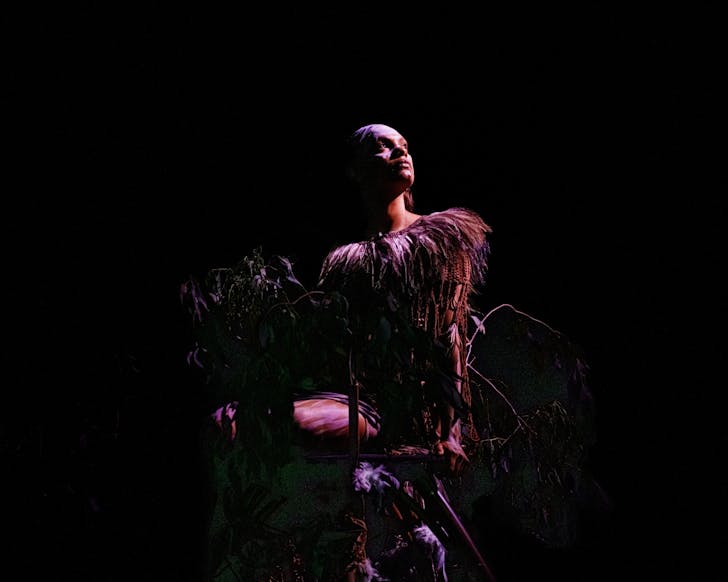 Image credit: Jannawi Dance Clan | Supplied
When asked how the idea for Garrigarrang Badu was sparked, Peta responds quite candidly.
"Definitely creating my own dance company, Jannawi Dance Clan. We really needed our own language to sing our songs in ceremony, so we created a song that starts from the mountains to the sea, from freshwater to saltwater. It’s the continuation and revitalisation of Dharug language, story, song and dance."
"We’ve been working on this for about six years, and it carries a lifetime of experience for me—training at NAISDA, dancing with Aboriginal Islander Dance Theatre, Bangarra, and then having my own company. All of those experiences are embedded in this work."
Yet this process was no individual feat. Garrigarrang Badu is the result of extensive collaboration between herself, late Dharug actor and singer Richard Green (who sadly passed during the years of creation), Dharug woman and knowledge holder Julie Bukkari Webb, and cultural consultant Matthew Doyle. Together, the four of them worked on the language, the songs, and the story.
"I think my biggest inspiration and mentor would be Rhoda Roberts," says Peta.
"What Rhoda created through Sydney Dreaming really inspired me because everything she presented was Dharug story on Dharug Country.”
A part of this involves reflecting on the entire process, and how each person and story comes together to produce the final performance.
"Being a dancer my whole life, we talk with our bodies—we express the story of Country through our bodies. When we started singing in language, it opened something else," she shares.
"Dance is already very spiritual, but singing in language created a whole other spiritual connection to our ancestors and to our land—you can really feel the ancestors come through you in a different way."
The message of Garrigarrang Badu is informed and enhanced not only by her years of experience, but also by the places in which the work is showcased. Place becomes a powerful driver in the message of the dance, and how it is received. As Peta recalls;
"Our first showing at Old Government House in Parramatta Park was pivotal. That place is a big part of the story—where the saltwater meets the freshwater. When the women brought the nowies (canoes) out, being at Old Government House made it even more striking. So much happened to our people in that park."
"It made people very emotional. Some people were crying in the audience. It felt like tears of joy, but also tears of remembering and of everything our people have been through. Seeing the new generation of women coming through the work was very powerful."
Women, Cultural Knowledge And Leadership
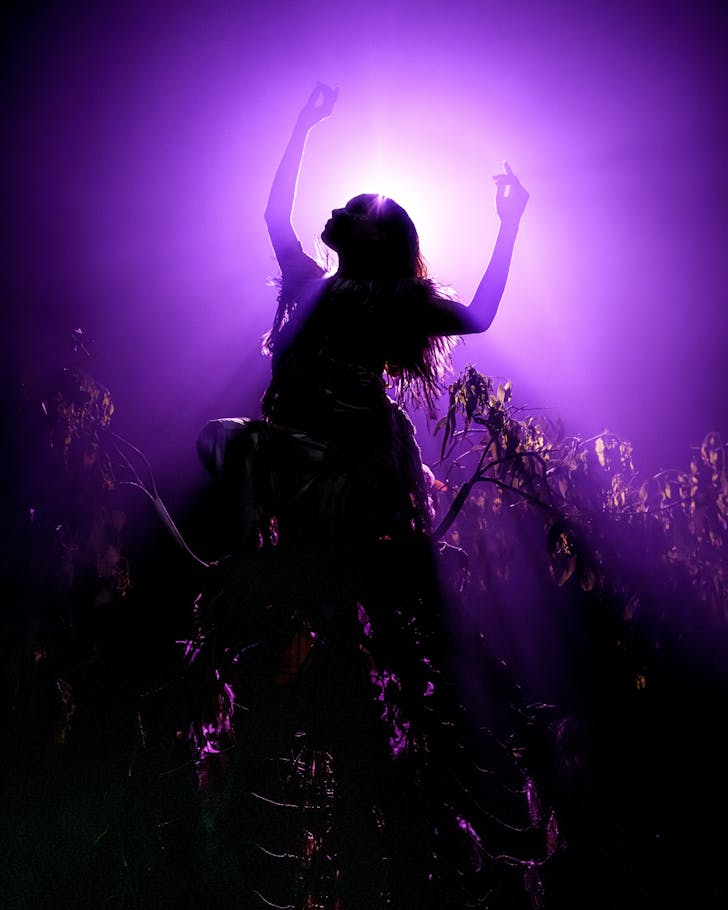 Image credit: Jannawi Dance Clan | Supplied
Garrigarrang Badu is performed by an all-female ensemble, and as we speak to Peta, she references the women dancing, and how integral they are to the piece. And while the dance follows their story, Peta feels it is important to also recognise the men who have played a role in bringing it to life.
"We are an all-female cast, and it is a women’s work, but I want to acknowledge that many of our amazing brothers and uncles have supported us along the journey and contributed to the work as well. It’s entirely women performing, but the men have helped in certain areas of the show."
From a creative standpoint, however, Peta outlines that there are definitely fewer cultural barriers working with women, especially surrounding male and female roles.
"For me, as a woman, I have more freedom when I’m working culturally with women. With men, there’s only so much I can teach, and when it comes to cultural knowledge, there are things we can’t teach men."
"Having all women, we’re on the same journey—there’s an understanding in how we connect and work together. The way we work is different to how men might, and in my experience, women are freer. We have more freedom in the space by being together."
The work also brings together women from Aboriginal and Torres Strait Islander nations across the continent, a process which in turn is teaching them to communicate Dharug language and stories.
"For me, being a Dharug woman, everything happened to our mob first—the first massacres, the first Native Institutions, the first land rush, the first impacts of the frontier wars. And we’ve had a long way to come back in revitalising our language and culture."
"Having women from all around be part of the process strengthens Dharug people and helps others connect deeply to the land they’re now living on, which is Dharug Country," she points out.
"Now we have women from all over the country speaking Dharug, singing in Dharug, and knowing our stories, which helps keep them alive."
The Legacy Of Storytelling
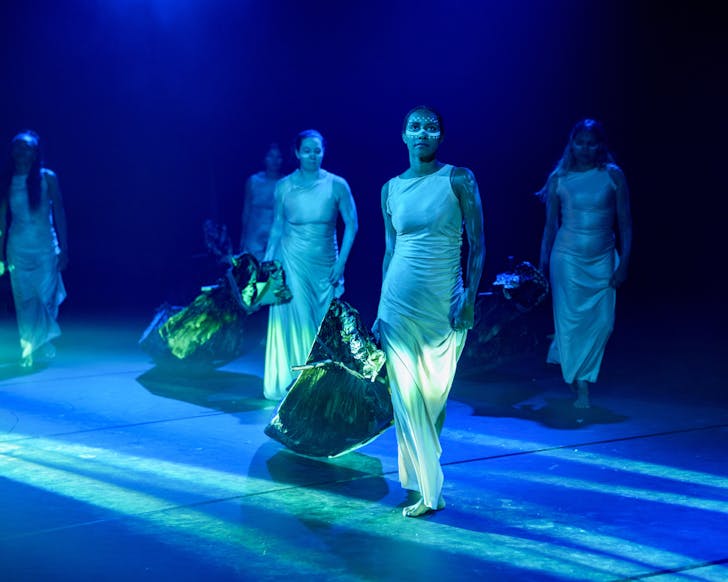 Image credit: Jannawi Dance Clan | Supplied
The importance of passing on language and stories through dance isn't limited to the performance itself. Peta sees the act of dance as its own form of language preservation and storytelling, especially for younger generations.
"Every dance has a story," she tells us.
"Through Garrigarrang Badu, my grandchildren are singing in Dharug language, knowing Dharug stories. They know how to bless Country and acknowledge Country, and in years to come, they’ll pass on these dances and songs."
There's also something to be said about the act of performance itself: the role of movement, breath, song, and rhythm in channelling these stories from dancer to audience.
"There's a moment in the show when we start and I'm like, this is where we take a big breath, and then we start the journey," Peta tells us.
"Everything together—movement, breath, song and rhythm—is really powerful. It takes us from the mountains, to Yarramundi where the rivers meet, through mangrove Country where freshwater meets saltwater, and then down to saltwater where we bring the nowies out.”
Perhaps these elements come naturally through the act of performance—but for the dancer, they act as a catalyst for bringing these stories to life.
There are several important messages Peta hopes audiences will carry away from the performance, and the impact she hopes it will have—but one stands out among the rest.
"Healing. This work is about healing. We embody the spirit of Country and the spirit of our ancestors. We physicalise the voice of Country through dance. I hope it opens people’s eyes to how much story and language still exists here, even beneath a big city."
With all of this considered, we are curious how Peta knows once a moment, or session of the work is finished. How does she decide that it is ready to perform?
This question isn't as easily answered as it is asked.
"I don’t think it’s ever really finished." She takes a moment to think, before continuing.
"But when you finally see all the dancers in the space and start running the work, you make those last decisions—taking things out, adding things in. Then you feel the piece is ready."
Garrigarrang Badu, by Peta Strachan and the Jannawi Dance Clan, will take the stage of the Opera House in 2026 for the Sydney Festival. The show runs across three sessions: Friday 9 January, at 6:30 pm, and Saturday 10 January, at both 1pm and 6:30pm. You can book tickets online to secure your place.
Main image credit: Jannawi Dance Clan | Instagram

Sydney’s Best Live Music Venues Right Now

19 Of Sydney’s Best Emerging Musicians Making Major Noise
