
Sydney Musings With Luke Davenport, The Making Of A Food City

Sydney Musings is an original local series of intimate conversations tracing Sydney's creative undercurrent and exploring the enduring exchange between a city and the people inspired by it.
It’s raining in Sydney when I call Luke Davenport from a small meeting room at The Commons, Chippendale.
Like many conversations between Sydneysiders, we default the start of our chat by talking about the weather; the sporadic thunderstorms of late and how we hope the clouds might clear by evening.
But somewhere along the way, we dip into Copenhagen bakeries, fermentation labs, single-boat fishermen, beef tongue cooked over wood-fire and a question that’s increasingly hard to ignore of late: has Sydney quietly become one of the world’s greatest food cities?
Luke thinks so.
He’s also the pinnacle archetype of the kind of chef Sydney has become almost too good at producing; a generation of Australian hospitality talent who left home believing excellence existed elsewhere, only to return and discover that the city they’d grown up in had evolved into something worth championing in its own right.
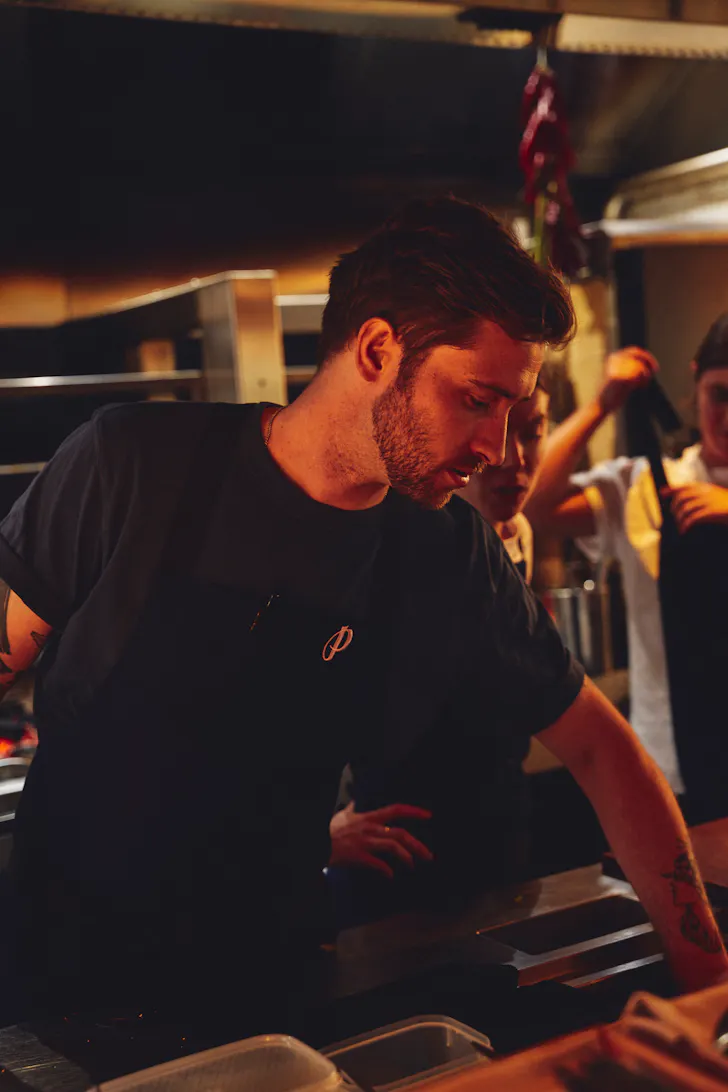 Image credit: Supplied | Ethan Smart
Today, Luke leads the kitchen at Oxford Street’s 25hours Hotel Sydney The Olympia, The Palomar—an Australian outpost of the acclaimed London restaurant. Founded in 2014 by husband-and-wife team Zoe and Layo Paskin, The Palomar quickly became one of the most defining restaurants of London’s dining renaissance, earning a reputation for its open-fire cooking, vibrant atmosphere and a menu taking notes from Southern Spain, North Africa and the Levant—not to mention, a baklava ice-cream sandwich that has become akin to dining lore (and rightfully so).
Its Sydney iteration, which opened its doors in October 2025, marked the group’s first venture outside of the UK, a pretty significant vote of confidence in a city that has spent the past five years drawing increasingly serious international hospitality attention (Nobu anchoring itself at Crown Sydney in late 2020, as well as Oncore by Clare Smyth followed in 2021, just to name a few).
Luke, however, didn’t arrive here by accident.
“I’ve been all over the shop,” he laughs.
Before leading one of London's most celebrated restaurant exports, there was a year at Noma in Copenhagen. Before that, London. Canada. Bakeries. Fine dining restaurants. French bistros. Like plenty of young Australian chefs at the time, Luke had bought into the idea that if you wanted to be a better chef, you had to go overseas.
“Ten years ago, you had to go to Europe,” he says.
“That was just kind of the way that a lot of the young chefs thought.”
It was a time where the industry’s biggest conversations seemed to be happening elsewhere. Copenhagen was redefining modern gastronomy. London was booming. Michelin stars still carried an almost mythical weight.
For young chefs coming up in that era, Noma loomed especially large. Opening back in 2003 in the Copenhagen neighbourhood of Christianshavn, and now boasting a social following of over a million, the restaurant became the standard-bearer for what would come to be known as New Nordic cuisine: hyper-seasonal, ingredient-led cooking rooted in place, shaped by preservation and foraging.
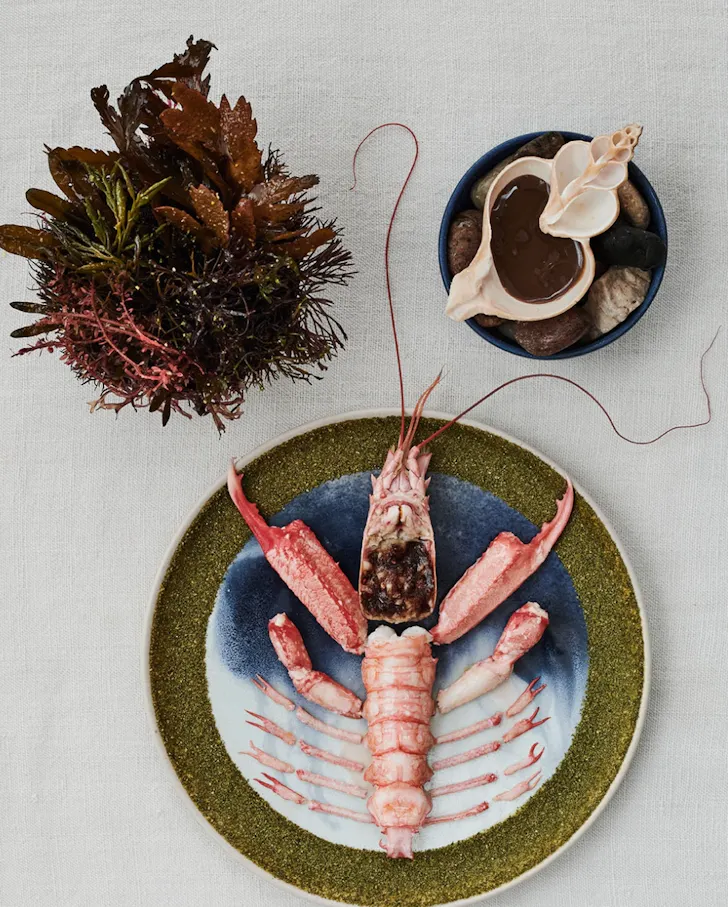 Image credit: Instagram | Noma
By the time Luke had arrived in Denmark, Noma had already altered the course of modern dining. It had debuted on the World’s 50 Best Restaurants list at number 33, before claiming number one four times, between the 2010 and 2014, cementing Copenhagen as one of the most important food cities in the world.
Its influence could be felt everywhere, from the rise of fermentation and wild ingredients to the way chefs spoke about provenance. Before this, the ‘creative possibilities’ of a single carrot, berry or clam were fairly nil.
“Noma in particular was such a hotbed for creativity,” he says.
“I spent some time working in the fermentation lab as well, which was insane. That was a big one for me, that kind of Scandinavian style of fermentation.”
If Australia’s relationship to produce is often about freshness, you could say Scandinavia prizes endurance. Where one celebrates ingredients at their seasonal apex, the other leans into all things curing and preservation.
"You've got these beautiful summers where everything's growing, but you've got to figure out a way that you can then use it again down the track,” Luke explains.
“They're preserving, they're pickling, they're fermenting and doing all these things so you can still have that amazing produce when it's freezing cold and snowing outside."
For a chef raised in Sydney, its deeper legacy, a philosophical one perhaps, was a teaching on how to think more rigorously about a place, and what a climate or landscape demands of a cook.
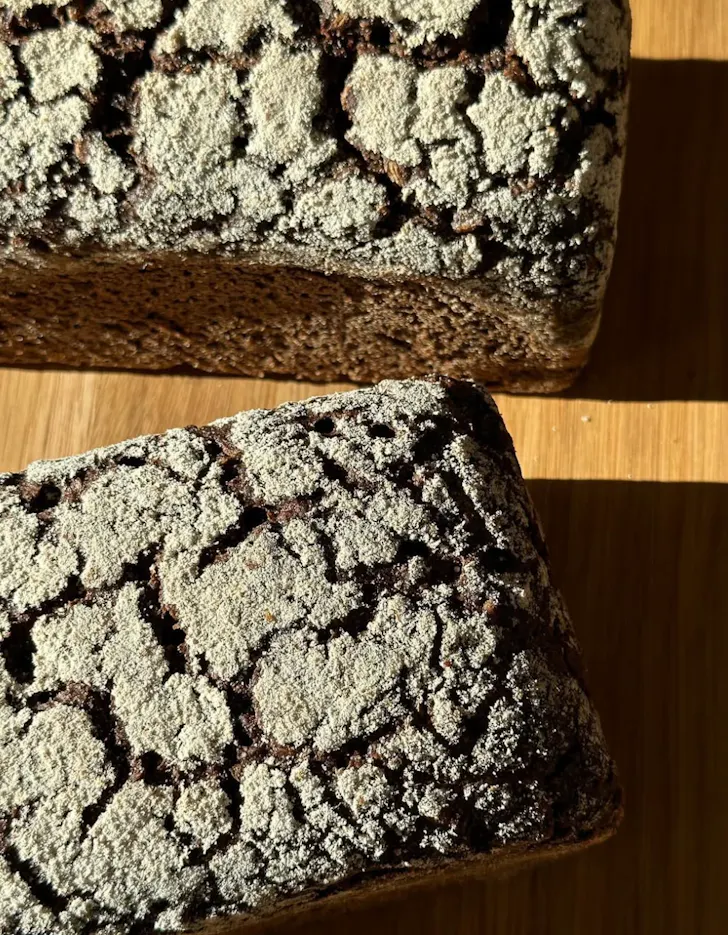 Image credit: Instagram | Hart Bageri
Then, there was Hart Bageri—the bakery Richard Hart opened in Copenhagen in 2018 after years as head baker at San Francisco’s Tartine. Hart arrived in a city already fluent in rye bread and laminated pastry but brought with him a different kind of baking orthodoxy; long fermentation, exacting naturally leavened loaves and arguably a near-fanatical attention to crumb, crust and grain. It brought bakery culture into the same conversation as fine dining, sourdough loaves became as sought-after as restaurant reservations.
"I basically just kept banging on their door being like, can you come and let me work here, even though I'd never worked in a bakery before."
But if Copenhagen sharpened his understanding of how deeply a city can cook from its own landscape, it also clarified something else. The way he wanted to cook was never going to belong entirely to Europe.
“I always came back,” he mentions.
“The way I wanted to cook was very much through that Sydney lens.”
This is a phrase that surfaces repeatedly throughout our conversation and Luke returns to how Sydney has developed its own kind of culinary language. Part of that comes from the city’s multicultural DNA. Part comes from the quality of Australian produce. Part comes from the constant exchange of ideas that occurs when chefs move between countries and cultures. But mostly, he believes, it comes from confidence
“I think we definitely have our own kind of way of doing things.”
"Sydney is such a melting pot of all these different people and different cuisines, but there is definitely this Sydney style in cooking. Once you've spent enough time here, you can really see the differences in what's being done here compared to Melbourne or Brisbane, or anywhere else for that matter."
By the time Luke was living in London and Copenhagen, Sydney was in the middle of a quiet but significant shift. Josh Niland was turning Saint Peter into one of the most talked-about restaurants in the country, recasting fish as a product worthy of the same care and nose-to-tail thinking more often reserved for meat. O Tama Carey was opening Darlinghurst’s, now closed, Lankan Filling Station and making hoppers, sambols and crab curry feel central to Sydney dining, rather than peripheral to it. Mat Lindsay was refining his own produce-led, fire-driven universe at Ester, before opening Poly; Sydney's gateway to fried potato and salted egg yolk.
“While I was in London, Saint Peter was becoming a big thing and Josh Niland was completely changing the landscape when it came to seafood. I remember thinking—'oh shit, I just left Sydney', suddenly everybody wanted to be there, everybody wanted to see what was going on.”
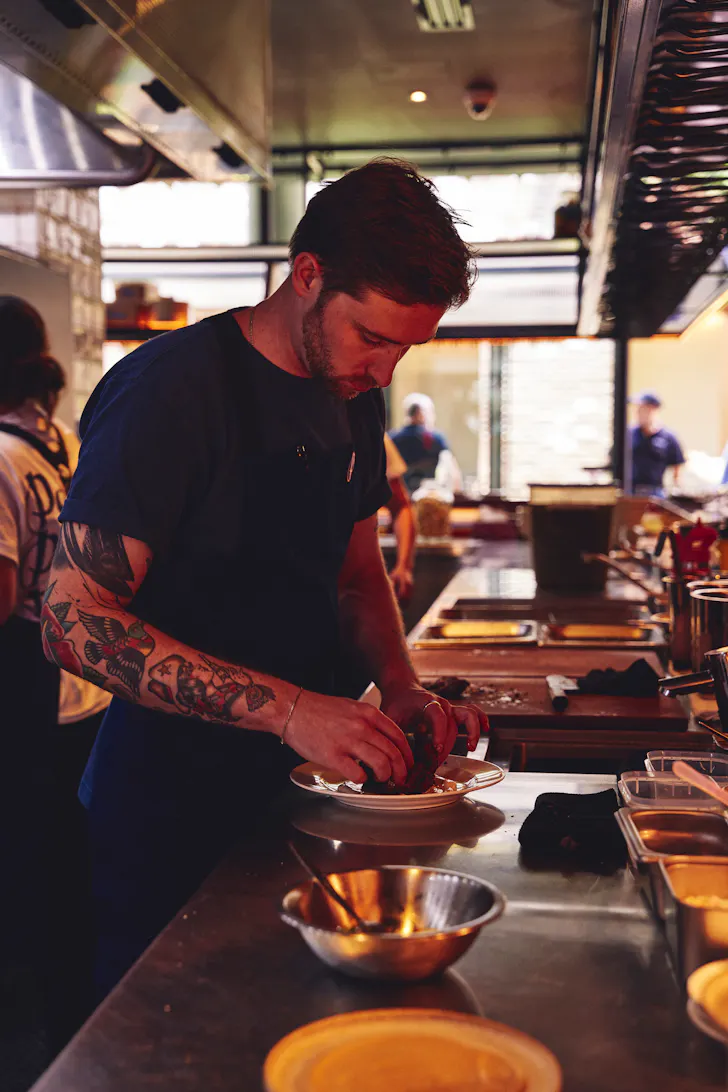 Image credit: Supplied | Ethan Smart
Today, he believes Sydney’s dining scene is up there with the best in the world with—"restaurants that can match anyone".
That perspective has become particularly relevant at The Palomar, on Oxford Street.
When the celebrated London restaurant announced plans for an Australian venture, nobody wanted to simply replicate what already existed in the UK. In Luke’s words, it would be recreated “through a Sydney set of eyes," rather than a direct copy and paste of its London counterpart.
And for Luke, the embodiment of this really starts with ingredients. One dish on the menu centres around blue mackerel sourced from a small-scale fisherman. When fish isn’t available, the team simply waits.
“We’re working with literally, a bloke and a fishing rod.”
This approach extends well beyond sourcing. At the kitchen counter, a place where “guests can see and feel the passion we all have for the food we’re putting on the table”, as The Palomar’s sous chef Chloe Sharp has told Urban List before—diner’s sit within an arm’s reach of chefs cooking over flame.
Luke describes it as the ‘engine’ of the restaurant and it’s impossible to spend so much time chatting to him without realising how much of his cooking actually revolves around such heat. Wood smoke appears everywhere from smoked creme fraiche folded beneath beef tartare to blackberries roasted for dessert. A beef tongue skewer glazed with date molasses and finished with fresh horseradish remains one of his favourite recommendations.
As we begin to wind down our conversation, Sydney’s afternoon downpour still in full swing, Luke’s career arc actually feels strangely fitting. Luke left Sydney to learn from the world’s leading kitchens. Today, he’s helping one of them find its own place here.
"I just want us to put up delicious food that people want to come and eat," he says.
“At the end of the day, I just want people to think of The Palomar as delicious food and a fun time. Those are the kind of restaurants I want to go to. Not, ‘Did you see that incredibly small microherb?’ I want people to leave thinking, ‘That was a memorably tasty dish. I had a great time.’”
Love the series? Read on for:
-
Sydney Musings With Local Designer Ian Tran, Is Shaping A City, One Sign At A Time
-
Sydney Musings With Hyun Lee, The Filmmaker Finding Solace In Asian Grocery Stores And Mystic Being
-
Sydney Musings With Iolanthe, On Building Creative Worlds And Party Alter Egos
Image credit: Supplied