
Table Tok Supper Club Is Built Around Bengali Home Cooking And Great Conversation
 Eloise Luke
Deputy Editor (Local Markets) | Urban List

Home cook Shishir grew up moving often—away from extended family, through many cities for study and work, before finally settling in Sydney, alone. She soon realised that if she wanted to find a community here (and a sense of belonging), she would have to build it for herself. Inevitably, Table Tok Supper Club was born from her passion of starting conversations with strangers, over food.
"Table Tok is a shared space for food and conversation, where Tok means the tangy sharpness of Bangali flavours and authentic dialogue between people—and it is homophonic to talk, as well," Shishir tells Urban List.
""I, like many immigrants, left a lot at home, in search of a new home in foreign lands. My supper club is my way to stay connected to my far away home, fragrant, people, and friends. These dishes that I cook became an exchange to trade connection and friendship."
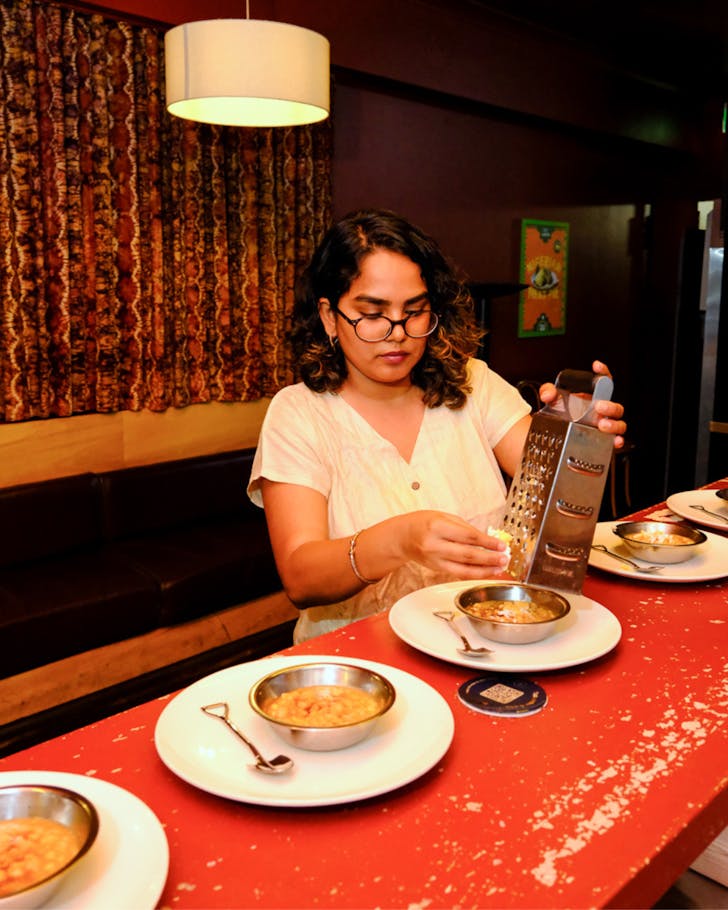
Her emphasis on conversation stemmed from a childhood where talking while eating was considered bad manner—growing up, mealtimes were quiet. With Table Tok, she hopes to prompt the very opposite.
"At Table Tok, I try to create a space that is noisy, full of laughter, warm, and curious, where we all can talk over each other, ask questions, and stay longer than planned—like a quintessential Bangladeshi dawat," Shishir tells us.
"It is more than a hosthood-guesthood dynamic. We build friendship over suppers, and then continue hanging out later."
As adults, it can be increasingly difficult to make new friendships in a city where people tend to stick to their respective circles. And yet, the rise of run clubs, book clubs, and social clubs that celebrate the coming together of strangers, point to a craving for human connection over the past few years.
"My tables are basically a place for addabaji," Shishir explains.
Addabaji is an act and habit of regular engagement with friends (sometimes strangers) over food, tea, and cigarette in long, informal, and leisurely conversations. When asked what conversations she has seen unfold around her table, Shishir has no shortage of answers.
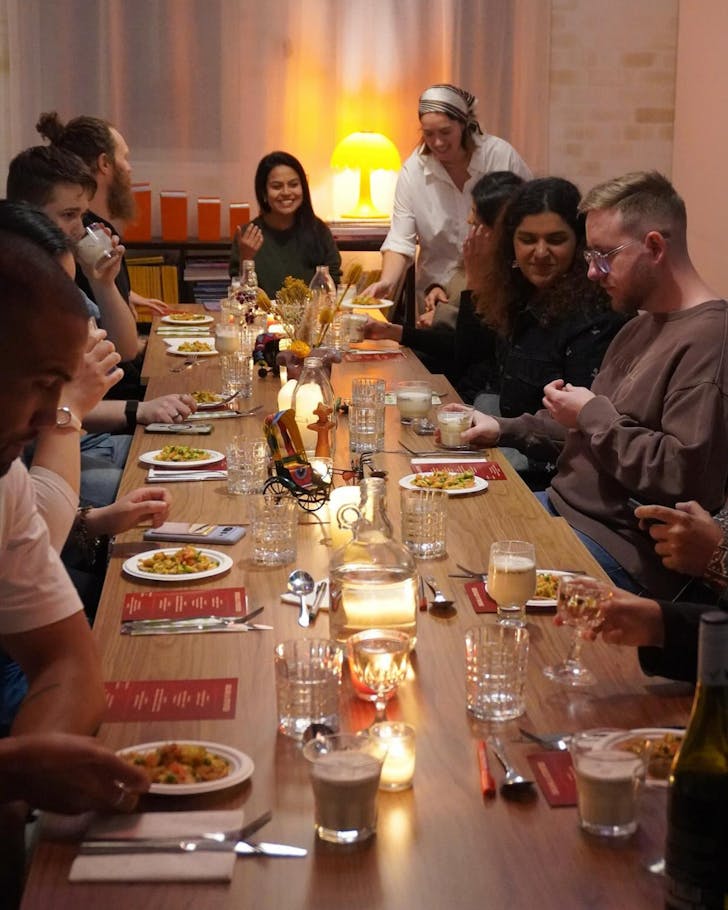
"World politics, genocide, personal life, hobbies, finances, love, loss, astrology, Sydney’s growing home and job crisis, frustrations and what not!" she tells us.
"It could be gossip as well!"
"Cooking Bengali food is my way of sharing where I come from — besides, this is the only way I know, because I am a cook, not a trained chef. More so, I cook intuitively, like any Bangali cook at home."
Sustainability is central to Table Tok, with zero-waste cooking forming to foundation of Shishir's process.
"That’s how a Bangali kitchen runs at home. Our leftover rice would be a Khichuri for next day’s breakfast. We use skin to seeds, everything," she shares.
"Scarcity of food shaped a culture of care and accountability towards food and hunger that food was never taken for granted and wasted. Leftovers have always been used, if not for eating, for cattle, or to fertilise the land."
"My father was in the army, staying away from family for months at times. We had to learn to live with what’s available to us. Later, I worked as a humanitarian worker for refugees and prisoners—all these experiences taught me to stay content with what I already have, and make something beautiful out of it."
The natural next step is for us to ask Shishir where she sees it all going—could Table Tok be the start of something much bigger for her, and Sydney's social scene as a whole?
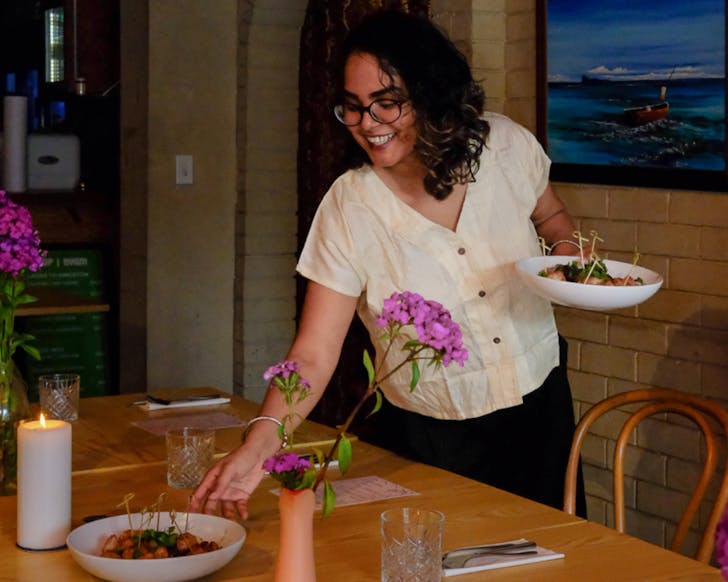
"Starting Table Tok was based on my teenage dream to open a Bhaat’er (Rice’s) Hotel (the name for small roadside restaurants in Bangladesh), where every day I cook fresh food with whatever is available in the morning bazar. Having the opportunity to do what I am doing right now (a version of that dream) is the big thing for me."
"I’d love to keep experimenting—more collaborations, more themed dinners, making more friends, maybe taking Table Tok into new spaces around Sydney and beyond."
What brings people back isn’t something new each time, but the relationships that take shape around the table and continue long after the meal ends — something Shishir sees unfold week after week.
"Perhaps the accessibility to something intimate and non-disposable, mind-alike people, home-styled cooked food, staying connected, or becoming friends," she reflects, on why her guests tend to return time and again.
"Many of us have made great friends through my suppers," she shares.
"We often cook together, go to the beach together, do live painting together and for walk by the river. We mostly eat with our hands, sit close, and try to know each other more."
Image credit: Table Tok, J. Guillermo Robayo Gomez | Supplied

What’s On In Sydney This Month And Beyond

Fun Date Nights In Sydney That Aren’t Just Dinner
