
We Travel The World, But There’s Nowhere Quite Like Uluṟu
 Lizzie Scorer
Contributor | Urban List, Sydney, NSW
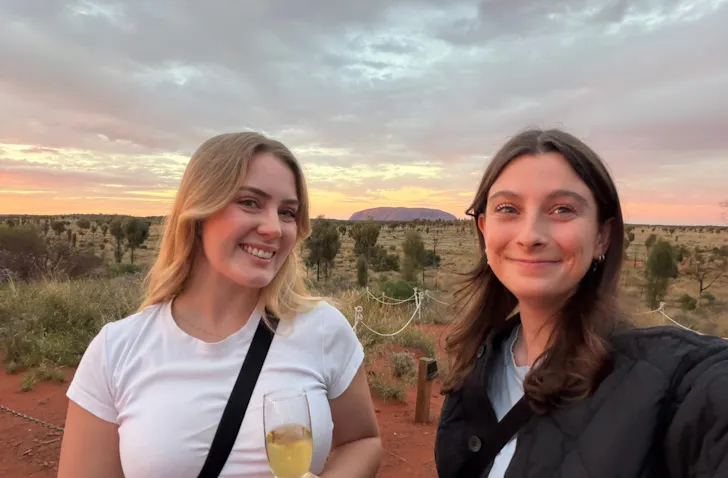
We acknowledge that we are on Pitjantjatjara Yankunytjatjara land, home to Aṉangu, the Traditional Owners of Uluṟu. We pay our respects to Aṉangu Elders past and present, and acknowledge their enduring connection to Country.
I keep wondering why I waited so long to visit Uluṟu. It was always somewhere I knew I would visit eventually. It sat patiently on my travel list. I’d get there one day, I thought. When I had more time, more money, or maybe, for some reason, when I was a little older. But after spending four days in exploring Uluṟu, with a base at Ayers Rock Resort, I kept having the same thought: I wish I’d come here sooner. And, even after four days, I wish we could have stayed longer—there was just so much to do!
As Aussies, we’re pretty good at looking overseas for our next adventure. We chase European summers, Japan ski seasons, Bali escapes and New Zealand road trips, sometimes forgetting just how extraordinary our own backyard can be. And Uluṟu is a pretty spectacular reminder of that.
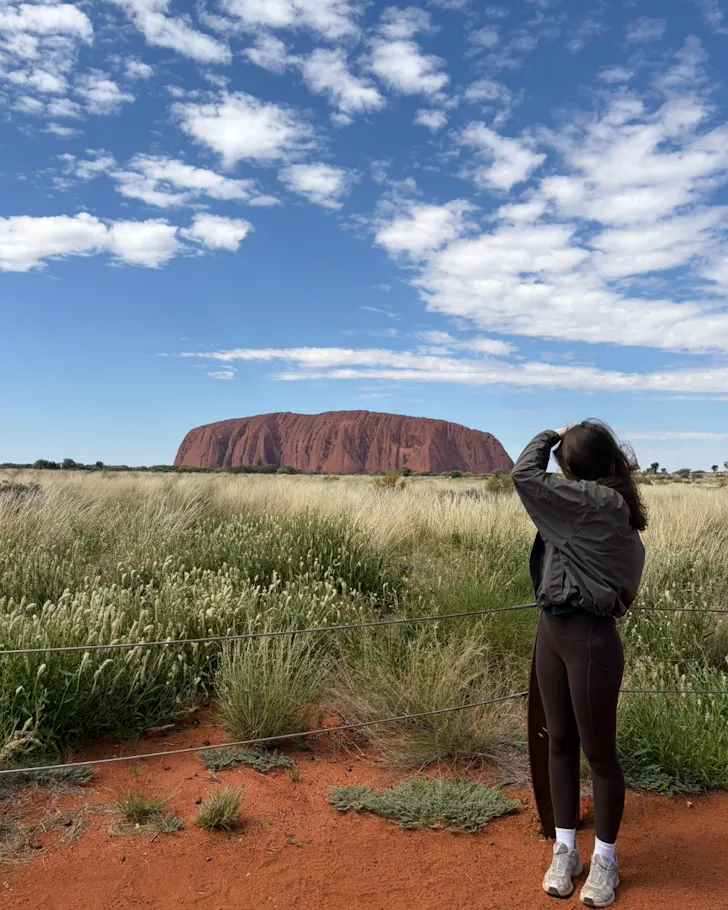
Over the four days, I learnt about Country, got out into the landscape, ate my way through native ingredients, watched the desert transform, and ticked off some of the best things to do in Uluṟu.
What surprised me most was how much Uluṟu changed from one experience to the next. The rock shifted from orange to dusty pink to deep purple as the sun moved across the sky, while every new vantage point revealed another side of the incredible landmark.
Maybe that’s the beauty of Uluṟu. You can come back again and again and still feel like you’re experiencing it all for the first time.
And the best part is, there’s no single way to experience this special destination. Whether you’re curled up under the stars at the campground or indulging in a native bush food high tea at the five-star resort, there’s an itinerary for every budget and travel style.
These were my favourite experiences I’d absolutely rebook, and why Uluṟu deserves to move a little higher up your travel list too.
Day One: Arriving On Country
AM
The flight from Sydney to Ayers Rock Airport was only 3 hours 40 minutes, which provided plenty of time to peer out the plane window. Hot tip: sit on the left side for aerial views of Uluṟu. Then before we knew it, we were welcomed onto Pitjantjatjara Yankunytjatjara Country, where Aṉangu, the Traditional Owners, have cared for the land for generations.
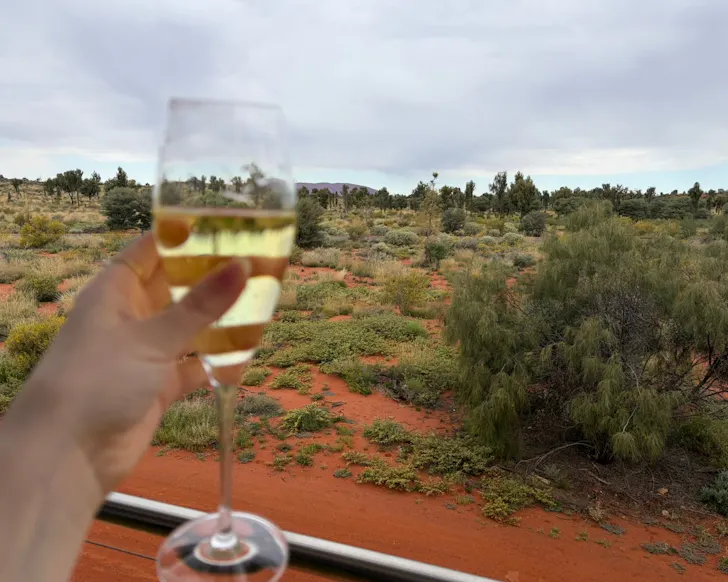
On the short ride to Desert Gardens Hotel, our base for the three nights, I watched the landscape unfurl: ochre earth, scattered spinifex and unfamiliar flora, with an enormous sky stretching above it all. It felt spacious in a way I wasn’t used to at home, almost as if the landscape was giving itself space to grow. I could already feel myself slowing down.
Rising 348 metres beyond the surrounding plain, Uluṟu appeared from the almost impossibly flat horizon, glowing orange-red against a clear blue sky. I didn’t expect a landscape I had seen countless times in photographs to feel so completely different in person. It was bigger, more imposing and more alive.
It was only 10 minutes before we arrived at Desert Gardens, which had to be a record time for airport-to-hotel transfers. After a speedy check-in, we settled into our crisp, air-conditioned rooms before getting our bearings. We wandered by the hotel pool (which we’d most definitely check out later), through the giant eucalyptus trees and over to Waḻpa Lobby Bar for a quick snack at Sails In The Desert next door.
PM
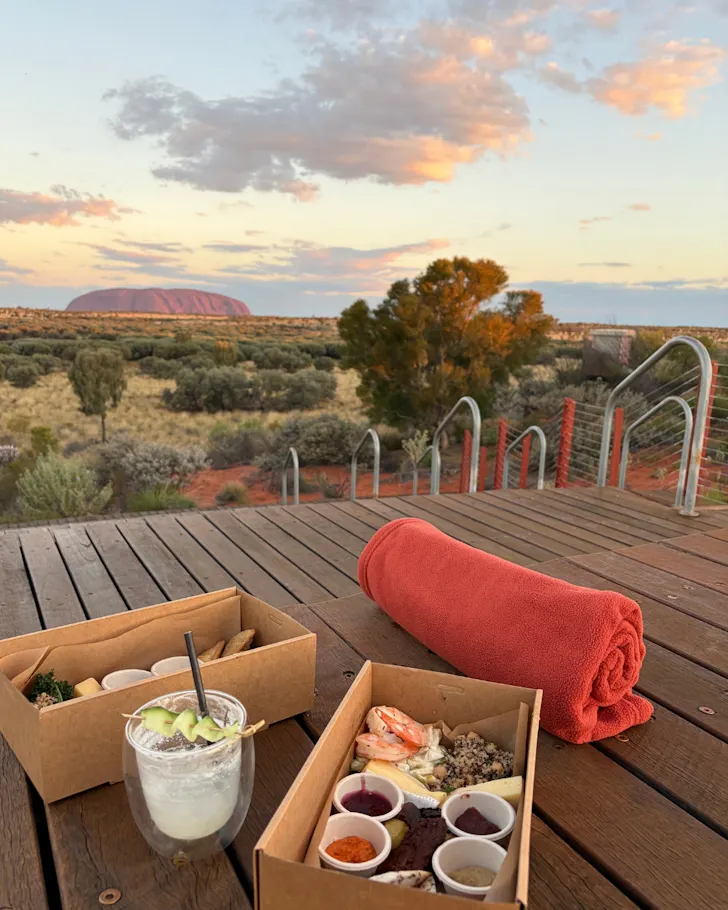
Our first big experience was the Wintjiri Wiṟu Sunset Dinner*. After being greeted with cocktails, premium Penfold wines and canapés curated by Indigenous chef Mark Olive, including gin-soaked cucumber sprinkled with green ants, we settled into an amphitheatre overlooking Uluṟu. Blankets kept us warm as the temperature dropped, while picnic hampers arrived filled with antipasti classics nestled beside emu and kangaroo cuts.
Once the sun had fully set, it was time to watch the multi-award-winning, world-first sound and light show. The Mala Tjukurpa (ancient Creation story) is brought to life through traditional Inma (ceremony/song), narration by senior Aṉangu in Pitjantjatjara, coordinated drones and colourful lasers projected onto the landscape.
Knowing that the story had been passed down through generations and was being shared with us on Country made the experience feel even more powerful. I’d only been in Uluṟu for a few hours, but I was already beginning to understand that there was far more to this landscape than what I could see in front of me.
Day Two: Our Biggest Adventure
AM
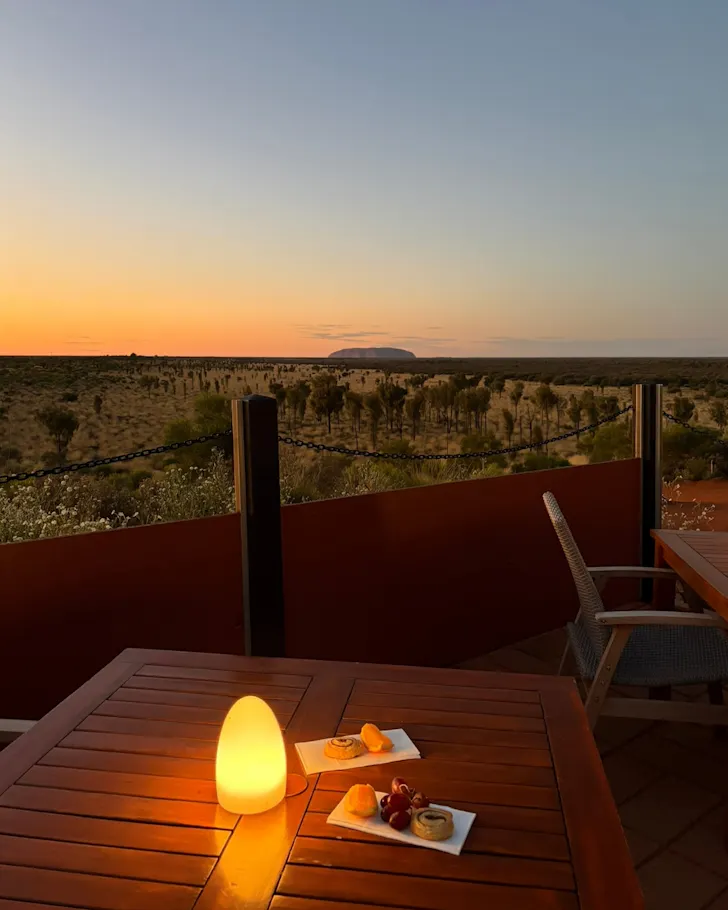
There were a few early mornings on this trip, this morning being one of them. I woke up at 5.30am, which left 20 minutes to get ready for our coach pick-up for the Desert Awakenings Tour. Not my usual morning routine, but the promise of seeing Uluṟu and Kata Tjuṯa at sunrise was enough motivation to get me moving.
Our guide Katie spent the drive introducing us to the landscape. Still wrapped in darkness, we strolled up to a viewpoint fitted with lamp-lit tables and tucked into breakfast while waiting for the first light to creep across the desert. The morning sun unlocked a whole new view of Uluṟu that left everyone speechless, or maybe that was because we were all still waking up.
Then it was time for the base walk. This was as up close as we’d been to Uluṟu so far, and the texture blew me away. From photos, I had expected it to be a smooth, waved rock, but instead it’s beautifully layered with folds, caves and a texture that looked like clay fusing together. We discovered that Uluṟu’s bright colour is from the iron minerals inside the sandstone.
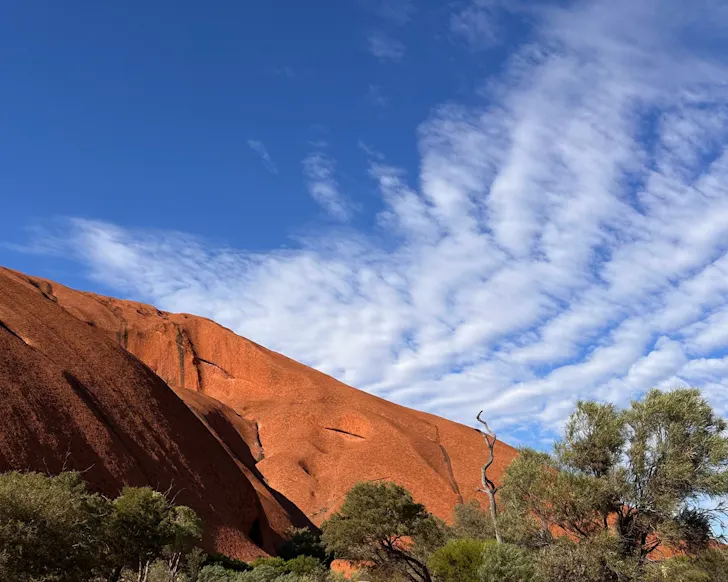
While the whole base walk stretches to 10km, Katie took us along the Mala walk, which details the Mala Tjukurpa, the same Creation story that we learnt about the previous night at Wintjiri Wiṟu. She guided us through the tjukuritja (physical evidence of the Creation story) left across the rock and surrounding landscape, mentioning the morals and lessons Aṉangu have derived from it and live by.
Along the walk, you get to see waterholes, incredible flora and fauna and marks from millions of years of history. One of the more recent marks is the scar, where people used to climb up until as recently as 26 October 2019. Standing at the site made the significance of the 1985 handback of the land to Aṉangu ownership feel much more tangible. By late morning, we were back at the hotel with a whole new appreciation for just how much can unfold in a landscape that, at first glance, appears so still.
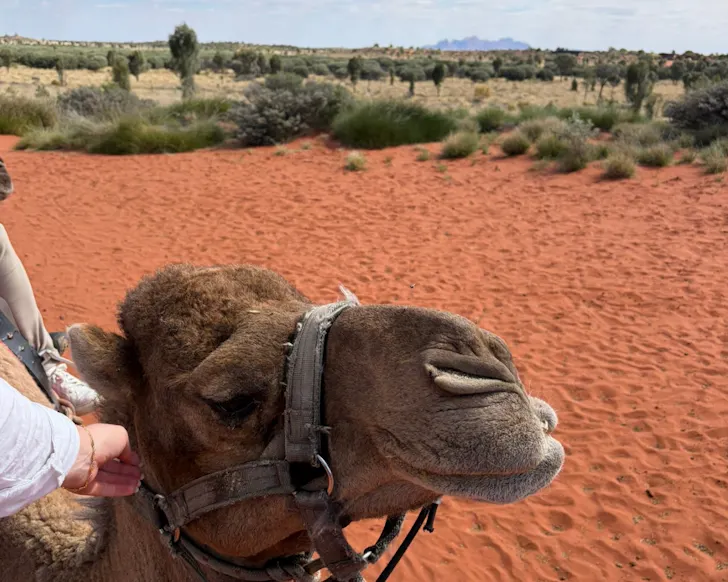
We had a quick lunch before heading back out for a 45-minute afternoon camel ride through the desert on Australia’s largest camel farm. Farm entry is free, but the camel ride was worth the extra spend. We travelled through the red dunes and incredible lookouts before wrapping up back where we started.
PM
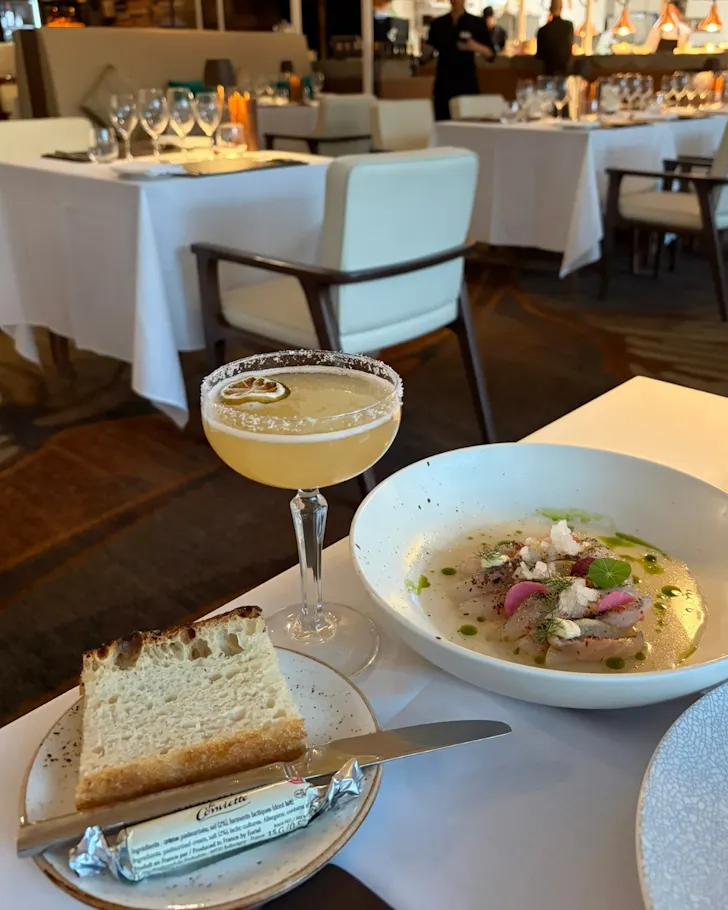
By the time dinner rolled around, we were ready to sit down at Arnguḻi Grill & Restaurant, the award-winning restaurant at Desert Gardens Hotel. Named after the Pitjantjatjara word for bush plum, Arnguḻi puts a native Australian spin on the familiar.
We kicked things off with finger lime margaritas and oysters, alongside complimentary bread and La Conviette butter, before working our way through nannygai crudo, pomegranate-glazed halloumi and handmade pumpkin and ricotta ravioli. For mains, we went for the wild-caught kangaroo, spiced with pepper leaf and served with burnt onion jam and Davidson plum jus, plus truffle-honey-coated crispy Brussels sprouts and duck-fat hash browns with black garlic aioli.
And because we’d already committed to the full experience, dessert was non-negotiable. We shared the Medjool date pudding with saltbush caramel and vanilla bean ice cream, and a thyme panna cotta with lychee granita. I was very much in a food coma and ready for bed by this point, but the day still had one more experience up its sleeve.
At 8.30pm, we met at Town Square before taking a short walk out to the viewing site for Outback Sky Journeys, an incredible star-gazing tour. With virtually no light pollution, the Red Centre is pretty spectacular after dark, but unfortunately we had a bit of a cloudy night. Regardless, our experienced star talker pointed out some beaming planets and constellations, which felt like the perfect way to end a massive day.
Day Three: Getting Lost In The Landscape
AM
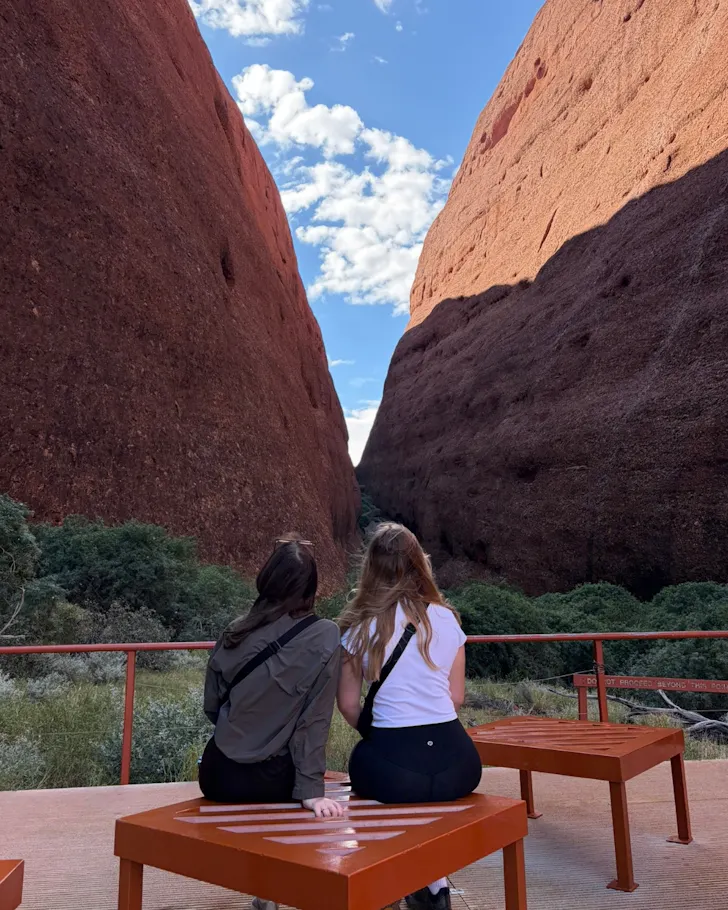
Day three was all about exploring Kata Tjuṯa, a collection of 36 huge domed rock formations. We loaded up on a buffet breakfast at Mangata Bistro & Bar, which was included in our stay, before driving into the distance.
Our first stop was Waḻpa Gorge, where we set off on the 2.6km return walk through the towering rock walls of Kata Tjuṯa. The easy trail follows a rocky creek bed, winding between native plants and clusters of purpley-pink daisies, with the sheer walls rising up on either side.
Aptly named after the Pitjantjatjara word for ‘whistle’, Waḻpa Gorge felt like a giant natural wind tunnel, funnelling a welcome cool breeze against the heat of the day. You can also do the popular 7.4 km Valley of the Winds loop, which takes you deeper into Kata Tjuṯa. We could have spent hours exploring the landscape, but our next activity was waiting.
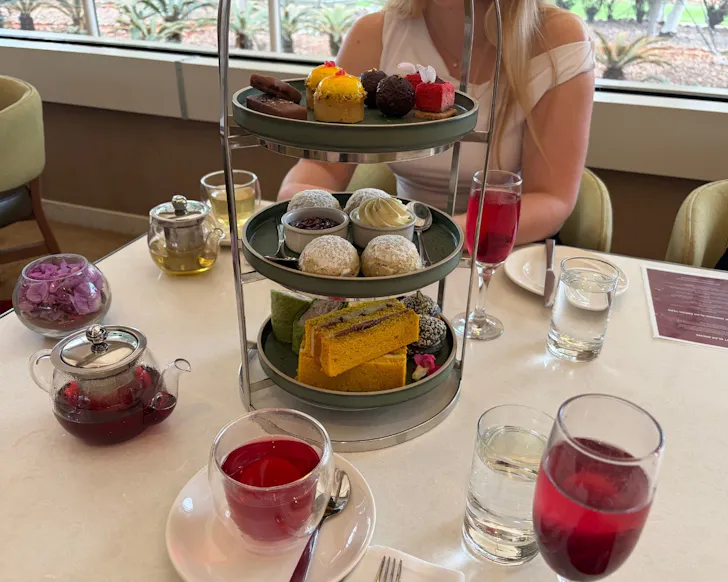
For a slower afternoon, we ducked into Ilkaṟi Restaurant at Sails In Desert for an Australian Native High Tea. Featuring botanical teas by award-winning Indigenous organisation Blak Brews, plus savoury nibbles and sweet treats like saltbush caramel Tim Tams and lemon myrtle scones with quandong jam, this one is a must-book.
PM
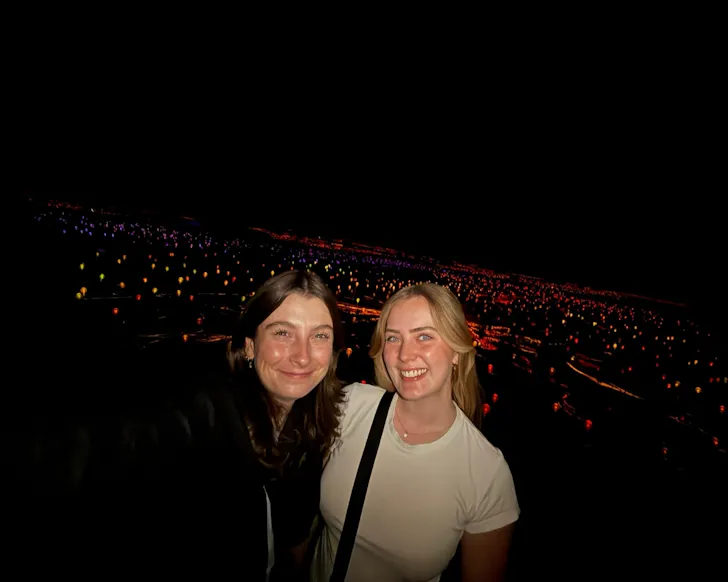
We hit the hotel pool in the late afternoon. I whipped out my Kindle, and we did a bit of bird watching (get the Merlin Bird ID app if you don’t have it already) before we got ready to head out for the Field of Light Star Pass, where you get to walk through Bruce Munro’s enormous light installation set against Uluṟu at sunset. We were taken to a dune-top lookout overlooking the rock, where we tucked into canapés and Australian wines while the sun disappeared.
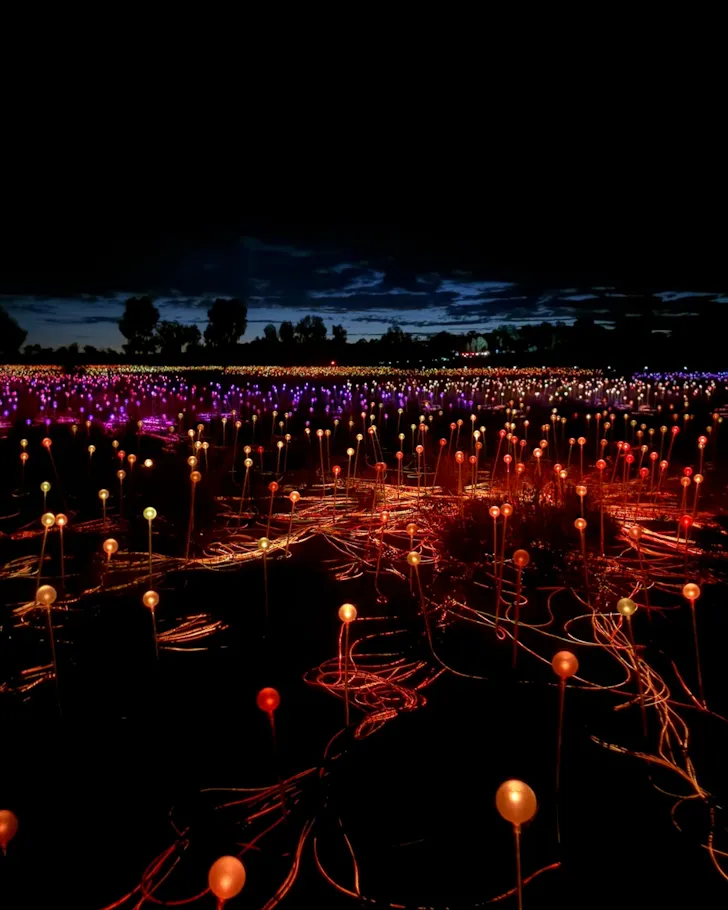
Now in its 10th year, the installation has become one of Uluṟu’s most iconic after-dark experiences. You wander through at your own pace, and there’s a longer or shorter route, making it super accessible for all ages and abilities. This was a major highlight of the trip and an experience I’ll be booking every time I return to Uluṟu.
Day Four: One Last Sunrise
AM
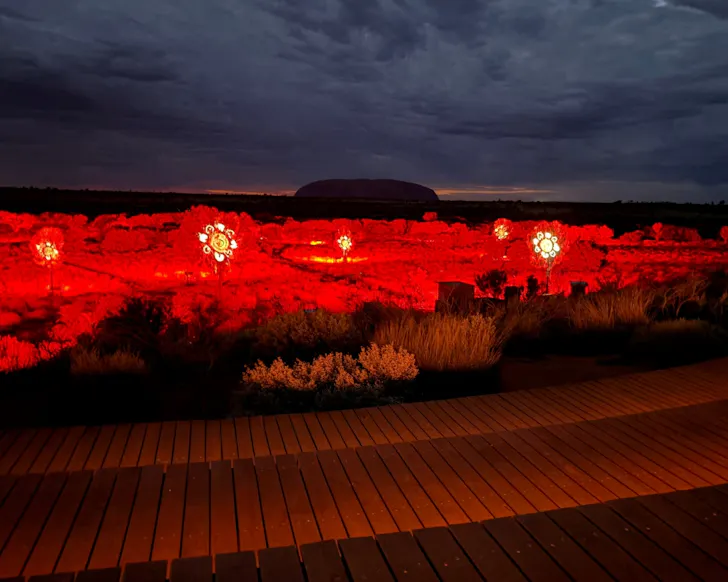
And just like that, it was our last day. This morning was another early wake-up. We met outside the hotel for a 5am coach pick-up to take us on the Sunrise Journeys tour, an early-morning cultural and sensory experience that combines Indigenous art, storytelling and video projected onto the landscape like a canvas.
Chai teas and muffins are handed out before you take a seat in the same outdoor amphitheatre as the Wintjiri Wiṟu Sunset Dinner. But mark my words, this was a completely different experience.
Sunrise Journeys is a collaboration between three renowned Aṉangu artists, based on an original painting titled Ngura Nganampa Wiru Mulapa (meaning our Country is truly beautiful) by Selina Kulitja of Maruku Arts, Denise Brady of Kaltukatjara Art and Valerie Brumby of Walkatjara Art, alongside Aṉangu musician and composer Jeremy Whiskey and visual experience creators Mandylights. Starting in total darkness, the desert slowly comes alive through projected artwork motifs. Sitting there in silence was another reminder to pause, take a breath and admire everything around.
Later on, we visited the Gallery of Central Australia (GoCA) to peruse the gift shop before joining a free daily gallery talk to discover more about the original artwork. GoCA proudly displays the works of 25 remote Indigenous art centres, with art sales providing an important income stream for the remote communities. We also saw a lot of the artists out on the town centre lawns, selling their incredible dot-art paintings directly to passers-by.
Final Thoughts
After four very full days of exploring, I really didn’t want to leave. In fact, by this point I’d become convinced I could have stayed for a full week and still not seen everything. Every day seemed to reveal another side of Uluṟu. From ancient stories and incredible landscapes to native flavours, desert wildlife, art and sunset-painted skies, everything made me stop in my tracks.
So, let this be the reminder that you don't need to wait to visit Uluṟu. The sooner you go, the sooner you can return and discover another side of the landscape and a deeper connection to Country.

Tick Off All The Best Things To Do In Uluṟu

The Best Things To Do In The Northern Territory
