Still Loud, Now Bigger: How Mojos Rebuilt Itself Without Losing Its Edge
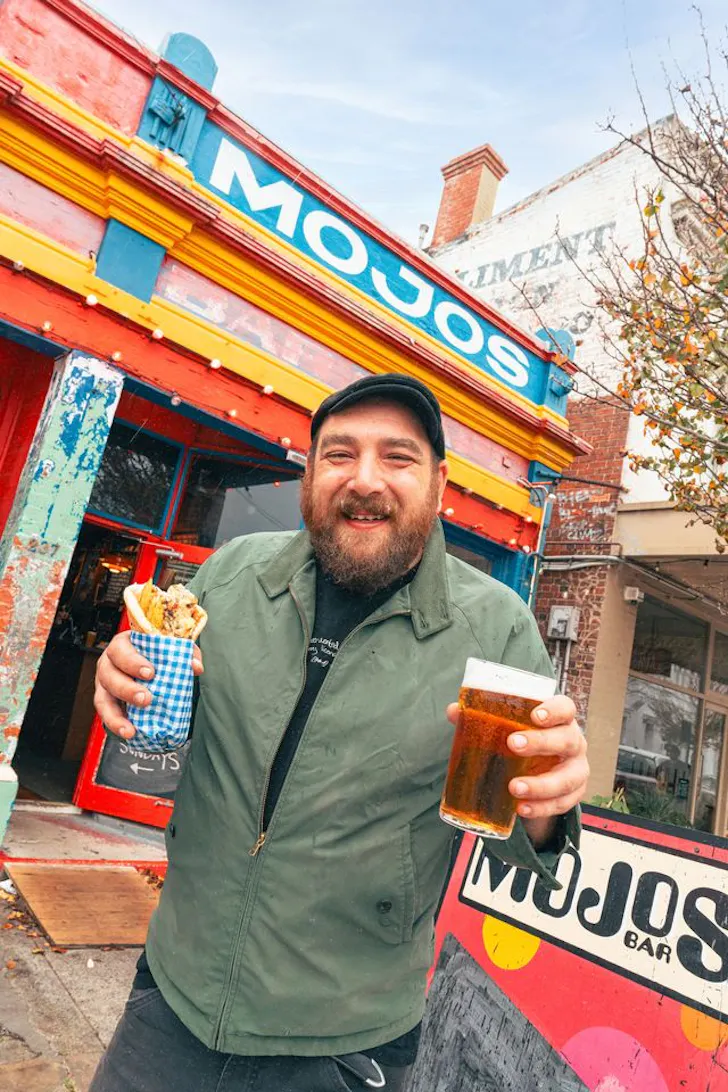
Handing over a long-standing venue is its own kind of challenge. Do you leave it exactly as you found it, or do you risk changing the thing people already love? Mojos, the North Fremantle live music institution that's been soundtracking nights out since the 70s, has spent the last two and a half years finding a third way.
Under new ownership, the venue has gone from opening two or three nights a week with no kitchen and no tap beer, to a seven-day neighbourhood bar with a full Greek-inspired menu, an always-open backyard and something on every night of the week. It's the kind of expansion that could easily have swallowed what made the place special in the first place. So how do you grow a venue like this without it stopping being Mojos?
For co-owner Tony Papa-Adams, the answer wasn't a masterplan so much as a single filter, applied to every decision along the way. Every change gets tested against one question: does it support the live music? "It's actually helped us maintain and keep the essence of what Mojos is," he says, "because that's kind of what the venue has always been about, long before my time."
That filter still gets a workout on the smaller stuff. Hanging a new picture or moving something on the wall can make Tony question whether he's tampering with the vibe, and putting screens in for the AFL finals was the biggest test of that instinct yet, a genuine risk, he felt, for a venue built on an artsy, counterculture identity. It turned out to be one worth taking. Footy on the big screen has simply become one more reason for people to drop in any day of the week, no ticket required.
The bones of the business needed work too. Trading two or three days a week with no tap beer wasn't a position the venue could hold long-term. "There's absolutely no way it's sustainable unless you have a huge benefactor or you're funded by the government," Tony says. There was also a flow-on effect on programming: leaning too hard on big drinking nights to cover the books had, in the past, nudged booking decisions toward crowd-pullers over musical merit. Building a steadier daytime trade around food and beer has taken that pressure off the weekend entirely, giving the team more room to book on talent rather than certainty, and to bring in a wider range of acts and audiences.
None of it happened overnight. Getting tap beer in meant petitioning to change the liquor licence and running new plumbing through a building never built for it, work that took roughly a year and a half from the takeover to complete. The kitchen followed some time after that, once the groundwork had settled and there were milestones the team needed to hit before taking the next step.
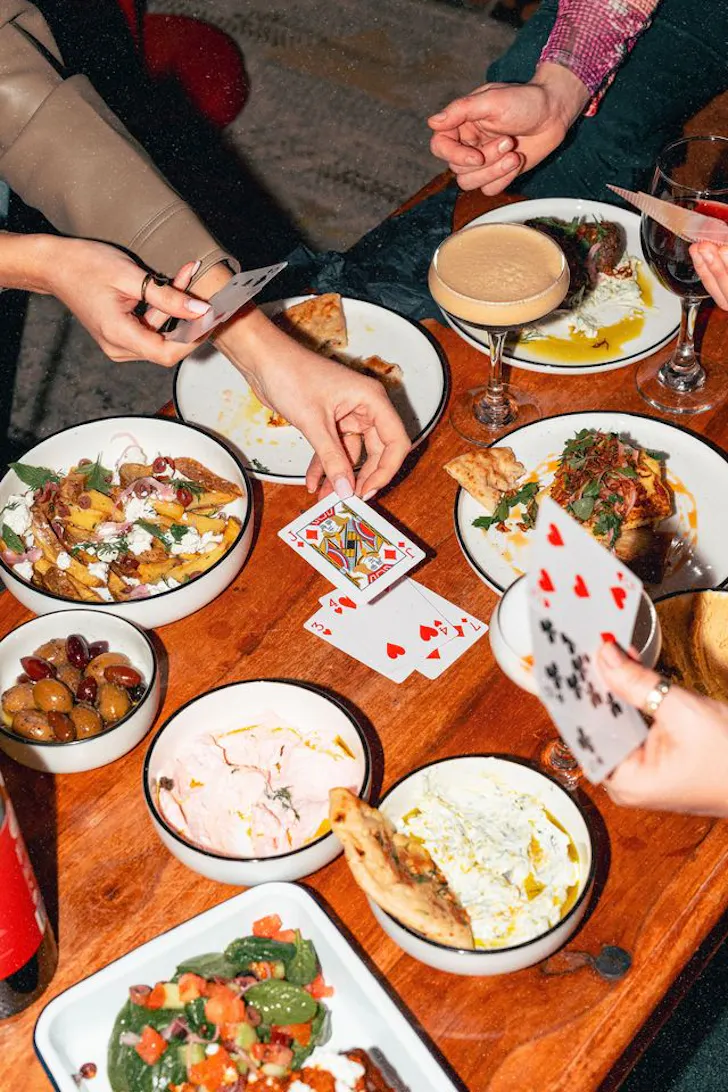
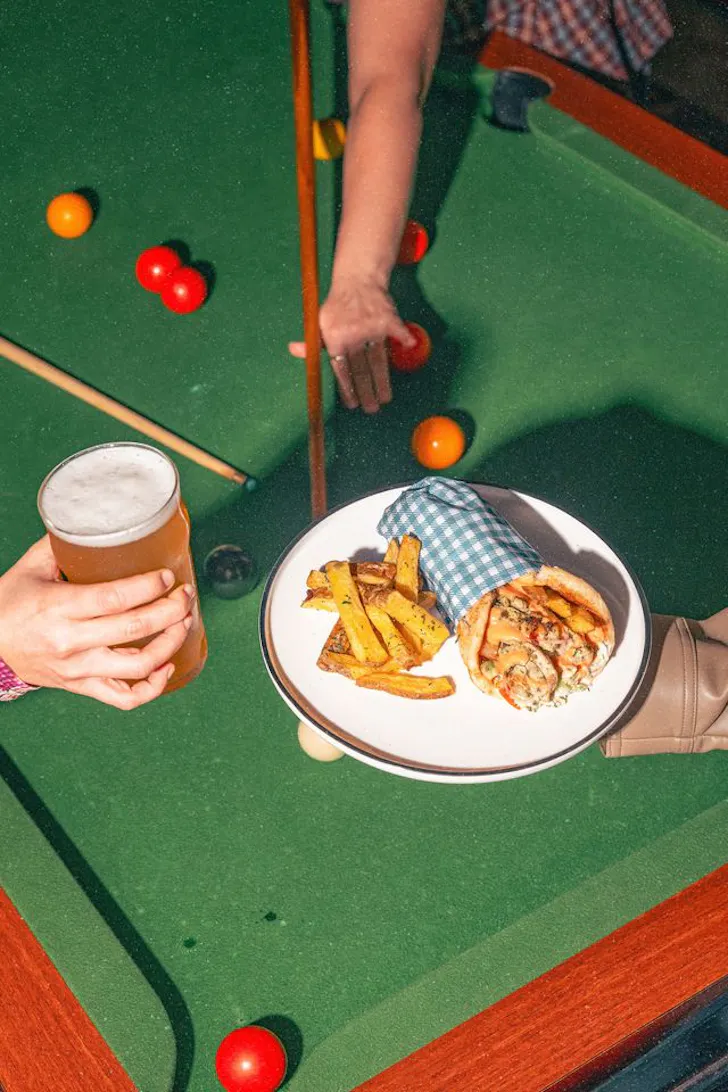
The kitchen itself is personal. Tony is Greek Cypriot, and the menu, led by Head Chef Reece Lardi, grew out of a simple question: what do you actually want to eat at a gig? Greek food lends itself naturally to that brief, share plates you eat with your hands, or something handheld you can enjoy without missing the show. It's built on family recipes developed with his mum and sharpened with Reece's technique. His pick of the menu right now is the keftedes, the Greek meatballs, which he says "taste every bit as if they were straight from the village."
Fitting a share-plates bar next to a ticketed band room took some working out. The solution borrowed from Tony's background in theatre, where an audience gathers and mingles before the curtain goes up. That idea became the backyard bar, a space where people can arrive early, grab a drink and settle in before a gig, rather than queuing on the street until doors open. It also solved a structural problem: the band room can seal off mid-set while the rest of the venue, courtyard bar included, stays open to anyone wandering in.
The ticketing logic follows the same throughline. Touring acts are ticketed, because that's how those artists get paid; local nights, open mic Mondays, blues nights, the Wednesday pub quiz, stay free, reflecting Tony's view that platforming emerging talent is simply part of running the venue. As Mojos grows, that free offering is only set to expand.
Asked what he'd tell someone else about to take over a long-running venue, Tony doesn't overthink it: "If you don't genuinely love it, walk away. It's more of a labour of love than 'I'm gonna make money out of this.'" But he's equally quick to encourage more people to give it a go, more venues, in his view, means more artists getting a platform and more audiences finding them.
Two and a half years on, Mojos isn't a different venue. It's the same one, just built to last a little longer, somewhere a stranger can grab a beer and a plate of souvlaki on a Tuesday afternoon, and a touring band can still sell out the room on Friday night, one never crowding out the other.
Hero Images Credit: Mojos | Supplied
See more Urban List in Google Search.