
Tigerfish’s Brendan Scott Grey On Hand-Rolled Oshibori, 3am Ramen & The Pursuit Of Perfection
On his first day as a Japanese cocktail apprentice, Brendan Scott Grey rolled a hand towel wrong. In Japanese bars, the oshibori is a ritual in itself: a warm towel offered at the start of service, a practice to set the tone for the experience to come.
When he got it wrong, he was told to roll a hundred more, the right way.
In place of formal instruction, learning happens through correction. You’re shown once, then expected to repeat it. And if you get it wrong, you’ll know about it.
Do something a hundred times until you perfect it. Once you’ve perfected it? Do it a hundred times more. Here, persistence lays the path to perfection.
When Brendan pours a drink behind the bar at Tigerfish, he’s distilling over two decades of bartending into a single glass. You might taste the balance: sweetness, bitterness, even temperature, landing exactly where it should. What you probably won’t taste are the thousands of hours of rote practice that have made that balance seem effortless. The best bar experiences rarely announce themselves. When a drink arrives and simply feels right, the bartender has done their job.
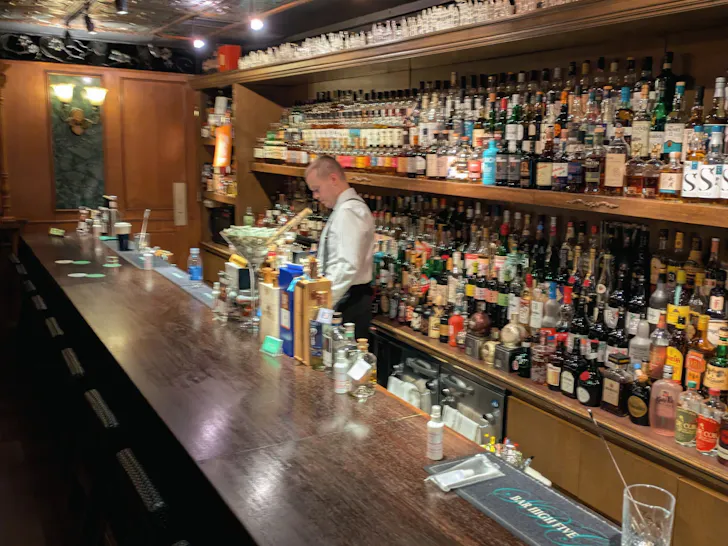
It’s precisely those years spent honing his craft that makes Brendan’s decision to take up a yearly apprenticeship in Japan all the more striking. Once a year, he trades his place at the helm of Perth bar Tigerfish for a few weeks at Tokyo’s Bar High Five, where an incubator-style program shapes bartenders looking to refine the craft of Japanese cocktails. It means long hours and late nights of prep and polishing, interspersed with snatched moments of tutelage from the master bartenders. That’s what obsession can do though.
Brendan’s interest in Japanese bartending didn’t begin behind the bar, but in research. A project tracing the history of Japanese spirits led him to Kokuteeru, Japan’s first cocktail manual. At the time, it had never been translated into English. Brendan tracked down the original text, had it translated, and published it himself, a project that would eventually take him to Tokyo to study the craft firsthand.
The apprentices at Bar High Five might work a full shift, starting prep in the early afternoon and finishing service late at night, but their real day starts after midnight. That’s when they start training.
“Before you can even begin to stir a drink or shake a drink, you have to master their stirring and shaking technique,” Brendan explains. “And that’s where things, I guess for me, got really fun.”
That technique involves holding the spoon in a specific vertical position, rotating your hand without letting your wrist kick out. The goal is a rapid stir, pushing the energy down into a whirlpool motion, but without causing the ice to touch the side of the glass and make noise. Before the masters will let you near a liquid, you’ve got to prove your proclivity by simply stirring in the air.
“I was quite proud of myself, I was able to figure that out in about 30 minutes. There were people there that have been there for months and were still on that.”
At Bar High Five the day starts at 1:00pm. The apprentices, many of them experienced bartenders in their own right, roll into the discreet Ginza district bar early for a coffee, but work begins sharply at 1:00pm. The bar is cleaned, equipment washed, then prep starts.
Piles of limes and lemons are rinded and juiced. The rind itself is precision cut, stacked in containers according to zestiness and oil in the skin, something the bartenders learn to recognise by sight.
Then, the ice carving. Large blocks, 15 to 20cm thick, are cut down with soba knives into the large cubes used for lowball drinks. Later, these same cubes are rinsed after use, the now-smaller block repurposed for shaken drinks, then eventually repurposed again as shaved ice. Each stage of its life carefully controlled, nothing wasted, everything considered.
At 5:00pm, service begins. The apprentice bartenders are responsible for keeping service seamless, getting cocktail orders to masters Hidetsugu Ueno and Kaori Kurakami, keeping up with the relentless rotation of washing and drying glassware, moving as quickly as they can without breaking the rhythm of service.
“If we run out of anything the masters get mad, and they’re very comfortable letting us know that,” Brendan tells me.
For all the hours spent behind the bar, apprentices rarely make the drinks themselves.
“The reason people come to these bars,” Brendan says, “is not to get a drink made by me. It’s to get a drink made by the master.”
The work of the apprentice is in everything around the drink, the preparation, the precision, the service.
Calls for last drinks go out at 11:00, and the bar is packed up by midnight for the apprentices to begin their training. For a few hours in the early morning, they’re stirring, shaking, learning about flavours and balance, all under the guidance of Ueno-san and Kaori-san.
At 3.00am, Bar High Five finally quietens for the night. Lights off, doors locked. While the bar falls still, outside Tokyo is still moving. Flickering fluorescent lights cast a glow over late-night diners pacing the sidewalks or hunched over bowls behind the glass fronts of ramen shops, steam rising into the cool air.
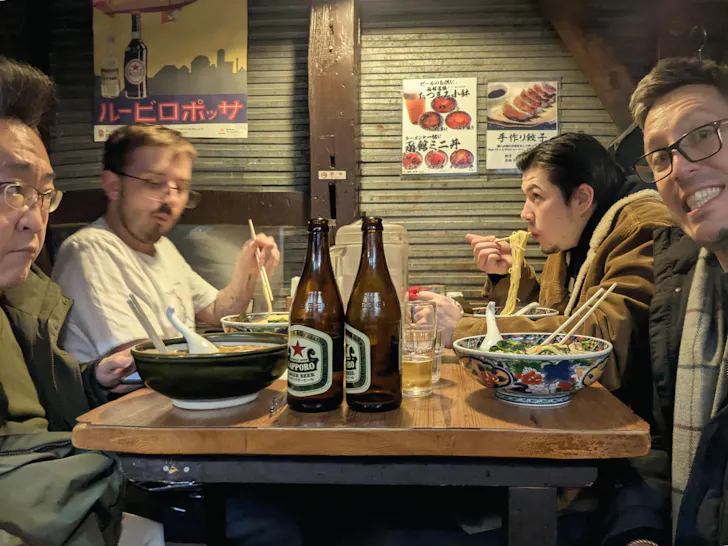
If service has gone well, the masters might take the apprentices for a late night bite, sitting shoulder to shoulder over broth and noodles. If not, it’s a stop at 7-Eleven for a cold beer before heading home for a few hours of sleep, only to return and do it all again.
Over a drink, Brendan tells me the story of Katsushika Hokusai, an Edo-period Japanese artist who started drawing at six and was considered something of a child prodigy. But by his own account, the work he did before 70 was not worth bothering with.
“I think that’s a great way to look at any artform,” says Brendan. “I think it's a constant evolution. The moment you say you've mastered something, you’ve stopped trying to progress.”
When it comes to mastering Japanese bartending, Brendan admits he isn’t sure where the finish line lies. He doesn’t know how the masters themselves became masters and who bestows the title. For now, it’s enough to keep returning, keep refining.
The drinks program for Tigerfish, designed ahead of its opening last year, was a labour of love, built to reflect refined Japanese drink sensibilities in a way that would feel accessible to the Australian drinker.
Reading the list, it would be easy to assume some pretension around how a drink should be designed, served, even consumed. That couldn’t be further from the truth.
“The only real drink philosophy I have is whatever the customer likes best, that’s the best drink,” says Brendan.
When the customer is happy, the barkeep’s done his job.