
Are We Witnessing The Death Of The Dinner Plate?
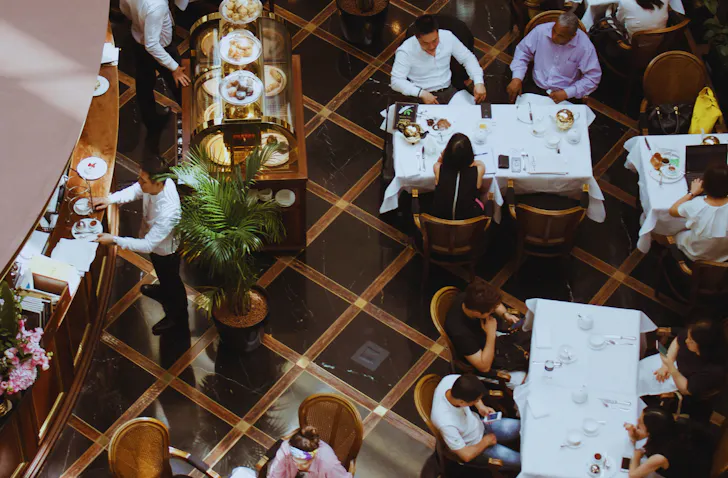
I was recently in a hotel lobby dining room late at night. Low lighting. The quiet clink of glassware. Suits loosened at the collar, everyone looking like they’d either just landed or were about to leave. There’s something about that in-between energy. Hotel dining rooms feel suspended in time. You could be anywhere. Any year.
The mains were $50 a plate. Steak, crab pasta, crispy-skinned chicken. Standard hotel fare. I scanned the menu, reassured by its predictability.
And then I saw it. Beneath the ‘large plates’ heading, its own neat little column: sides. Which snapped me straight back to 2026.
It feels like the days of ordering a meal and having your plate arrive complete with protein, vegetable and carb are long gone. Instead, here I was on a Tuesday night in an upscale restaurant, debating the morals of $22 broccolini versus $19 potatoes. Can’t a girl have both, right beside her main?
Somewhere along the line, restaurants quietly split the plate. The steak stayed the same price. The vegetables wandered off into their own column, and suddenly demanded a premium for it. We’re used to splitting the bill. That feels communal. Splitting the plate feels commercial.
It’s become the default of contemporary dining. “Share style” is no longer the exception, it’s the format. There’s a time and a place for it. Share plates make sense when they’re the point. Tapas bars, yum cha, wine bars, somewhere you’re grazing your way through a bottle of something orange and interesting.
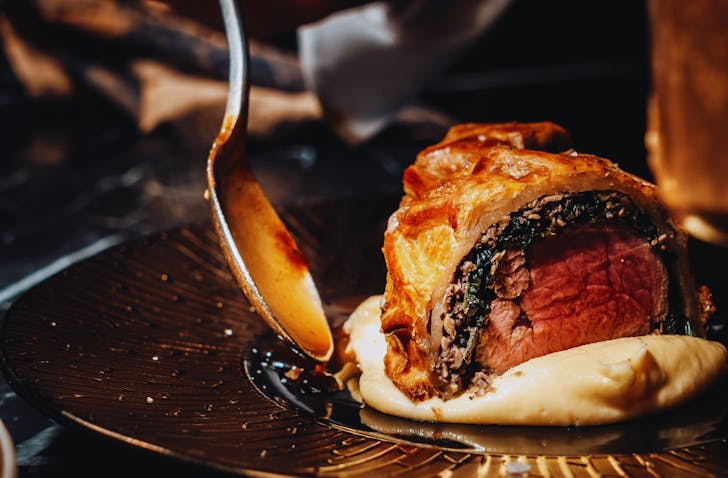
But at dinnertime, is it so wrong to want my plate to be a proper meal?
The argument, of course, is that share plates offer more choice. Flexibility. Control. To that, I say give me less choice any day. When each of those plates comes in at $28 or $32, the total quietly eclipses the price of a traditional main.
Then there’s the maths problem. How many is enough? A main, as we once knew it, was built as a one-person portion. Share plates are far less predictable. One venue’s “to share” is three croquettes. Another’s is a mountain of lamb over hummus. The barometer for portion size? There isn’t one.
Perception, however, remains king. In an era where diners are more price-sensitive than ever, smaller plates create the appearance of affordability, a gentler entry point on the menu. For kitchens, they promise stronger margins. Split the plate. Sell the components separately. The margin stacks quietly, all without touching the headline price of the steak.
For diners, that promise of flexibility isn’t always reflected in the final bill.
Pubs, bless them, remain the last bastion of the full plate, a parmi with its rightful chips and a token side salad that at least pretends to count as greenery. It’s what continues to make them the go-to for families. Here, value feels guaranteed.
A main should be a meal. Full stop.